



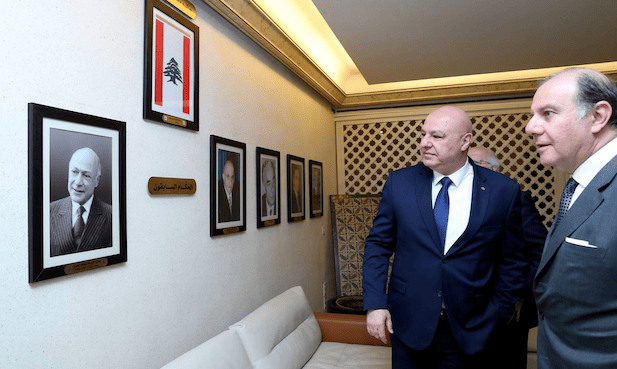
Lebanon’s political system is the product of a century of compromises designed to allow a diverse society to coexist within a single state. From independence and the National Pact to the Taif Agreement, the distribution of key state positions has been central to maintaining a delicate balance among Lebanon’s communities.
Political convention assigns the presidency to a Maronite Christian, the premiership to a Sunni Muslim, and the speakership of Parliament to a Shiite Muslim. Article 95 of the Constitution establishes another fundamental principle: first-category civil service positions and their equivalents are to be distributed equally between Christians and Muslims during the transitional period toward the abolition of political sectarianism.
The Constitution does not reserve individual first-category positions for particular sects. Their detailed allocation is a political convention, not a constitutional entitlement. Yet this distinction does not make those conventions politically irrelevant.
Studies have counted approximately 155 to 157 first-category and equivalent senior positions across the state and public institutions. Conventionally, the command of the Armed Forces, the governorship of Banque du Liban, and several senior judicial and financial positions have been associated with Maronites; the Internal Security Forces and other major administrative positions with Sunnis; General Security, the Court of Audit, and other senior offices with Shiites; and the Armed Forces Chief of Staff and other positions with Druze. Greek Orthodox, Greek Catholics, Armenians, and other communities are similarly represented.
These arrangements may be criticized as part of Lebanon’s sectarian system. But they cannot be selectively dismantled while the rest of that system remains intact.
Banque du Liban and the Balance of Power
Banque du Liban itself reflects this balance. By convention, its governor is Maronite, while its four vice-governors are distributed among the Shiite, Druze, Sunni, and Armenian Orthodox communities.
This makes the distribution of authority within the central bank more than a technical governance question.
Article 26 of the Code of Money and Credit grants the governor broad executive and administrative authority and makes him the legal representative of Banque du Liban, responsible for implementing the law and decisions of the Central Council. The Central Council, meanwhile, has important statutory responsibilities of its own, including determining monetary and credit policy.
The law therefore created a deliberate institutional architecture: a clearly identifiable executive head operating alongside a Central Council with defined powers.
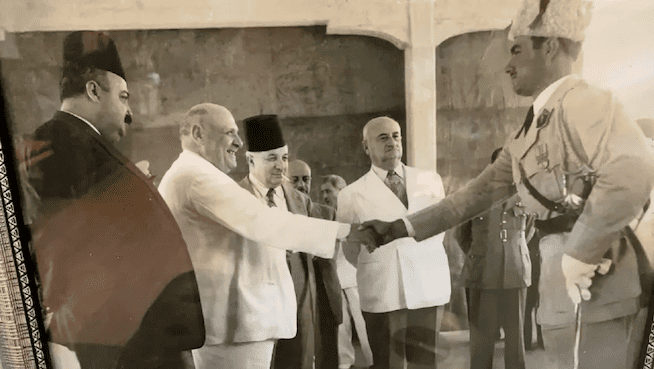
Since Banque du Liban’s establishment, its governorship has been exercised by Philippe Takla, Elias Sarkis, Joseph Oughourlian in an acting capacity, Michel El Khoury, Edmond Naïm, Riad Salameh, Wassim Mansouri in an acting capacity, and Karim Souaid.
The central bank operated for decades under essentially the same legal framework and under vastly different political and economic circumstances. Riad Salameh was the exception that demonstrated what can happen when the exercise of the governorship exceeds legal boundaries with political cover.
Salameh did not accumulate exceptional power because the Code of Money and Credit required it. The political authorities allowed his role to expand over decades and permitted Banque du Liban to assume responsibilities that should have remained with the government and political authorities.
The problem, therefore, was not the existence of the governor’s statutory powers. It was their misuse, the failure of oversight, and the absence of timely accountability.
Reform or Redistribution?
This distinction is crucial to the current debate over restructuring Banque du Liban.
There is no disagreement over the need for stronger transparency, auditing, internal controls, risk management, conflict-of-interest rules, and accountability. The International Monetary Fund has called for reforms addressing excessive concentration of decision-making authority and strengthening collective decision-making and oversight. The Alvarez & Marsal forensic audit likewise identified serious deficiencies in governance, internal controls, and accountability.
These findings demand reform. But what kind of reform?
If a Director General of General Security—a position conventionally associated with the Shiite community—violates the law or abuses his authority, should Lebanon respond by stripping General Security of its powers and transferring them elsewhere? Or should it hold the offending Director General accountable and require his successor to operate within the law?
The same question can be asked about the premiership. If a Sunni Prime Minister exceeds his constitutional authority, should Lebanon amend the Constitution, remove powers from the premiership, and distribute them among ministers? Or should the Prime Minister be held accountable through constitutional mechanisms?
Why should the principle be different for Banque du Liban?
If a governor exceeds his authority, the answer should be accountability—not punishment of the office.
This is particularly important because transferring substantial executive powers from the governor to the Central Council is not politically neutral in Lebanon. The governor is conventionally Maronite, while the vice-governors represent other communities.
If the distribution of powers changes, the distribution of influence changes with it.
An international expert may view transferring authority from a governor to a collective council as a technical governance reform. In Lebanon, however, the same change may alter a political balance embedded in the distribution of senior state offices.
The IMF and Alvarez & Marsal can legitimately diagnose excessive concentration of authority, weak controls, and inadequate accountability. But the choice of Lebanon’s institutional architecture ultimately belongs to Lebanese constitutional and political institutions, which must consider both sound governance and the consequences for the country’s existing balance.
There is a fundamental difference between preventing unchecked concentration of power and hollowing out the governor’s statutory executive authority.
Do Not Punish the Office
The lesson of the Salameh era should not be that a powerful governor is inherently dangerous. It should be that a powerful governor without effective oversight and accountability is dangerous.
Good law gives an official the authority necessary to perform the job, defines its limits, and holds that official accountable for violations.
If Lebanon applied the opposite principle consistently, it would have to rewrite the powers of every public institution whenever one of its officials violated the law.
If the Director General of General Security breaks the law, hold the Director General accountable—not General Security.
If a Prime Minister exceeds constitutional authority, hold the Prime Minister accountable—do not redistribute the premiership’s powers.
And if a governor of Banque du Liban exceeds his statutory authority, hold the governor accountable—do not redesign the governorship because one occupant abused it.
Reform Without Selectivity
Article 95 identifies the abolition of political sectarianism as a national objective. Lebanon should ultimately move toward institutions based on citizenship and competence.
But such a transition cannot occur by dismantling one component of the existing balance while preserving all the others.
Until political sectarianism is abolished—and after arms are brought exclusively under the authority of the state—Lebanon cannot selectively disrupt these balances under the banner of financial reform.
If Lebanon wishes to move beyond sectarian allocation, it should do so comprehensively: through a sovereign state that controls arms and decisions of war and peace, applies the Constitution, strengthens the judiciary, and transitions toward citizenship through an agreed national process.
Until then, balance must be measured not merely by titles, but by actual powers.
Banque du Liban unquestionably needs reform. Strengthen auditing. Enforce transparency. Activate the Central Council within its statutory jurisdiction. Establish effective accountability. Prevent conflicts of interest. Require disclosure. Prosecute violations.
But do not turn Riad Salameh’s exceptional experience—enabled for years by political cover—into a justification for permanently weakening the office.
Preserve for the governor the powers granted by the Code of Money and Credit, and require the governor to remain within the limits of that same law.
Lebanon needs neither a governor above the law nor a governor stripped of meaningful authority.
It needs a governor empowered by the law, constrained by the law, and accountable before the law.
To preserve institutional balances, uphold the spirit of the Constitution, and respect the principle of institutional stability and accountability of officials rather than positions.
The President of the Republic has the right to return the law for reconsideration and a new vote on the provisions that conflict with these principles, while taking into account the technical requirements.
Reforming Banque du Liban Is Not Punishing the Office : 1- The article gets the priorities wrong. Lebanon’s issue today is not the sectarian identity of the Central Bank Governor, but the financial collapse, the banking crisis, and the rights of depositors. 2- The political class and the banks share responsibility for the collapse, but Banque du Liban and its governorship were at the heart of the monetary and financial system that enabled and contributed to the disaster. This cannot simply be reduced to one governor misusing his powers. 3- The Salameh era exposed a serious institutional failure : concentrated… Read more »