



A balance sheet, a podcast and the inconvenient question of who ultimately benefits from Banque du Liban’s last great asset
Lebanon has discovered a new branch of economics: ownership by podcast. In a recent episode, a host asked whether the gold shown as an asset on Banque du Liban’s books belongs to the central bank or to the Lebanese State. The guest concluded that it belongs to the state. Apparently, balance sheets are now decorative — rather like cushions in a Beirut salon: prominently displayed, frequently rearranged and never meant to be taken too seriously.
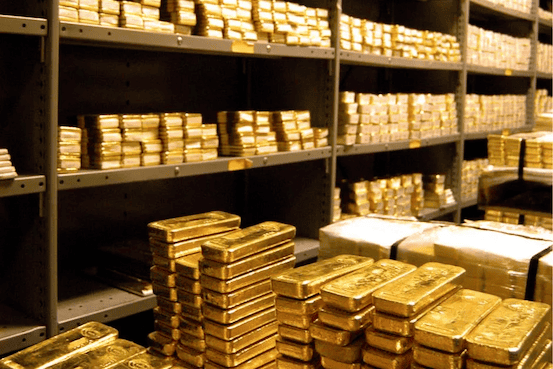
The question matters. Lebanon holds roughly 286 tonnes of gold. After the rise in gold prices, it is probably the country’s most valuable financial safety net. But the answer is not simply ‘the State owns it’ or ‘the central bank owns it’. We must ask a more practical question: when the bills finally arrive, who should benefit from the gold first? A lot of ideas and theories are currently circulating about the status and use of gold reserves — do they belong to the central bank or do they belong to the State? Should they be used as a benefit of the reconstruction of the south or to reimburse depositors? All are valid questions. The starting point is not wishful thinking but legitimacy. The starting point must be the legal status of BdLand the gold reserves.
The legal premise is as follows: the gold reserves are an asset of the central bank, reflected on the balance sheet (https://www.bdl.gov.lb/). The central bank is in default with its creditors, i.e. the commercial banks, Lebanese and certain foreign banks licensed in Lebanon, which have made deposits with the central bank and have not recovered them. Excluding mandatory reserves, the central bank owes commercial banks and therefore depositors $78bn. The central bank enjoys strong immunities under US, UK and other laws when it comes to the debts of the State . I.e., a creditor of the State cannot generally enforce its debt against assets of the central bank, including gold reserves. However, the central bank does not enjoy the same or any strong immunities when it comes to its own liabilities, ie liabilities to its own creditors.
The fact that there is a law which restricts the sale or other use of the gold does not change the ownership of the asset, nor would it be a valid defence against creditors of the central bank. In light of the above, the gold or gold reserves can only be used for two purposes: sustaining the activities of the Central Bank by strengthening its balance sheet and permitting BdL to conduct its normal central bank activities, or using it to partially cover the central bank’s own liabilities, i.e., its debts.
When an institution is in default, assets of that institution are primarily available to satisfy its liabilities. Any other use, including any use by the institution’s shareholder, the Lebanese State, would trigger additional claims against the central bank on potential “Fraudulent Conveyance” or defrauding its creditors, i.e., removing assets from the general claim of its creditors. Any use of the gold other than for the two purposes above would also diminish the central bank’s independence and autonomy, potentially exposing BdL to claims for the payment of state debt , such as the Eurobonds. By undermining the independence of the Central Bank, you are exposing it to potential liability for state debt.
In plain English, a parent may own a company; that does not allow the parent to empty the company’s safe while leaving its unpaid customers unpaid.
Lebanon has a law, passed in 1986, preventing the gold from being sold without Parliament’s approval. That law was designed to stop the country’s politicians from treating the vault as emergency pocket money. Parliament could change the law, but until it does, neither the government nor the central bank can simply sell or mortgage the gold.
There is another awkward detail. The Lebanese State is not merely the owner of BDL. It is also BDL’s biggest debtor. Governor Karim Souaid has put the state’s obligations to the central bank as high as about $60 billion. The exact figure still needs to be settled with the Finance Ministry, but the basic point is clear: the state owes BdL money. It cannot make that debt disappear by announcing that BDL’s most valuable asset was really the State’s all along.
If the podcast theory were that simple, Lebanon would already have found the world’s easiest debt-restructuring plan. The State could tell BDL: ‘You have our gold, we owe you money, so let us call it even.’ There would be no repayment plan, no negotiations and no tedious arithmetic — only one enormous accounting entry followed, presumably, by lunch. Yet the Givernment and BdL are discussing how the debt will be recognised and repaid. Their own behaviour shows that the gold cannot simply be grabbed and used as an eraser.
The basic accounting rule is simple:
Assets = Liabilities + Equity
Or, in ordinary language:
Equity = Assets − Liabilities.
What remains after an institution pays what it owes belongs to its owner. But the owner does not get paid first. Creditors do. This does not mean that every Lebanese depositor legally owns a tiny piece of a gold bar. It means that BdL cannot keep its valuable assets for the State while pushing its enormous losses onto the banks and their depositors.
The financial hole is concentrated at BdL The central bank owes more than $70 billion through a chain that ends with ordinary depositors. Banks placed their money at BdL and depositors placed their money with the banks. Declaring the gold ‘property of the people’ while telling those same people that their deposits have vanished would be a remarkable trick: nationalise the treasure, privatise the loss and call it reform.
Could a creditor go to a foreign court and seize the gold? Possibly but not easily, owing to jurisdictional hurdles.
Lebanon’s own ban on selling the gold is important at home, but it is not a magic shield everywhere in the world. A Lebanese law cannot tell courts in New York, London or Paris how to apply their own rules. At the same time, a foreign judge would normally have little power over gold physically stored in Lebanon, where the central bank enjoys absolute immunity. Where the gold is held would therefore matter almost as much as who claims to own it.
So who does the gold really belong to? On paper, it is an asset of BdL. The state owns BDL and is also its largest debtor. Banks and depositors do not hold legal title to the bars, but they have the strongest claim to the value those bars represent because they are the BdL creditors waiting to be repaid.
But it cannot honestly be treated as a free gift to the State while BDL’s creditors absorb the losses. However one slices and dices it, the State cannot arrive first for dessert after leaving depositors with the bill.
The State has an indirect interest in the gold as a sole shareholder. However, this interest is subordinated to BDL’s own creditors, the commercial banks and the depositors.
NB — Legal aspects of this paper were checked with an international law firm.