



Lebanon does not fundamentally lack turbines, engineering expertise or international capital. It lacks an investable electricity market. Yet the government is searching for additional revenue from an economy whose citizens have already endured a financial collapse, the destruction of much of their savings and years of paying privately for services — electricity foremost among them — that the state failed to provide. Lebanon risks choosing the familiar path once again: preserve a dysfunctional structure, finance its losses and tax what remains of the productive economy.
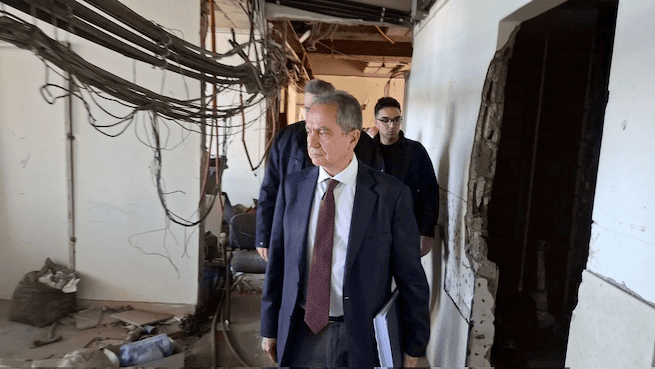
Electricity should instead be where that cycle is broken. Energy minister Joe Saddi has correctly identified much of the problem. Lebanon lacks generating capacity, Électricité du Liban struggles to collect what it bills, substantial quantities of electricity disappear through theft and other non-technical losses, and private investors demand payment and political-risk protection before committing capital. Saddi paints the macroeconomic picture well. But was his role to become a more effective advocate for EDL inside cabinet, or to use independent regulation, competition and private capital to make EDL’s generation monopoly progressively unnecessary?
Lebanon has had the legislative basis for that transformation since Law 462 of 2002. The Electricity Regulatory Authority was envisaged more than two decades ago, and the process leading to its appointment began before the present government. The question is what Lebanon intends to do with it. A genuinely independent regulator could have moved investment decisions away from EDL and ministerial discretion towards transparent licensing, predictable grid access, competitive procurement and enforceable tariffs. Government would still have to restructure EDL, enforce payment and provide sufficient contractual credibility for investors.
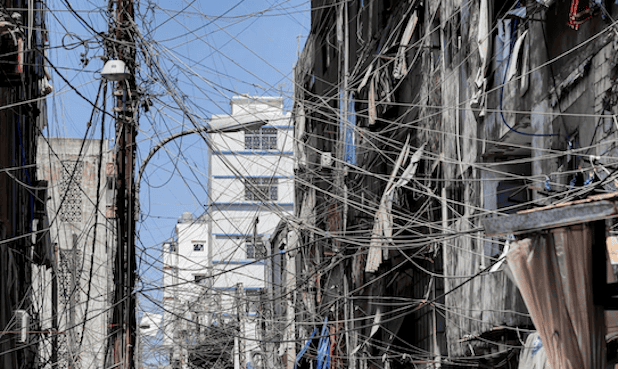
There is another monopoly reform should have challenged: the parallel diesel-generator economy created by EDL’s failure, where consumers often have little choice of supplier. Saddi has sought to regulate it, but the real answer is to destroy its economic rationale. And surely the minister is aware of what this failure now means at household level: how many Lebanese families have reduced their private-generator subscription to as little as 2 amperes simply because they can no longer afford more? Reliable, competitively financed grid power would simultaneously weaken EDL’s generation monopoly and the local monopolies that prosper from its failure. Lebanon should not regulate scarcity more efficiently; it should abolish the scarcity that sustains them.
The economics illustrate what is at stake. A new 825MW gas-fired plant costing an illustrative $2,000-$2,500 per kilowatt would represent about $1.65bn-$2.1bn of investment. That sounds impossible if the Lebanese Treasury is expected to finance it. It looks very different as an international infrastructure project. With 20 per cent sponsor equity, roughly $330mn-$410mn would be required from investors, potentially leaving the balance to project debt, export-credit financing and political-risk instruments. US Exim can support eligible American equipment exports, including power generation, and similar structures are commonplace in emerging-market infrastructure. So no, Lebanon does not need to find $2bn. It needs to create the regulatory and contractual conditions under which others are willing to invest it.
This is what makes Saddi’s confrontation with cabinet over roughly $300mn allegedly owed to EDL so revealing. Lebanon can continue mobilising hundreds of millions around the survival of an incumbent that has repeatedly failed to generate, meter and collect electricity efficiently, or it can expend its political capital building a market capable of mobilising billions from outside the state. Fighting for the former while proceeding cautiously on the latter risks confusing the preservation of EDL with the reform of the energy sector.
There is a wider danger. Lebanon’s economic policy increasingly risks becoming hostage to a slow process of political and security normalisation. Peace would transform the country’s investment proposition and dramatically reduce its cost of capital. It should be pursued with determination. But Lebanon cannot wait for every geopolitical risk to disappear before becoming investable. Nor can a slow-motion peace process be accompanied by a slow-motion economic policy whose principal response is to tax more heavily those who survived the collapse. Depositors have already absorbed enormous losses; businesses already finance their own electricity and other basic services. There comes a point at which additional taxation no longer finances reform but finances the failure to reform.
Lebanon can begin changing that equation now. Electricity theft can be confronted, bills collected, regulation made genuinely independent and private generators allowed to compete under contracts credible enough to attract international capital. Washington and other international partners can then be approached not simply for aid but for instruments that mobilise investment: export-credit support, political-risk protection and project finance.
That is the real fight for power in Lebanon. It is not primarily about finding another cheque for EDL but about liberating electricity from a monopoly that has made the state simultaneously producer, purchaser, regulator and ultimately payer of last resort. The country needs electricity and it needs peace, but it also needs to rediscover the ability of private capital to solve problems that an exhausted state can no longer afford to solve itself.
The measure of reform should therefore not be whether Joe Saddi succeeds in extracting another $300mn for EDL. It should be whether, five years from now, an energy minister still needs to ask for it.