



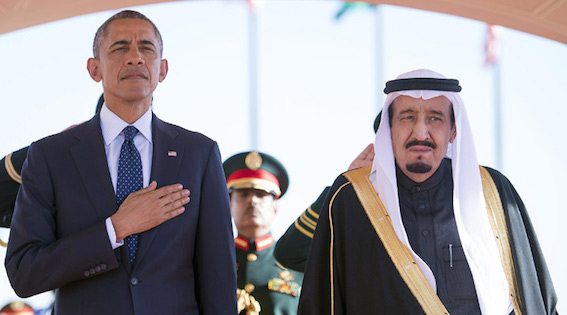
Unless the Obama administration demonstrates stronger resolve in responding to Iranian aggression, the Saudis and other Gulf monarchies will continue to take vigorous action of their own, likely in ways Washington finds unhelpful.
******************************
Saudi Arabia’s January 2 execution of prominent Shiite dissident Nimr al-Nimr was primarily for domestic reasons, but it also carried a strong foreign policy message — namely, if the United States will not stand up to Iran, Riyadh will do so on its own. Recently, the Obama administration backed off its planned response to Iranian missile tests, cancelling additional sanctions whose details had leaked to the press. Instead of new restrictions, Washington has held intensive discussions with Tehran, as reported by Iranian media outlets and mentioned by senior U.S. lawmakers who have been briefed by administration officials. Meanwhile, Iran has upped the ante, conducting provocative rocket tests in a busy shipping lane not far from a U.S. aircraft carrier.
The sanctions backpedal comes after the many administration statements during the debate over the Iran nuclear deal assuring that the United States would, in President Obama’s words, “be aggressively working with our allies and friends to reduce — and hopefully at some point stop — the destabilizing activities that Iran has engaged in.” Those words matter less to Persian Gulf leaders than the actions Washington takes to put them into effect.
Under these circumstances, it is hardly surprising that regional states would decide they must act on their own, and that their view of how to act would differ from Washington’s. As the interventions in Bahrain and Yemen have shown, the Saudis are prone to see an Iranian hand behind developments that U.S. officials believe are largely homegrown. Riyadh has long regarded Shiite protests in the kingdom’s Eastern Province as Iranian-inspired, if not directed, and the many domestic social media comments supporting Nimr’s execution demonstrate how deeply this view resonates among the Saudi public (for more on the wider Gulf flare-up with Iran, including the embassy and consulate attacks in Tehran, see “Saudi-Iranian Diplomatic Crisis Threatens U.S. Policy,” http://washin.st/1kFQyjm).
If Washington wants Riyadh to follow U.S. advice, then it will need to demonstrate that it offers a better alternative. This means taking clear action to oppose Iran’s regional meddling. The planned discussions about implementing UN Security Council Resolution 2254 will be an important test. During the October talks on Syria, Saudi suspicions about U.S. policy were enflamed by Secretary of State John Kerry’s apparent backpedaling on the U.S. demand that President Bashar al-Assad must go. At those talks, it was Riyadh, not the United States, that took the toughest stance on Assad and Iranian intervention in Syria, evidently to Kerry’s displeasure. Vigorous U.S. support for the Syrian opposition and a refusal to accept vague regime promises of reform would do much to assure the Gulf monarchies that Washington means what it said about standing up to Iran’s destabilizing activities. This reassurance would be particularly helpful as the nuclear deal moves forward and sanctions are eased on Implementation Day, expected to take place in the next few weeks.
In contrast, if the administration continues to press Saudi Arabia about Nimr’s execution and other issues while doing little about Iranian provocations, it will only reinforce Riyadh’s fear that the United States sees Tehran as its potential chief ally in the region. That would in turn further spur the Saudis to act vigorously on their own, as they have done in Yemen. In other words, the best way to stabilize the situation is for the Obama administration to demonstrate leadership in responding to Iranian aggression, because otherwise the Gulf monarchies will increasingly go off on their own — likely in ways that the United States finds unhelpful.
******************************
Patrick Clawson is the Morningstar Senior Fellow and director of research at The Washington Institute.