



Hamalawy gained international prominence as a blogger and activist during Egypt’s 2011 revolution. In this provocative book, he draws on meticulous research to paint a devastating critique of the regime that uprising produced.
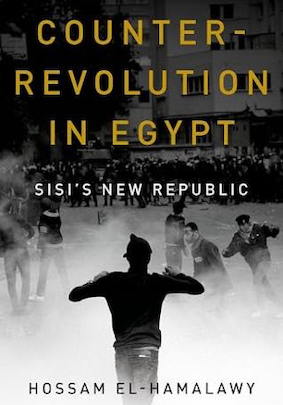
In doing so, he effectively debunks some of the conspiracy theories about the fall of President Hosni Mubarak in 2011 and President Abdel Fattah el-Sisi’s rise to power two years later. As Hamalawy shows, the Egyptian military did not deliberately permit the Muslim Brotherhood, the popular Islamist movement, to win presidential elections in 2012 in the expectation that the religious zealots would fail at governing, nor did Sisi himself agree to serve as defense minister in the Brotherhood government merely to be well placed to launch a coup in 2013.
The Egyptian military was not clairvoyant, but it did adapt quickly to protect its own interests.
Hamalawy contends that Sisi’s “Second Republic” differs from earlier military regimes in Egypt in how it perceives threats. Whereas previous Egyptian presidents organized their militaries to “coup-proof” their governments, institutionalizing rivalries among services, Sisi is bent on making his rule “uprising-proof.” He sees peril not in foreign enemies or in disgruntled officers but in disaffected citizens.
His largely unified military government rules without a political wing, a functioning parliament, or any other element of an independent civil society or private business sector, relying on the ubiquitous security services to root out and extinguish even loyal opposition.