



Masaad Boulos Moves Through the World’s Most Volatile Rooms Without Making a Sound — and That Is Precisely the Point
*By Special Correspondent*
There is a particular kind of power that announces itself with silence. It does not arrive at press conferences or linger in cable news green rooms. It does not grandstand before Senate committees or leak artfully to friendly journalists. It moves instead through corridors that have no cameras, speaks in rooms where no official transcript is ever produced, and delivers its most consequential messages in tones barely above a whisper — and yet those messages are heard, distinctly and durably, by the people who matter most.
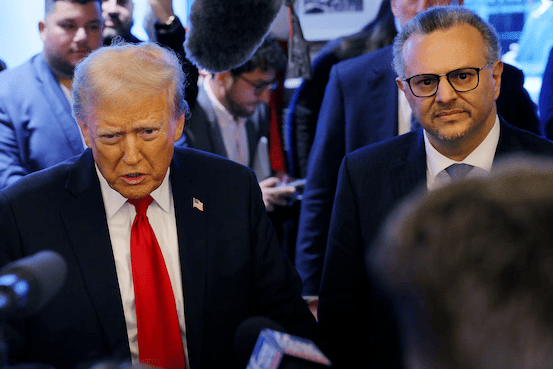
Dr. Masaad Boulos, President Donald Trump’s senior adviser for Africa and the Middle East, is that kind of operator. And in an administration that has at times resembled a carnival of competitive visibility — where proximity to the president is measured in retweets and rivals jockey for position through carefully staged public performances — his mode of operating stands out precisely because it is so conspicuously understated.
That understatement is not a personality quirk. It is a method. And it is working.
The Architecture of Quiet
To understand Masaad Boulos, it helps first to understand what he is not.
He is not Tom Barrack — the private equity executive and longtime Trump associate whose enthusiasm for personal relationships with Arab Gulf leaders eventually produced a federal indictment for acting as an unregistered foreign agent. And he is most certainly not Senator Lindsey Graham, whose periodic eruptions about Lebanon’s army commander carry the diplomatic precision of a foghorn: loud enough to be heard everywhere, useful precisely nowhere.
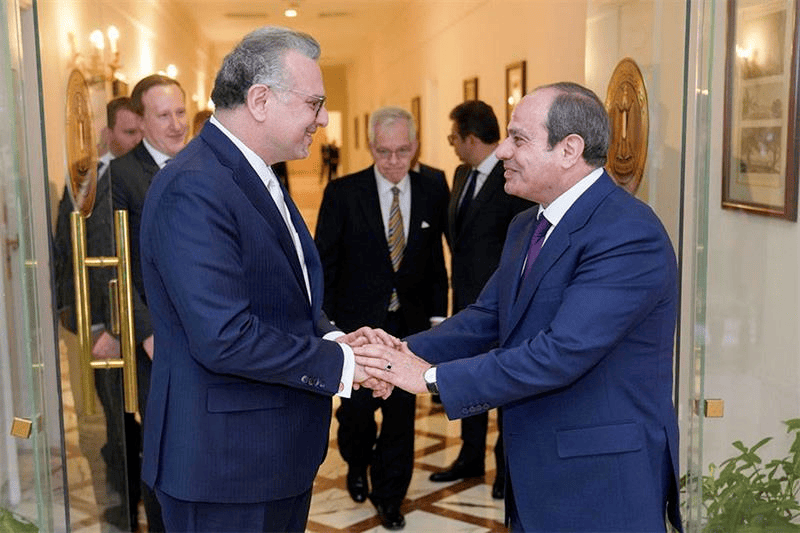
Boulos is none of these things. He is something considerably rarer in Washington’s ecosystem — a man who understands that in diplomacy, as in surgery, the difference between healing and harm is often not what you do, but how, and whether, you are seen doing it.
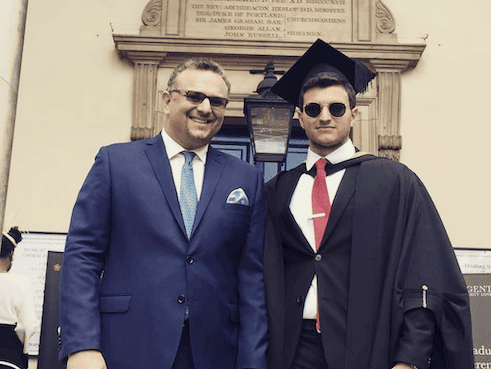
His entry into the Trump orbit is, of course, inseparable from family. His son Michael is married to Tiffany Trump, making Masaad Boulos, in the peculiar geometry of the Trump world, something between a family patriarch and a trusted confidant of the president himself. That proximity could easily have become a liability — an invitation to the kind of nepotistic overreach that has characterized corners of this and other administrations. Instead, Boulos appears to have treated that proximity as something to be handled carefully, even reverently, the way a craftsman handles a tool of exceptional but easily misused power. He has not leveraged the family connection for visibility. He has used it, apparently, for access — and then deployed that access with notable discretion.
This is not a common instinct in Washington, where access is almost invariably converted into performance.
Born Into Complexity
Masaad Boulos was born into a Lebanese Greek Orthodox Christian family — a community whose historical experience is, in itself, a masterclass in the arts of survival, negotiation, and strategic ambiguity. The Greek Orthodox community of Lebanon occupies a singular position in the country’s impossibly fractured confessional landscape: neither the politically dominant Maronites nor the numerically ascendant Shia, it has historically cultivated relationships across sectarian and national lines with a pragmatism born of necessity. It has produced merchants, intellectuals, physicians, and diplomats whose worldview was forged in the understanding that survival in the Levant requires the capacity to speak to everyone without being owned by anyone.
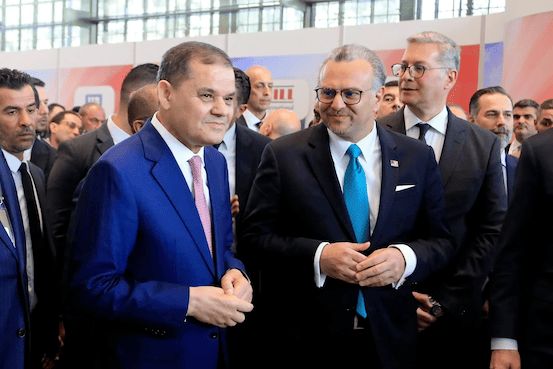
That inheritance is not incidental to who Boulos is. It is foundational. A man raised in that tradition learns early that rigid public positions are luxuries that smaller communities cannot afford, that the most durable relationships are built in private rather than proclaimed in public, and that the capacity to be trusted by parties who distrust each other is the most valuable political asset a person can possess.
He later built a substantial business career, with his family’s pharmaceutical and commercial interests extending across West Africa and the broader Arab world — an operational biography that gave him something no Washington think tank fellowship can replicate: actual, working relationships with the political and business elites of the regions he now advises on, accumulated over decades rather than assembled through briefing books.
When he arrived in the formal orbit of American foreign policy, he did not arrive as an outsider learning the terrain. He arrived as someone who had been quietly walking it for years.
The African Canvas
Africa is the primary theater in which Boulos has most visibly — or rather, most invisibly — operated. And it is a theater that rewards exactly the kind of diplomatic temperament he embodies.
The African continent in the mid-2020s presents a landscape of extraordinary complexity and extraordinary stakes.
Russian military contractors, reorganized under the Kremlin’s direct command following the Wagner Group’s turbulent end, have entrenched themselves across the Sahel. Chinese infrastructure investment has created dependencies that function, in many capitals, as durable political leverage. French influence — once the organizing axis of Francophone Africa — has suffered a series of humiliating retreats from Mali, Burkina Faso, and Niger, where military governments expelled French forces with an enthusiasm that alarmed Paris and delighted Moscow. Meanwhile, the United States — distracted, inconsistent, and frequently condescending — has struggled to articulate a coherent posture toward a continent of 54 nations, 1.4 billion people, and some of the world’s fastest-growing economies and most significant strategic resources.
Into this landscape, Boulos moves with what can best be described as calibrated patience. He understands — in a way that career Washington operatives frequently do not — that African heads of state carry long memories. They remember the lectures about governance and democracy that preceded arms deals and debt restructurings. They remember the promises that evaporated. They remember, with considerable precision, which envoys came to listen and which came merely to speak.
Boulos, by multiple accounts from interlocutors in North African capitals who have engaged with his office, tends toward listening. He arrives informed. He asks questions that reveal preparation. He does not carry the American flag as a cudgel. This is not idealism — it is strategic adaptation, and it works in rooms where the opposite approach has repeatedly, expensively failed.
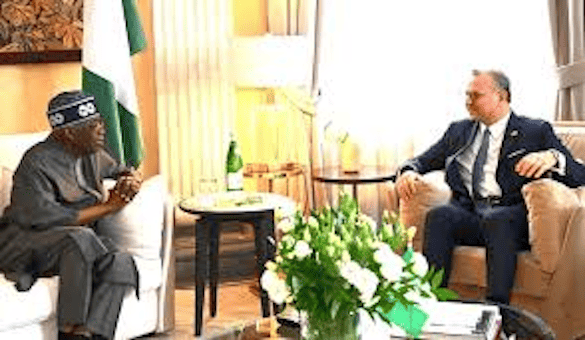
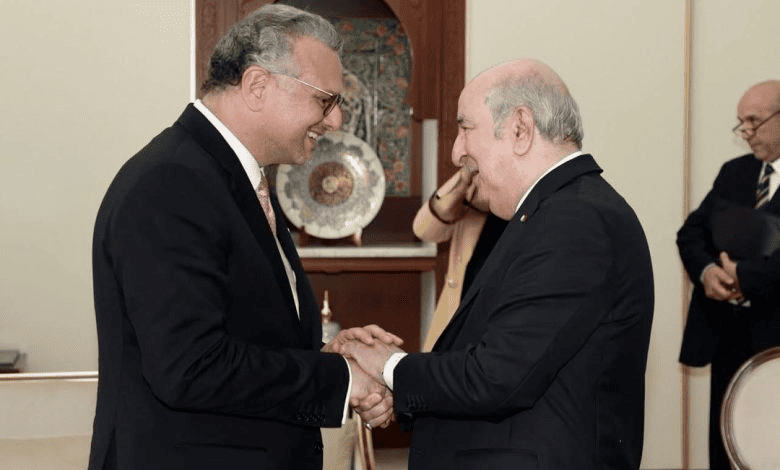
His engagement with North Africa in particular — with governments in Cairo, Rabat, Tunis, and Tripoli — reflects an understanding that these are sovereign interlocutors rather than subjects of American foreign policy management. Egypt’s leadership, navigating the impossible triangulation between Washington, Beijing, and its own regional security calculus, has found in Boulos an American official capable of frank private conversation without the ritual performance of public conditions and demands. Morocco, whose participation in the Abraham Accords created both diplomatic opportunities and delicate internal complications, requires interlocutors of exceptional subtlety. Boulos appears to provide exactly that.
The French Connection
Perhaps the most diplomatically revealing relationship Boulos maintains — certainly the one most illustrative of his method — is the one he has carefully cultivated with Emmanuel Macron.
This is, on the surface, counterintuitive. The second Trump administration has not been tender with France. Macron has been the recipient of public condescension on Ukraine, trade friction over tariff policy, and the broader ideological antagonism that the Trump political project directs toward European multilateralism. The Washington-Paris relationship has had, to put it with diplomatic restraint, considerably better chapters.
And yet Boulos maintains direct, working lines of communication with the Élysée on African policy — matters on which France, despite its recent humiliations in the Sahel, remains a significant actor with formidable intelligence assets, deep historical relationships, and residual leverage that the United States cannot simply wish away or replace overnight.
Lebanon: The Art of Healthy Distance
The Lebanese-American community is vocal, organized, factionalized, and — like many diaspora communities navigating the politics of a broken homeland — capable of generating enormous pressure on figures it perceives as holding proximity to power.
In Boulos’s case, that pressure would be exceptional by any measure. He is close to the President of the United States. If any Lebanese-American figure in Washington were positioned to insert personal Lebanese political preferences into the highest levels of American foreign policy, the structural opportunity is entirely his.
And yet, by all credible accounts, he has declined it. He has maintained a studied distance from Lebanese factional politics — not the performative distance of a carefully worded press release, but the operational distance of a man who has evidently concluded that becoming Lebanon’s American advocate would cost him precisely everything that makes him genuinely useful to anyone, including, ultimately, Lebanon itself.
Boulos’s healthy distance from this theater is precisely what gives his occasional, carefully chosen engagements on Lebanon their specific gravity. When he speaks about Lebanon — reportedly and quietly, in the internal counsels of the administration — he is heard as someone who carries no faction to protect, no future appointment to secure, no diaspora constituency to satisfy at the expense of clarity. He is heard, in Washington’s terms, as honest. In an environment populated by advocates wearing the clothes of analysts, that quality is both rare and enormously valuable.
Precedents in Quiet Power
To locate Boulos within a broader historical tradition is to find a lineage that is distinguished but never long, because Washington and the capitals of the democratic West have rarely been institutionally patient enough to sustain it.
The closest American precedent may be Harry Hopkins — Franklin Roosevelt’s most intimate adviser, who traveled to Moscow in 1941 carrying no official title and immense actual authority. Hopkins sat with Stalin and communicated American intentions with a directness and personal credibility that no formal diplomatic channel could have replicated, precisely because he occupied that peculiar, powerful interstice between the personal and the official.
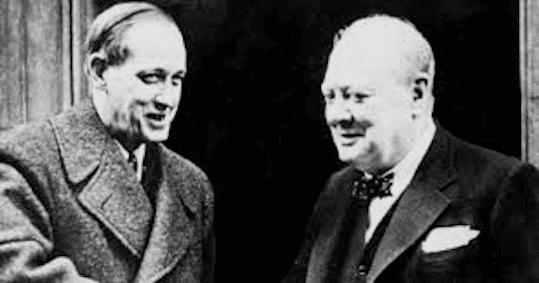
Looking to Europe in the early decades of the twentieth century, the tradition runs deeper and finds sharper parallels. Philippe Berthelot, the Secretary-General of the French Foreign Ministry from 1920 to 1932. Berthelot’s power was entirely relational, constructed on trust, on the consistent quality of his private analysis, and on a reputation for saying in private only what he could sustain and defend in private — never performing for audiences he did not have, never sacrificing the long relationship for the short advantage.
Boulos operates in a similar interstice in the contemporary American context. He is not a Secretary of State, not a National Security Adviser, but something simultaneously more personal and, in specific contexts, more effective than either: a man the president trusts, who travels to places where the president’s official representatives are not entirely trusted, who can say — and crucially, hear — things that official channels cannot carry without distortion.
The Value of the Whisper
There is a final observation worth making — one that reaches beyond the particular figure of Masaad Boulos and touches something the contemporary moment has largely, and at some cost, forgotten.
The environments where Boulos operates — the royal courts of the Gulf, the presidential palaces of North Africa, the chancelleries of a sub-Saharan Africa increasingly unwilling to be managed from abroad — are environments that respond poorly to public pressure and considerably better to respected private counsel. They are environments where the form of a communication carries as much information as its content, where face is not vanity but a serious political resource, and where a message delivered with appropriate discretion is worth many times more than the same message delivered as a public ultimatum.
That the Trump administration — not generally celebrated for its lightness of diplomatic touch — has found and retained someone capable of operating effectively in these environments is, in its way, noteworthy. That the person in question has managed to remain effective by systematically and apparently cheerfully resisting the various gravitational forces that routinely pull Washington figures toward the spotlight is more noteworthy still.
In the end, what distinguishes the quiet diplomat from the merely silent one is not reticence but purpose — not the absence of ambition but the discipline to pursue it without the performance. Whether history will record Masaad Boulos as a consequential figure depends on outcomes not yet fully determined, in regions whose trajectories remain genuinely uncertain. What can be said with confidence now is that the method is serious, the discretion appears genuine, and the results — in several theaters where America’s louder instruments have repeatedly and expensively failed — appear to be real.
In the city of the perpetual announcement, the whisper, it turns out, carries further than anyone expects.