
Close Menu
    Facebook Instagram LinkedIn
    • العربية (Arabic)
    • English
    • Français (French)
    Facebook Instagram LinkedIn
    Middle East Transparent
    • Home
    • Categories
      1. Headlines
      2. Features
      3. Commentary
      4. Magazine
      5. Cash economy
      Featured
      Headlines Yusuf Kanli

      Mojtaba Khamenei: From silent heir to Supreme Leader

      Recent
      13 March 2026

      Lebanon’s failure to disarm Hezbollah keeps doing greater damage

      12 March 2026

      Mojtaba Khamenei: From silent heir to Supreme Leader

      8 March 2026

      Did Iran just activate Operation Judgement Day?

    • Contact us
    • Archives
    • Subscribe
    • العربية (Arabic)
    • English
    • Français (French)
    Middle East Transparent
    You are at:Home»Categories»Headlines»Israeli MI Chief: Another War Would Turn Lebanon Into ‘A Country of Refugees’

    Israeli MI Chief: Another War Would Turn Lebanon Into ‘A Country of Refugees’

    0
    By Haaretz on 15 June 2016 Headlines

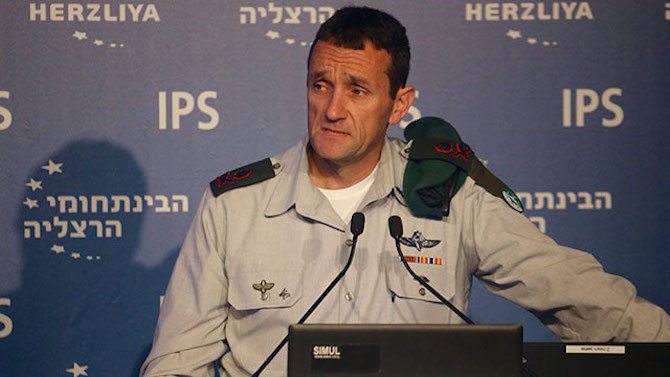
    Military Intelligence chief Herzl Halevi said Wednesday that another war with Lebanon’s Hezbollah would be much harsher for the home fronts on both sides.

    “If there is another war, Israel will recover and rebuild,” Halevi said at the annual Herzliya Conference at the IDC Herzliya.

    “We are a strong society, an advanced society. Lebanon will become a country of refugees that will have difficultly recovering, and Hezbollah will lose its political support base.”

    Halevi said further that the next conflict may already be in the making because Syria has resumed manufacturing weapons expressly for Hezbollah, contravening the terms of the United Nations-backed ceasefire that ended the Second Lebanon War in 2006.

    “Hezbollah has put its hands here and there on ammunition of the sort it hadn’t had access to previously,” Halevi told the conference.

    He  said that Syrian military industries had resumed weapons production, for Hezbollah, adding that these arms were “not for the fighting in Syria, it is weaponry meant for combat against Israel.”

    “The world shouldn’t accept this, it is a violation of Security Council Resolution 1701, passed after the Second Lebanon War, and Israel shouldn’t accept it, either. To a certain extent this could move up the outbreak of another round of conflict.” 

    Halevi said Iran was also providing Hezbollah with weaponry, which he referred to as strategic arms.  He said these transfers were being carried out under the cover of providing aid for the war in Syria, but that some of these weapons are actually being transferred to Lebanon. “This is also something that neither the world nor us should ignore,” he said.

    Halevi said the next war would be different from the conflict a decade ago with Hezbollah and the 2014 Gaza war against Hamas and its allies.

    “The next war in the north will be essentially different, not just from the Second Lebanon War and Operation Protective Edge, but from the Yom Kippur War and what came before that. In the Yom Kippur War we had a single casualty on the home front from a rocket from Syria,” Halevi said.

    “In the next war, it will be a whole different situation. We are stronger than ever in relation to our enemies. We will cope with any challenge. But it’s important to know that the way to achieve this will not be easy or simple. As happens in wars, there will be a price.”

    Regarding Israeli intelligence on Hezbollah, Halevi said: “I say with all due caution that I think that never before has an army known as much about its enemy as we know about Hezbollah. But the next war will not be simple or easy.”

    Halevi also mentioned the January 2015 incident in which two Israeli soldiers were killed by Hezbollah fire.

    “It’s not certain that Hezbollah understood the full potential for casualties in this incident,” he said. “If it had, the response would have been different … and today on the radio we’d be talking about the third war with Hezbollah.”

    Halevi said Israel was still clearly the strongest player in the region.

    “Maybe because of the Holocaust we still carry this feeling of persecution … but in the region we are perceived as very, very strong, as aggressive and unpredictable and very powerful,” he said. “It’s very important to preserve this asset.”

    Haaretz

    Share. Facebook Twitter LinkedIn Email WhatsApp Copy Link
    Previous ArticleMen’s hair takes centre stage in battle over legitimacy of political Islam
    Next Article Even With Confession of Cheating, World’s Doping Watchdog Did Nothing
    Subscribe
    Notify of
    guest
    guest
    0 Comments
    Newest
    Oldest Most Voted
    Inline Feedbacks
    View all comments
    RSS Recent post in french
    • Le Liban entre la logique de l’État et le suicide iranien 3 March 2026 Dr. Fadil Hammoud
    • Réunion tendue du cabinet : différend entre le Premier ministre et le chef d’état-major des armées, qui a menacé de démissionner ! 3 March 2026 Shaffaf Exclusive
    • En Arabie saoudite, le retour au réalisme de « MBS », contraint d’en rabattre sur ses projets pharaoniques 27 February 2026 Hélène Sallon
    • À Benghazi, quinze ans après, les espoirs déçus de la révolution libyenne 18 February 2026 Maryline Dumas
    • Dans le nord de la Syrie, le barrage de Tichrine, la forteresse qui a résisté aux remous de la guerre civile 17 February 2026 Hélène Sallon
    RSS Recent post in arabic
    • 500 ألف دولار شهريا لنبيه برّي لدعم نفوذ إيران في بيروت 12 March 2026 إيران إنترناشينال
    • بالفيديو والصور: بلدية صيدا “قَبَعت” القرض الحسن من شارع رياض الصلح! 12 March 2026 خاص بالشفاف
    • “طارق رحمن”: الوجه الجديد في عالم التوريث السياسي 12 March 2026 د. عبدالله المدني
    • صفقة التمكين الأخيرة: السودان ينزع عباءة الأيديولوجيا تحت وطأة المقصلة الأمريكية 12 March 2026 أبو القاسم المشاي
    • سكان بلدة مسيحية بجنوب لبنان يطالبون الجيش بحمايتهم من حزب الله واسرائيل 11 March 2026 أ ف ب
    26 February 2011

    Metransparent Preliminary Black List of Qaddafi’s Financial Aides Outside Libya

    6 December 2008

    Interview with Prof Hafiz Mohammad Saeed

    7 July 2009

    The messy state of the Hindu temples in Pakistan

    27 July 2009

    Sayed Mahmoud El Qemany Apeal to the World Conscience

    8 March 2022

    Russian Orthodox priests call for immediate end to war in Ukraine

    Recent Comments
    • hello world on Between fire and silence: Türkiye in the shadow of a growing regional war
    • بيار عقل on Did Iran just activate Operation Judgement Day?
    • Kamal Richa on When Tehran’s Anchor Falls, Will Lebanon Sink or Swim?
    • me Me on The Disturbing Question at the Heart of the Trump-Zelensky Drama
    • me Me on The Disturbing Question at the Heart of the Trump-Zelensky Drama
    Donate
    © 2026 Middle East Transparent

    Type above and press Enter to search. Press Esc to cancel.

    wpDiscuz