




As several states seem to experiment with opening up, Iran has made headlines as one of the countries experimenting with a gradual reopening of the country. However, the Iranian regime’s consistent mishandling of the crisis raises the question of whether this reopening too will be mismanaged, and whether the country will reach a point where the alienation felt by the Iranian public be enough to be a major tipping point for the regime.
Iran’s failures during the coronavirus crisis has presented a sort of existential crisis for the regime. Its early inability to admit to, much less contain the outbreak—and its subsequent inability to manage the public health response required by COVID19, have shown the regime’s indifference to the wellbeing of the its own people, steadily increasing the public’s sense of alienation.
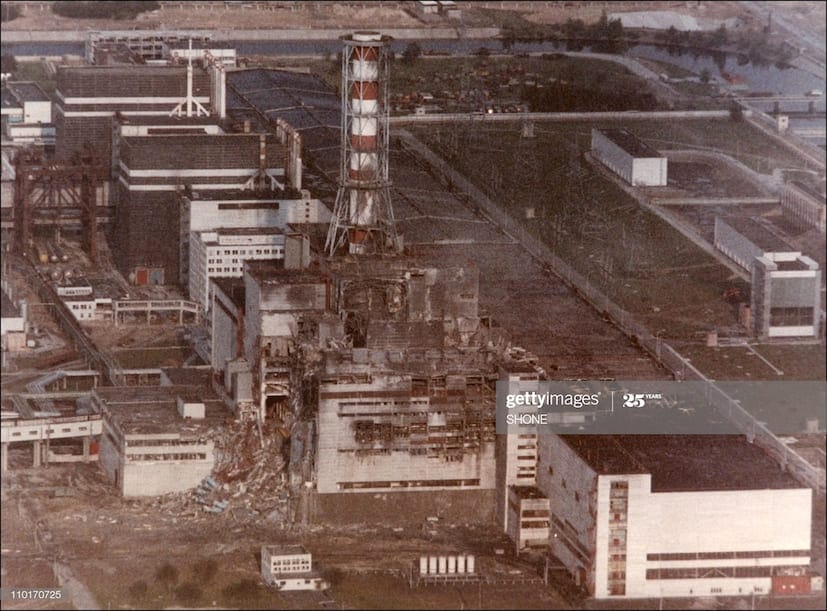
The catastrophe that has unfolded in Iran is in several ways reminiscent of history’s worst nuclear accident, which occurred in the former Soviet Union just 34 years ago. Many mark the Chernobyl nuclear disaster, which killed thousands, as the moment that led to the downfall of the Soviet Union five years later. More than anything else, the 1986 Chernobyl disaster helped the people of Soviet Union realize that they had been systematically lied to by the Soviet regime for over 70 years. As Soviet leaders scrambled to cover up the disaster, their denials and concurrently slow efforts to contain the leak demonstrated a willingness to sacrifice human lives in order not to embarrass the state. This undeniable reality as the Chernobyl disaster became too large to hide and prompted even loyal citizens to question their government—this stark example of state failure helped the entire system begin to unravel.
The slow reaction of the current Iranian Regime, like Soviet leaders, revealed their total disregard for their own people, gradually shattering the illusion of supremacy. In the former USSR, this disillusionment opened a path to a stronger “Perestroika,” which in turn unraveled the mechanisms of fear that had helped keep the regime apparatus in place. And while the dynamics of the two states are different in many ways, the stakes of a potential Chernobyl moment in Iran are just as high for the region and the world.
Notably, COVID19 has come at an already perilous moment for the Iranian state. Over the past six months, Iran has been forced to raise taxes in response to crippling economic sanctions and expenses associated with the revolutions in Lebanon in Iraq against Iranian-backed elements, and Iranian proxies in the ongoing wars in Syria and Yemen. Last November, gasoline prices jumped three-fold, sparking public outrage. Protests erupted in over 140 cities and towns calling on the government to reverse the taxes and change the overall policy agenda with cries such as, “We wish to live in Iran and not to die in Syria.” The regime responded to the riots by killing over 1,500 protestors and arresting thousands more.
Shortly after this violent clampdown, Qassem Soleimani—Iran’s most revered military commander and overseer of the Islamic regime’s proxy wars in Syria, Lebanon, and Yemen—was unceremoniously killed by a U.S. drone. Following the initial shock, the regime tried to capitalize on his death by staging a massive funeral. However, even the funeral for Iran’s most powerful military commander was used against its own people, as 75 people were crushed to death during the procession. The IRGC’s attempt to respond to the attack also triggered the accidental shooting down of a civilian Ukrainian Airline plane, killing all 175 passengers on board—many of whom were Iranian citizens. The act and subsequent attempted coverup sparked both domestic and worldwide condemnation of the regime, especially after initial attempts by the Iranian government to cover up its involvement.
In the face of these growing signs of slipping control within the state, the Iranian regime attempted to boost public morale by showcasing a large turnout during its February parliamentary elections. The official voter turnout numbers were revealing: despite repeated appeals by the supreme leader, the election showed the lowest voter turnout in more than four decades. Video clips from across the nation showed empty voting stations with very few people participating in the election.
What only became clear later was the Iranian government’s willingness to mask yet another crisis—the coronavirus. The mishandling of the crisis became more evident as the number of infections and deaths mounted. As of April 23, the number of cases reached 87,026 documented cases and 5,481 deaths.
Understandably, Iranians are scared and confused. Many officials have tested positive for the virus, including the head of Iran’s counter-coronavirus task force. The head of the coronavirus task force, Iran Harirchi, gave a news conference where he downplayed the severity of the outbreak, claiming the virus would not touch Iran and that “Quarantines belonged to the Stone Age.” Shortly after his speech, Haririchi was diagnosed with the virus and put under quarantine. Denials from numerous officials, like Haririchi, gave the virus plenty of time to spread in Iran and beyond to the region. The virus has also continued to move through the government, infecting and killing several lawmakers, council members, and other high-ranking officials.
Public comments have pointed to Qom, one of Iran’s holiest cities and home to top Shia clerics and seminaries, as the origin of the coronavirus in Iran. Shrines in Qom stayed open despite civilian health authority’s advice, which has been attributed to the spread of the virus to other cities. The varying statistics from Qom further highlight Iran’s repeated attempts to lie about the outbreak. Suspicions around the actual number of deaths from the virus arose when Qom representative Ahmad Amiranadi Farahani told the Iranian Labour News Agency (ILNA) that 50 people have died since February 13, contradicting Iran’s official claim that only 12 have died since February 19. Farahani also confessed that “the performance of the administration in controlling the virus has not been successful” and “So far, I have not seen any particular action to confront the coronavirus by the administration.”
Compounding the crisis was the Iran regime’s decision to continue many international flights long after the question of closing borders was relevant. As neighboring countries closed their borders with Iran to stop the spread of the coronavirus, Iran continues to fly the Iranian Revolutionary Guard Corps’ Mahan Air to several Chinese cities despite the widespread ban in late January on flights to China. Mahan Air has also been used to transport weapons and resources on behalf of the Quds Force – but this time, it appears to have brought the coronavirus as well.
With coronavirus now impacting much of the world, Iran’s own early challenges—and the regime’s failure to address them—the question now becomes what Iranian citizens will take away from their experience with coronavirus. Reflecting on the Chernobyl disaster, Gorbachev himself wrote: “The nuclear meltdown at Chernobyl… even more than my launch of perestroika, was perhaps the main cause of the Soviet Union’s collapse five years later. Indeed, the Chernobyl catastrophe was a historic turning point: there was the era before the disaster, and there is the very different era that has followed.”
As the Iranian regime’s “Annus Horribilis” comes to an end, the Iranian people are left abandoned under a system that continues to strive for a revolution that no longer serves in the interests of the younger generation, which now make up a majority of the population. Unlike the fall of the Soviet Union, the Iranian regime shows little will for “Perestroika.” However, as the current ‘status quo’ is dismantled another Chernobyl moment may be lurking beneath the surface. As many struggle to imagine the global changes that will unfold post-coronavirus, this eventuality should be understood as a unique opportunity for the Iranian people, who have already returned to the streets to express their outrage, to demand change. This time, perhaps, with the momentum necessary to force a shift from revolution to restructuring.
Shayan Arya
Shayan Arya is an Iran expert and Human Rights activist and a member of the Constitutionalist Party of Iran (Liberal Democrat).
Nir Boms
Dr. Nir Boms is a co-founder of CyberDissidents.org and a research fellow at the Dayan Center for Middle East Studies.