



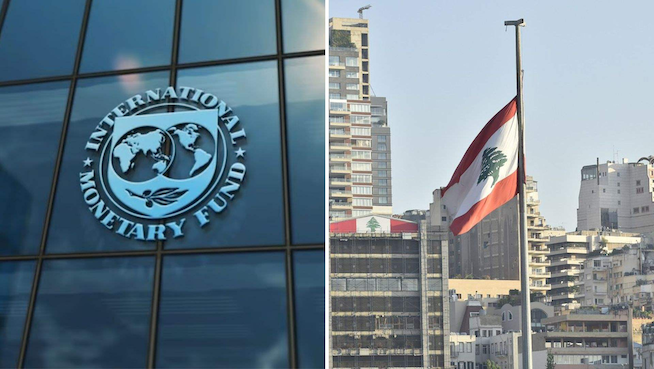
When reform becomes a Trojan horse: the failure of IMF governance prescriptions in a politically captured state.
The collapse of Lebanon’s banking sector was not caused by flaws in the Code of Money and Credit itself. Rather, it was the result of decades of malpractice, weak oversight, and collusion between political authorities and monetary institutions. Existing checks and balances were ignored, circumvented, or rendered ineffective through poor governance and a complete failure of accountability.
Contrary to the prevailing narrative, power was never concentrated solely in the hands of the Governor of the Central Bank. The law vested significant authority in the Central Council, a collective decision-making body composed of the Governor, Vice Governors, and ex officio government representatives. The Council was specifically designed to exercise oversight and ensure accountability. Its failure to effectively supervise the Governor over more than three decades enabled misconduct, regulatory abuse, and the misapplication of the law. By definition, this was a failure of governance and professional responsibility—not a failure of the legal framework itself.
Yet today, the proposed remedy appears to rest on the assumption that the problem was excessive concentration of authority within the Central Bank. The IMF is advocating for a new banking law whose central objective is to dilute the authority of the Governor and distribute powers among multiple bodies in the name of improved governance and international best practices.
The IMF’s push for reform is rooted in a legitimate objective: strengthening governance within Lebanon’s banking sector and aligning its regulatory framework with internationally recognized standards. The logic behind dispersing authority, enhancing oversight mechanisms, and reducing excessive concentration of power is understandable. In principle, stronger governance structures should reduce the risk of abuse and improve institutional accountability.
The problem, however, lies not necessarily in the IMF’s objectives but in the way these reforms are being adapted and implemented within Lebanon’s political environment. As pressure mounts to amend banking laws and governance structures, local political actors have sought to introduce additional provisions that expand their own influence over key institutions. These changes appear to go well beyond the governance principles being promoted by the IMF, yet they have not attracted the same level of scrutiny or objection.
This creates a significant risk. Reforms intended to strengthen independence can be transformed into vehicles for political domination. Measures presented as improvements in governance may, in practice, create new channels through which political forces can exert influence over regulatory and supervisory bodies. The result could be a system that appears more sophisticated on paper while becoming less independent in reality.
In that sense, some of the proposed amendments resemble Trojan horses embedded within an otherwise legitimate reform agenda. Under the banner of improving governance, they introduce mechanisms that could deepen political involvement in institutions that are supposed to operate independently of political power. Rather than insulating the banking sector from political interference, these provisions risk institutionalizing it.
If left unaddressed, the unintended consequence may be the exact opposite of what the reforms are meant to achieve: a banking sector governed by more committees, more procedures, and more formal oversight structures, yet one that remains vulnerable to political capture. Governance reform that increases political leverage is not reform at all; it is simply political influence operating under a different name.
One of the most consequential changes is the expansion of the powers of the Higher Banking Commission, the body responsible for overseeing bank restructuring, mergers, and liquidation procedures. Under the proposed law, the Commission would gain substantial influence over the future of financial institutions and, in certain circumstances, could affect the regulatory actions of the Central Bank itself.
The fundamental question, however, is not how powers are distributed on paper, but how institutions are staffed and how the law is implemented in practice. If members of the Higher Banking Commission continue to be appointed through the same political mechanisms that have characterized public appointments for decades, the result will not be better governance. On the contrary, accountability may become even more diluted as responsibility is spread across a larger number of actors, making it harder to identify and punish misconduct.
The government’s draft law grants three ministers—the Ministers of Finance, Economy, and Justice—the authority to appoint “experts” to the Higher Banking Commission. These political appointees would sit alongside the Director General of the Ministry of Finance, an independent judge, the Governor of the Central Bank, and two Vice Governors, including the First Vice Governor.
As a result, four members of the Commission would be directly linked to, or heavily influenced by the political establishment. This raises serious concerns regarding the Commission’s independence and, by extension, the independence of the Central Bank itself. These members would have the ability to influence meeting quorums, shape decisions regarding which banks survive or fail, and affect regulatory outcomes with significant economic consequences.
The concern is not merely theoretical. The Higher Banking Commission is the ultimate authority that will decide the fate of distressed banks, oversee restructuring and liquidation processes, and influence the future shape of Lebanon’s banking sector. Giving political actors greater influence over such a body risks turning what should be a technical and independent process into one shaped by political considerations, patronage networks, and competing interests.
Although the proposal represents a legal change, it should not automatically be mistaken for genuine reform. Rather than strengthening institutional independence, it risks reinforcing Lebanon’s traditional system of power-sharing, confessional balancing, and political patronage by introducing additional layers of influence into the banking sector.
The risks become even more pronounced in the current political environment. If the law is enacted while Hezbollah and its allies continue to exert significant influence over state institutions, appointments to these powerful commissions are likely to reflect prevailing political realities rather than merit, competence, or independence. Those selected will inevitably be individuals deemed acceptable to the dominant political forces and those seeking accommodation with them.
Given that members would serve five-year mandates, these appointments could shape the reconstruction of the banking sector for an entire generation. Five years is sufficient time to redesign the sector, influence market structure, determine winners and losers, and entrench new centres of power. It is also enough time to gradually recreate many of the conditions that led to the original crisis.
The urgency surrounding the law’s adoption and the rush to fill these positions should therefore be viewed with caution. What is presented as a governance reform may, in practice, become a mechanism for institutionalizing political influence within the financial system for years to come. The race to pass the law and appoint members to these newly empowered bodies is also a race to shape who controls the banking sector during the reconstruction phase. Once these appointments are made, their influence will extend far beyond the current political cycle.
By dispersing authority across multiple commissions and bodies while simultaneously weakening clear lines of accountability, the proposed framework risks creating the perfect environment for the continuation of the very malpractice it claims to prevent. Responsibility will be fragmented, accountability diluted, and political influence embedded more deeply within institutions that are supposed to act independently.
Lebanon does not suffer from a shortage of laws, committees, or regulatory bodies. It suffers from a shortage of accountability. The country’s banking collapse was not caused by an absence of institutions; it was caused by the failure of those institutions to perform their duties and the absence of consequences when they did not.
A new banking law may create new commissions, redistribute powers, and introduce new governance structures. But if the same political forces continue to control appointments, influence decisions, and evade accountability, Lebanon will simply have a new banking law serving the same old system.
And that is not reform. It is merely a reorganization of responsibility without a transformation of governance.