



Shaffaf Exclusive
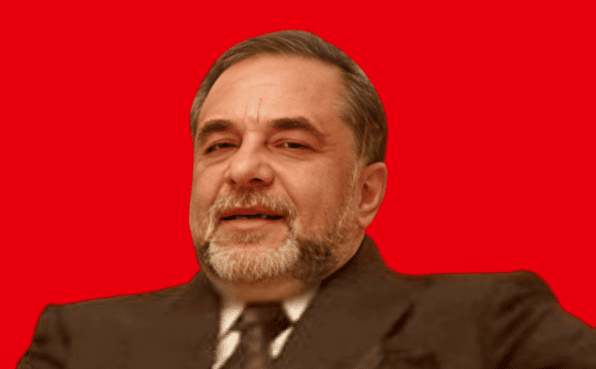
Over the course of Michel Aoun’s presidency, one name quietly but persistently threaded its way through Lebanon’s most sensitive political and financial deals: Alaa Al Khawaja. Little known to the broader public before 2016, Al Khawaja emerged as a key broker linking Riyadh, Amman, Beirut, and the Lebanese banking sector. Today, his name has resurfaced after being listed among the individuals targeted by a new case launched by Lebanon’s central bank governor.
This article reconstructs Al Khawaja’s trajectory as it is commonly described by people familiar with his activities: from his early days in Jordan and Egypt, to his entrance into Lebanon’s political economy, his central role in the “presidential compromise,” and finally his controversial acquisition of BankMed and subsequent banking practices.
Regional Operator: From Jordan and Egypt to Beirut
Alaa Al Khawaja is a Jordanian businessman who built his early power base around proximity to Gulf and Jordanian royal circles. He was part of the entourage of Prince Sultan bin Abdulaziz Al Saud, former Saudi Crown Prince and Minister of Defense. Through that court, he reportedly developed a close relationship with Bassem Awadallah, the former Jordanian finance minister and royal court chief, who later became an advisor to Saudi Crown Prince Mohammed bin Salman (MBS). Awadallah himself would eventually be jailed by King Abdullah II of Jordan over what Amman described as an attempted coup plot.
Before appearing on the Lebanese scene, Al Khawaja spent significant time in Egypt. There, he cultivated business interests until the 2011 revolution. After the upheaval, he fled Egypt and sought to re‑establish himself elsewhere. Lebanon, with its combination of weak institutions, powerful banks, and a political system dependent on external patronage, provided fertile new ground.
First Steps in Lebanon: Banks and Gatekeepers
Al Khawaja’s initial institutional foothold in Lebanon came through the banking sector. His early banking relationship was with Fransabank, where he maintained a close personal relationship with Nadim Kassar, a key figure in the bank.
But it was the Hariri network that would ultimately propel him to the centre of Lebanese politics. Al Khawaja was first introduced to Mohammed Hariri, a prominent member of the Hariri family’s business circles, through a prominent Lebanese businessman.
Mohammed Hariri, in turn, introduced Al Khawaja to Saad Hariri, the former Prime minister. This introduction came at a particularly delicate moment: relations between Saad Hariri and MBS were deteriorating rapidly. That prolonged tension would culminate in November 2017, when Hariri was dramatically detained in Riyadh and forced to announce his resignation before eventually returning to Beirut under international pressure.
It was during this moment of regional and domestic strain that Al Khawaja positioned himself as a useful intermediary and problem‑solver for multiple sides. According to sources, “He never brought any money to Lebanon” Riad Salameh once said
Architect of the Aoun–Hariri “Compromise”
One of the most consequential episodes in which Al Khawaja played a key role was the election of Michel Aoun to the Lebanese presidency in 2016. After a presidential vacuum lasting more than two years, a so‑called “compromise” deal was hammered out: Aoun would become president for six years, and Saad Hariri would serve as prime minister for the duration of Aoun’s term.
According to people familiar with the negotiations, Al Khawaja was instrumental in pushing Aoun to power, moving between Aounist circles, the Hariris, and regional actors. For his contribution in facilitating Aoun’s path to the presidency, he was reportedly rewarded with a bundle of lucrative contracts in the energy and telecommunications sectors.
These state‑linked contracts deepened his entanglement with the Lebanese banking system—particularly with Bank Audi, which became the financing hub for his government‑related ventures.
The Audi Connection: Financing, Offices, and Influence
Bank Audi was not just a lender for Al Khawaja; it effectively became his financial base of operations. All of his major government contracts, especially those in energy and power, were financed through Audi.
The relationship grew so close that Al Khawaja was reportedly given an office inside Bank Audi’s headquarters—an unusual privilege that underscored how central he had become to the bank’s state‑related business.
Inside Audi, his principal contact on the energy and power file was Carole Ayat, a senior bank figure who later emerged as a known technocrat in the energy field. Al Khawaja went so far as to push for Ayat to be appointed minister of energy, a post that has long been at the heart of Lebanon’s chronic electricity crisis and patronage system. The attempt ultimately failed, but it reflected his ambition not just to benefit from state contracts, but also to influence who oversaw them.
According to sources, Alaa Al Khawaja was also deeply involved in the controversial Karpowership (Karedeniz) power‑ship deal, under which floating electricity plants supplied power to Lebanon at great cost and amid allegations of corruption and political favoritism. His ties to Michel Aoun and Gebran Bassil—Aoun’s son‑in‑law and the dominant figure in the Free Patriotic Movement—were, by this stage, well‑established.
Enter BankMed: A Convenient Buyer Appears
Parallel to his growing influence in government contracts, Al Khawaja moved into banking ownership in a spectacular fashion.
By 2016, Ayman Hariri—son of the late Rafik Hariri and brother of Saad—wanted to exit his stake in BankMed, one of Lebanon’s largest banks. Finding a serious buyer able to absorb a transaction in the range of half a billion dollars proved difficult in a market already showing signs of strain.
Al Khawaja stepped forward, presenting himself to Mohammed Hariri as someone capable of executing a $500 million deal. The due diligence on BankMed was handled not by an independent external firm, but by Bank Audi itself, underlining how tightly woven Lebanon’s banking and political elite had become.
At the time the deal was taking shape, central bank governor Riad Salameh’s term was nearing its end, and his reappointment was uncertain. While Saad Hariri supported Salameh’s renewal, President Aoun did not. The issue required approval by the cabinet, making it a core bargaining chip.
According to individuals familiar with the transaction, Bank Audi’s chief executive Samir Hanna insisted on Salameh’s reappointment as a “condition precedent” for Audi to grant the massive loan that Al Khawaja needed to acquire the BankMed stake. This tied together three elements in one knot: Al Khawaja’s rise as a banking owner, Salameh’s survival at the central bank, and Aoun–Hariri political horse‑trading.
Financing the Deal: No Equity, Borrowed Power
Despite presenting himself as a $500 million buyer, Al Khawaja reportedly had no equity of his own for the BankMed acquisition. To bridge the gap, he turned to the Rahme brothers, who provided an estimated $80–100 million in equity.
The remainder—around $400 million—came in the form of loans, largely through Bank Audi. This structure left Al Khawaja highly leveraged and heavily dependent on cash flow from BankMed itself to service his obligations.
The strain this created would later manifest in aggressive demands on BankMed for dividends and loans to entities connected to him. In essence, the target bank’s own resources became critical for financing the purchase of its shares.
Capture from Within: Board, Management, and Political Appointees
Once the deal was approved and structured, Al Khawaja moved quickly to consolidate control inside BankMed by reshaping its board and senior management.
He appointed several board members and key figures with clear political and regulatory connections, including:
– Maya Dabbagh, former chairwoman of the Banking Control Commission of Lebanon (BCCL).
– Several of his own associates in management.
Most notably, he pushed out long‑serving CEO Mohammed Ali Beyhum and installed Raoul Nehme as the new chief executive. Nehme was known as an Aounist and close to MP Jamil al‑Sayyed. During the Diab government formed after the 2019 uprising, Nehme was appointed minister of economy and played a central role in the subsidy policies that are widely believed to have squandered around $20 billion of Lebanon’s remaining foreign reserves.
Another Al Khawaja‑backed figure, Tania Musallam, also an Aounist, was placed in a senior role at the bank. Through these appointments, BankMed was effectively pulled into the gravitational field of Aounist and allied networks, while simultaneously serving as a financial cornerstone for Al Khawaja’s highly leveraged ownership structure.
Dividends, Liquidity, and the Pre‑Crisis Squeeze
By 2018, against the recommendations of both BankMed’s own board and the central bank (BDL), Al Khawaja pushed through the distribution of more than $100 million in dividends via the bank’s General Assembly. This move significantly squeezed the bank’s liquidity at a time when signs of systemic stress in Lebanon’s banking sector were already clear to insiders.
The dividends, in practice, helped service the financing of the acquisition and strengthened Al Khawaja’s cash position and that of his partners, at the potential expense of the bank’s resilience and depositors’ long‑term security.
In parallel, he continued to exert pressure on BankMed for additional loans and facilities to entities associated with him, further entangling the bank’s balance sheet with his personal ambitions.
Crisis, Arbitrage, and Informal Rackets
When Lebanon’s financial crisis exploded fully in 2019, banks imposed informal capital controls, depositors were blocked from freely accessing their savings, and a chaotic system of multiple exchange rates emerged.
Within this environment, Al Khawaja is widely reported to have organized a profitable internal operation at BankMed, exploiting bank cheques and the BDL’s “Sayrafa” platform—an official but distortive exchange mechanism that allowed privileged access to foreign currency at subsidized rates. Through cheque trading and Sayrafa arbitrage, a vast, informal racket is said to have taken shape, enabling insiders to realize enormous gains while ordinary depositors saw their life savings evaporate. The main company that had all the kickbacks and commissions go through at BankMed was called “الطاهرة” that is “the immaculate”.
While much of this activity has not yet been formally adjudicated in court, it is an open secret in banking and political circles that many actors profited from these loopholes. Al Khawaja’s name frequently appears among those most associated with such practices.
From Merchant of Influence to Target: The Central Bank Case
In recent developments, the governor of the central bank launched a legal case targeting several individuals for their role in Lebanon’s financial meltdown and related irregularities. Alaa Al Khawaja was among those listed.
For many observers, his inclusion is emblematic. His trajectory encapsulates the core features of Lebanon’s collapse:
– A political system based on external patronage and opaque compromises.
– A banking sector that abandoned prudence to finance politically connected deals.
– The blurring of lines between regulator, borrower, and shareholder.
– The monetization of crises through privileged access to arbitrage mechanisms and opaque financial engineering.
From a Jordanian operator close to Saudi and Jordanian elites, to a key broker of the Aoun–Hariri presidential deal, to a heavily leveraged buyer of a systemic bank, and finally to an alleged organizer of crisis‑era financial rackets, Al Khawaja’s story is not just about one man. It is a case study in how personal networks, political bargains, and banking power combined to help bring Lebanon to the brink.
Conclusion
Alaa Al Khawaja’s ascent and current legal exposure highlight how deeply intertwined Lebanon’s political leadership, banking elite, and foreign patrons have become. His role in energy contracts, the Karpowership deal, the Audi‑financed state projects, and the BankMed acquisition reflects a model in which public resources and financial institutions were systematically repurposed to serve private, politically connected interests.
Whether current legal actions will seriously probe that model, or simply recycle blame within the same ecosystem, remains to be seen. What is clear is that the “merchant of influence” offers a rare window into the mechanisms that transformed Lebanon’s political compromise into financial catastrophe.
Very interesting but it doesn’t say that they took loan in LBP at 2%