


Istanbul–
Careful when you mock Jensen Huang. Even honeypotters get honeypotted.
The Jensen Huang affair, starring the golden boy of the American chip industry, has reminded many of history’s honeypots. Mata Hari, Anna Chapman and so on..
Mind that when it comes to love, as an old Turkish song has it, “the bullet doesn’t ask for an address.” Not even when you are the honeypot yourself.
A story from 1960s Lebanon that never got the attention it deserves shows just that.
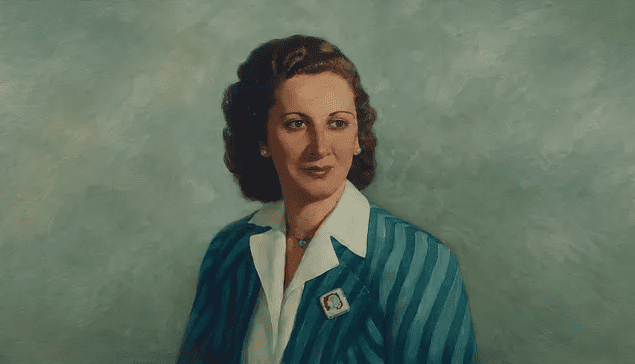
Shulamit Cohen was born in Buenos Aires in 1917, the daughter of Meir Azra Cohen, an Egyptian Jewish businessman who had emigrated to Argentina. Even as a child she was known for her blue eyes, her striking presence and how easily she talked to people. She picked up Arabic in a small Lebanese neighbourhood of Buenos Aires.
At sixteen she was married off to Joseph Kishik, a Lebanese Jew. His family lived in Wadi Abu Jmil, the Jewish quarter of Beirut, and she moved there. She would have seven children with him.
A bored, sharp teenager, married into a city that ran on gossip.
The stories of Jews fleeing Nazi Europe and making aliyah moved her, and she decided on her own initiative to help Jewish migration.
On the eve of Israel’s founding, the Jewish Agency was short of assets in the Arab world. Some say the marriage to Kishik was a cover from the start.
Through her husband’s shop on Hamra Street, she found a merchant travelling to Palestine and gave him a sheet of paper written in invisible ink, a trick she had learned as a girl scout.
“I am Shula Cohen. I am a Jew from Beirut and I want to help you.”
Weeks later she got her first assignment: hide a man. Soon she was sheltering Jews on their way to Israel and sending them on by different routes. Between 1946 and 1948 she had found an overland route for Jewish migration.
According to her own memoirs, she went to dead drops in the south while pregnant, belly out in front of her, to meet Jewish agents in a small village. Notes in invisible ink went out by carrier pigeon.
The replies came over Israeli radio: a broadcast of certain passages from an Abdel Halim Hafez song told her whether a message had arrived. Sometimes her handlers in Israel wrote to her through a Beirut pharmacy, in ink, on the back of the label of a medicine bottle.
One day in 1947, some Lebanese officials discussed military plans against Israel within her earshot. She sent it to Israel on a slip of paper tied to a pigeon’s leg.
To make all this work, she was in touch with a lot of people in the Lebanese bureaucracy. She had men in the customs authority for forged passports.
Rumour had it she was as close to Camille Chamoun as a daughter. We still don’t know how much of these connections she actually used. The Israelis say the point was less what she did than the fact that she was there. Someone could tell Ben-Gurion: we have spies in the heart of Lebanon.

When the Lebanese authorities tightened the border, she switched to the sea and began sending people out on the Wednesday ship.
She opened a salon to further her business. Then came the upper echelons of society: generals, senior bureaucrats.
Some say she built a prostitution network. We can’t be sure. What we do know is that girls were employed in her salons to collect information. Some say she opened a brothel. She is also said to have used the Olympia casino as a house of assignation, especially for Phalangist leaders.
Lebanon in those days was a crossroads anyway. Arrest one young man and it turned out he had been selling information to four or five embassies. For Shulamit, useful assets were plentiful.
One of them was Simon, a man in his twenties who was tutoring her children.
In her memoirs, Simon starts working at her side and becomes key to her dealings with Israel. He sets up her meetings. Some take place in Rome. They travel together to Istanbul and Tel Aviv. He was ten years younger, but she fell in love with him. He began running some of her parties and occasions himself.

At Simon’s suggestion, Shulamit planned one more party. When the first guest of the evening knocked, she opened the door and found a gun pointed at her.
It was Simon.
Until that moment, Shula had never suspected him.
But the Lebanese, on a small budget, had by then built an intelligence service of their own: the Deuxième Bureau, staffed by senior military figures. One of them was Milad al-Qarah. Shulamit knew him, and loved him, as Simon.

By the Lebanese officials’ account, she knew karate and resisted arrest for a while.
The Pearl’s fate was not that of Eli Cohen, hanged in Syria.
The case was a great shock to Lebanese high society, and the trial was followed with enormous interest. Surprisingly, not one of the politicians caught in Shula’s web was named.
She was sentenced to death. Under international pressure, the sentence was commuted to twenty years. After the 1967 war she was exchanged for a number of Syrian, Lebanese and Egyptian soldiers, and welcomed in Israel as a heroine.
She died in 2017, at the age of 100, in Jerusalem
One of the children she had carried to those dead drops, belly out in front of her, became Israel’s ambassador to Cairo.
Love goes both ways, even when it’s a honeypot.