



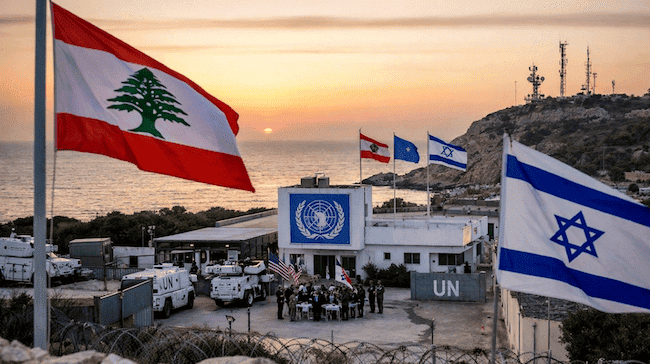
For decades, Lebanon has lived in the shadow of conflict,its borders tense, its economy strained, and its people often forced to look outward for survival. But today, with the first real signals of Israeli–Lebanese peace talks emerging in the US, something quieter yet more powerful is stirring: hope from the people themselves.
This hope is not abstract. It is deeply practical.
A new generation of Lebanese is not driven by ideology or old narratives of conflict. They are driven by something more immediate: the desire to live, work, and build a future at home. For years, Lebanon’s young professionals have scattered across the world, especially to places like Dubai, seeking stability and opportunity. In doing so, they have left behind aging parents, empty villages, and a country that increasingly resembles a summer destination rather than a lived-in home. Like Sicily in Europe, Lebanon has watched its youth depart, returning only briefly during holidays.
Peace offers a reversal of that story
If borders open and relations normalize, the economic implications could be transformative. Israel’s economy—valued at roughly $500 billion in GDP—stands in stark contrast to Lebanon’s, which has contracted to under $20 billion after years of crisis. This gap is not just a statistic; it represents potential. Israel has become a regional hub for technology, innovation, and especially AI. For Lebanese, highly educated, multilingual, and globally experienced, this proximity could unlock unprecedented employment opportunities.
Instead of uprooting their lives to work abroad, Lebanese professionals could commute, collaborate, and contribute within the region. The idea of being able to build a career while staying close to family is not just appealing, it is deeply human. Many would return from abroad almost immediately if that possibility became real.
Tourism, too, tells a compelling story. Lebanon and Israel share one of the most historically rich and geographically compact coastlines in the world. Imagine a future where tours begin in Beirut, wind through Byblos and Tyre, and continue seamlessly into Haifa and Jerusalem. Such a corridor would be among the most visited cultural routes on earth, benefiting both nations and reshaping how the world experiences the region.
And perhaps most importantly, peace could be inclusive. For Lebanon’s Shia population, often living in regions most affected by conflict, open borders could mean access to jobs, trade, and mobility that have long been restricted. Participation in a peace-driven economy could deliver tangible improvements in daily life, making stability not just a political concept but a lived reality.
What makes this moment unique is where the momentum is coming from. In other regional examples, such as Egypt or Jordan, peace agreements exist at the governmental level, but people-to-people engagement remains limited. Lebanon may be different. Here, there is a growing sense that the public, especially the younger generation, is ready for peace even if political structures lag behind.
This is what makes it powerful. It is not imposed peace. It is desired peace.
At its heart, this hope is about more than economics. It is about choosing to bury decades of inherited hostility and imagining a different regional identity, one defined not by conflict, but by collaboration. A Middle East that becomes a hub for AI, entrepreneurship, and shared prosperity is no longer an impossible dream; it is a logical next step if barriers fall.
And so, this moment calls for courage, not from the people, who have already shown their readiness, but from those in power. Lebanese politicians must listen carefully to their youth, to their diaspora, to the quiet but growing consensus that the time for change is now. This is a rare alignment of economic necessity and popular will. It should not be ignored.
To Lebanon’s leaders: this is your moment to rise above the past and build the future your people are asking for. You carry not only the responsibility of governance, but the possibility of transformation.
We send our wishes of strength and wisdom to all those involved in these efforts. And we recognize the role of leadership in opening this door, praise to President Joseph Aoun for helping bring this opportunity into reality.
May this be the beginning of something lasting, something human, and something hopeful.