



A new UN initiative appears to be taking shape around Erhürman’s insistence that failure must not mean a return to the old status quo. Yet diplomacy alone cannot bridge Cyprus’ divisions. Any real settlement will require a painful process of reciprocal concessions, mutual recognition and political courage from both communities, as well as Ankara and Athens.
Cyprus has entered one of those rare periods when diplomacy appears to be moving faster than the political inertia that has long defined the island’s unresolved conflict. The return of United Nations Secretary-General António Guterres’ Personal Envoy María Ángela Holguín, the prospect of an enlarged 5+1 conference later this summer, growing European engagement and cautiously positive signals from Ankara have combined to create a sense that a new effort may be emerging. For the first time in years, diplomats are discussing not merely how to keep the Cyprus issue alive but how to construct a process capable of producing tangible political movement.
That alone represents a significant change. The Cyprus problem has never lacked diplomatic attention. What it has lacked is a framework capable of surviving the predictable moments of crisis that have repeatedly derailed negotiations. From the Annan Plan to Crans-Montana, ambitious efforts have collapsed under the weight of unresolved questions concerning political equality, governance, security and implementation. Each failure left both communities more sceptical and further entrenched in their respective narratives. The challenge facing Holguín and the United Nations today is therefore not simply to restart negotiations, but to persuade the parties that another attempt will not end where every previous attempt ended.
Diplomatic sources suggest that this recognition is shaping the emerging UN approach. The strategy document currently being developed through consultations in Nicosia, Ankara, Athens, Brussels and New York is expected to provide the foundation for a possible new process. While details remain closely held, the broad objective appears to be clear: if a new initiative is launched, it must be built on a more durable political logic than those that preceded it.
Erhürman’s framework gains ground
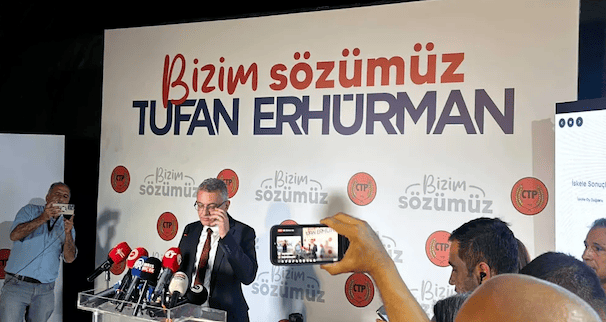
One of the most notable developments in recent months has been the growing prominence of the four-point methodology advocated by Turkish Cypriot leader Tufan Erhürman. Following his meeting with Holguín, Erhürman reiterated that the Turkish Cypriot side would not participate in a process that failed to address four core concerns: political equality must be accepted from the outset, negotiations must operate within a clearly defined timeframe, previous convergences must be preserved and, crucially, a collapse of talks must not simply restore the existing status quo.
These principles are often presented as Turkish Cypriot conditions, but they are increasingly being viewed by diplomats as an attempt to address structural weaknesses that have plagued Cyprus negotiations for decades. Erhürman himself suggested that there were positive signs, noting that Turkish Cypriot expectations appeared to be “accommodated” and “internalised” by the ongoing consultations. While he stopped short of declaring optimism, his comments reflected a belief that the United Nations is listening more carefully than in previous years to concerns that have often been dismissed as procedural obstacles.
The significance of this should not be underestimated. One of the recurring frustrations voiced by Turkish Cypriots has been that international diplomacy frequently focused on persuading them to return to negotiations without addressing why confidence in negotiations had eroded in the first place. The result was a growing perception that talks themselves had become an objective rather than a means to achieve a settlement. By placing questions of political equality, timelines and post-failure arrangements at the centre of the discussion, the emerging framework appears to be responding directly to that criticism.
Why “No return to the status quo” matters
Among Erhürman’s four principles, the most consequential may be the insistence that failure should not automatically return Cyprus to the political reality that existed before negotiations began. This concept, while simple in formulation, represents a potentially significant departure from the traditional logic of Cyprus diplomacy.
For many Turkish Cypriots, the defining lesson of the last two decades is that participation in peace processes has carried substantial political risks without producing corresponding benefits. The 2004 Annan Plan referendum remains a particularly powerful reference point. Turkish Cypriots voted in favour of the United Nations proposal, while Greek Cypriots rejected it. Yet the internationally recognised Republic of Cyprus entered the European Union shortly thereafter, while Turkish Cypriots remained politically isolated and outside many of the economic opportunities they believed would follow a positive vote.
The collapse of the Crans-Montana negotiations in 2017 reinforced that sense of frustration. Despite years of negotiations and significant progress on a number of substantive issues, the process ultimately failed. Once again, the island reverted to familiar positions, and the political landscape remained largely unchanged. For many Turkish Cypriots, this raised a fundamental question: why engage in another open-ended process if failure simply restores the same status quo?
It is therefore significant that diplomats increasingly speak of phased implementation, incremental gains and mechanisms designed to preserve progress even in the absence of a comprehensive settlement. Such ideas remain speculative and no formal proposal has yet emerged. Nevertheless, they suggest a growing recognition that negotiations can no longer be built on the assumption that everything must wait until a final agreement is achieved. A process that generates practical benefits and gradually builds confidence may ultimately prove more resilient than one dependent upon a single dramatic breakthrough.
The limits of one-sided empathy
Yet no diplomatic framework, however innovative, can overcome the deeper psychological obstacles that continue to divide the island. At the heart of the Cyprus problem lies not only a dispute over territory, governance or security, but also a profound disagreement over history itself. The persistence of competing narratives remains one of the greatest barriers to reconciliation.
Greek Cypriot political discourse understandably focuses on the trauma of 1974. The displacement of populations, the loss of homes and property, the presence of Turkish troops and unresolved questions relating to missing persons remain central components of collective memory. These experiences are real, legitimate and deserving of recognition. No durable settlement can ignore them.
The difficulty arises when the dominant narrative effectively begins in July 1974 and leaves little room for the experiences that shaped Turkish Cypriot political consciousness during the decade that preceded it. A peace process built exclusively around the memory of 1974 inevitably struggles to explain why Turkish Cypriots continue to insist on political equality, security guarantees and effective participation in governance. For Turkish Cypriots, the collapse of the 1960 partnership republic, intercommunal violence, exclusion from state institutions, forced displacement and years spent in enclaves are not historical footnotes. They are foundational experiences that continue to shape attitudes towards security, political equality and power-sharing.
To acknowledge these experiences does not diminish Greek Cypriot suffering. It simply recognises that both communities carry historical wounds that remain politically relevant today. A sustainable peace process cannot be built on selective empathy. It is impossible to demand that Turkish Cypriots understand Greek Cypriot fears while dismissing Turkish Cypriot fears as exaggerated or obsolete. Equally, Turkish Cypriots cannot expect Greek Cypriots to ignore their own historical trauma in the name of reconciliation. The challenge is not to determine whose suffering was greater, but to recognise that both communities emerged from the conflict with deeply rooted insecurities that must be addressed simultaneously.
Europe may matter more outside the negotiating room
Holguín’s upcoming meetings with Turkish Foreign Minister Hakan Fidan in Ankara and Greek Foreign Minister Giorgos Gerapetritis in Athens may prove particularly important in determining whether the emerging initiative acquires real political substance. While the Cyprus negotiations formally belong to the two communities under UN auspices, experience has repeatedly shown that no meaningful progress is possible without active support from the guarantor powers, especially Türkiye and Greece.
Diplomatic sources note that Holguín’s mission is no longer confined to assessing the positions of the two Cypriot leaders; it is increasingly focused on testing the extent to which Ankara and Athens are prepared to support a more ambitious framework and, perhaps more importantly, whether they are willing to encourage difficult decisions when the process reaches its inevitable moments of political friction. The Ankara and Athens consultations are therefore likely to be more than routine briefings. They may ultimately determine whether the emerging UN initiative evolves into another exploratory exercise or acquires the political backing necessary to become a genuine negotiating process. The outcome of these consultations is expected to play a significant role in shaping the strategy paper that will eventually be placed before Secretary-General Guterres and could determine the scope and ambitions of the enlarged 5+1 meeting later this summer.
Another notable feature of the current diplomatic environment is the growing involvement of the European Union. While neither Ankara nor the Turkish Cypriot side supports the idea of the EU becoming a formal participant in negotiations, there is increasing recognition that Brussels may have an important role to play outside the negotiating framework itself.
The interest shown by European Council President António Costa, European Commission President Ursula von der Leyen and EU foreign policy chief Kaja Kallas reflects a broader shift in European strategic thinking. Cyprus is no longer viewed solely as an unresolved intercommunal dispute. It has become linked to questions of energy security, Eastern Mediterranean stability, maritime jurisdiction, NATO-EU cooperation and the future of EU-Türkiye relations. The war in Ukraine, instability across the Middle East and growing concerns over Europe’s strategic vulnerabilities have further reinforced the island’s geopolitical significance.
Some diplomatic circles have even begun quietly discussing whether a future settlement could eventually be anchored within a broader European and transatlantic security framework, replacing older security concepts with arrangements more compatible with contemporary realities. While such ideas remain highly speculative and politically sensitive, they illustrate the extent to which Cyprus is increasingly being viewed through a wider regional security lens rather than solely as an intercommunal dispute.
Against this backdrop, the NATO Summit scheduled to take place in Ankara on 7-8 July assumes added significance. Costa and von der Leyen are expected to be among the participants and, according to diplomatic sources, have already sought a meeting with President Recep Tayyip Erdoğan on the margins of the summit. Although the agenda will be dominated by European security, Ukraine, defence cooperation and regional crises, Cyprus is expected to feature prominently among the issues discussed. The summit will therefore provide an important opportunity to assess whether the emerging convergence between the United Nations, the European Union and the guarantor powers can be translated into practical political support for a renewed peace effort.
In this context, the European Union possesses tools that could help create a more favourable environment for compromise. Progress on Customs Union modernisation, renewed high-level dialogue with Türkiye, energy cooperation and measures aimed at reducing the isolation of the Turkish Cypriot community could all contribute to a more constructive political atmosphere. Such steps would not resolve the Cyprus problem, but they could reduce some of the incentives that encourage maximalist positions on both sides and help create the political space necessary for difficult compromises.
Peace requires more than good intentions
The renewed diplomatic momentum has inevitably generated expectations. Yet one lesson emerges clearly from decades of failed negotiations: goodwill alone is insufficient. Every major Cyprus initiative has been launched by leaders who publicly expressed support for peace. Every major initiative has eventually encountered the political costs associated with compromise.
This reality is particularly visible in Greek Cypriot debates. A frequently voiced question is: “What do we get?” It is an entirely legitimate question because any settlement would require difficult concessions relating to governance, power-sharing, territory and security. Yet the same question can be asked from the Turkish Cypriot perspective. Since 1964, the internationally recognised Republic of Cyprus has remained under Greek Cypriot control. Since 2004, it has also enjoyed the benefits of European Union membership. For many Greek Cypriots, these realities are often viewed as the minimum that should be preserved. For many Turkish Cypriots, however, they are evidence that the burdens and benefits of the status quo have never been distributed equally. Turkish Cypriots continue to live outside the structures of international recognition. Any serious discussion of compromise must therefore take account of both perspectives rather than assuming that only one side is being asked to make difficult choices.
This is why a successful process will require more than carefully drafted communiqués. It will require a willingness by both communities to move beyond entrenched narratives and acknowledge that peace inevitably involves sacrifice. No settlement will provide either side with everything it wants. The only realistic objective is an arrangement that addresses the fundamental concerns of both communities while allowing neither to achieve total victory.
The hardest challenge: Preparing society
Perhaps the greatest obstacle facing any new initiative lies not in the negotiating room but in society itself. One of the most thoughtful concerns raised by commentators on both sides of the island is that citizens remain largely unprepared for the compromises that a settlement would require. Political leaders frequently discuss diplomatic processes, meetings and frameworks, yet rarely engage in sustained public conversations about the substance of a possible agreement.
This creates a dangerous disconnect. Negotiations are conducted by leaders, but settlements are ultimately judged by voters. If public opinion is not prepared for difficult choices, even the most sophisticated diplomatic framework can collapse at the referendum stage. The experience of 2004 demonstrated that international support and diplomatic momentum cannot compensate for the absence of societal ownership.
If a new process is genuinely beginning to take shape, then preparing public opinion may be as important as preparing the negotiations themselves. Both communities will need honest conversations about what peace would look like, what compromises would be required and why those compromises might ultimately serve their long-term interests better than the continuation of division.
The window is open, but not forever
As Holguín travels from Nicosia to Ankara, Athens, Brussels and New York, there is a sense that Cyprus may once again be approaching an important diplomatic crossroads. The convergence of UN engagement, growing European interest, changing regional dynamics and a more structured discussion about the foundations of a future process has created an opportunity that did not exist only a year ago.
Opportunities, however, are not outcomes. The history of the Cyprus problem is littered with moments when momentum appeared unstoppable until political realities intervened. What will determine the success of the current initiative is not the number of meetings held, statements issued or conferences convened, but whether the parties are finally prepared to confront the difficult questions they have spent decades postponing — questions of power, security, equality, recognition and trust.
There is now movement. There is effort. There is even hope. But hope has never been the scarce commodity in Cyprus. The scarce commodity has always been the willingness to transform hope into political courage. Whether this new initiative succeeds will ultimately depend on whether both communities are finally prepared to do precisely that.