



Shaffaf Exclusive:
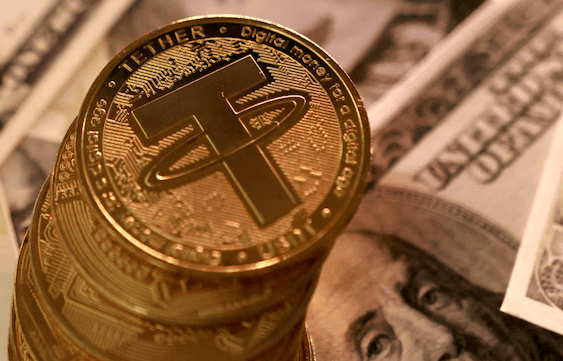
In Beirut’s trading hubs, a parallel financial system is no longer emerging, it is already in place. Small and medium-sized enterprises (SMEs), squeezed by a dysfunctional banking sector, are increasingly bypassing traditional channels altogether, settling international transactions in USDT, the dollar-pegged stablecoin.
What began as a workaround has evolved into a structural shift. For Lebanese importers, USDT is faster, cheaper, and more reliable than the formal banking system. Transfers that once took days and incurred high fees can now be executed in minutes at a fraction of the cost. In a country where access to dollars is restricted and confidence in banks has collapsed, the appeal is obvious.
But what makes USDT efficient for businesses is precisely what makes it dangerous for policymakers.
Lebanon runs a chronic trade deficit, importing far more than it exports. This imbalance creates a constant demand for dollars, forcing the central bank into a defensive position—trying to conserve scarce foreign currency reserves and limit capital outflows. In such an environment, control over dollar liquidity is not just a policy objective; it is a necessity for financial survival.
The growing use of USDT is quietly undermining that control.
With stablecoins, dollar flows are no longer routed through the banking system, where they can be monitored, regulated, or slowed. Instead, they move through decentralized networks beyond the immediate reach of monetary authorities. Every transaction settled in USDT effectively represents a potential dollar outflow that bypasses oversight.
This is not a marginal trend. Roughly 98% of the $315 billion global stablecoin market is denominated in US dollars, meaning USDT and similar assets are, in practice, shadow dollar systems. In Lebanon, they are becoming an unregulated pipeline for external payments, particularly for imports, the very channel through which dollars already leave the country at scale.
The consequence is clear: the central bank could lose visibility and control over capital flows at a time when it can least afford it.
Other emerging markets are moving to contain this risk. Brazil, for example, has imposed a $100,000 cap on certain USDT foreign transfers, signaling a broader effort to tighten oversight as digital dollar alternatives grow. These policies reflect a recognition that stablecoins are not just a fintech innovation, they are a monetary challenge.
Lebanon, by contrast, remains largely unregulated in this space.
This absence of oversight raises two immediate concerns. First, stablecoins may be weakening already fragile capital controls by enabling businesses to move value offshore outside formal channels. Second, they risk creating a parallel economy where transactions, particularly trade finance, escape taxation altogether.
Whether authorities are tracking these flows is unclear. If they are not, a significant portion of external trade may already be occurring beyond the reach of the Ministry of Finance.
There is also a broader risk flagged by central bankers globally: the use of stablecoins for illicit finance. While Lebanese SMEs are primarily using USDT for legitimate commercial purposes, the same infrastructure can facilitate money laundering, sanctions evasion, and other forms of financial misconduct, especially in a low-regulation environment.
Yet the dilemma is stark. For businesses, USDT is not speculative, it is functional. It keeps supply chains moving in an economy where the banking system no longer performs its core role. Attempting to restrict its use without fixing the underlying financial system risks further economic paralysis.
Still, inaction carries its own cost.
Lebanon is effectively allowing a parallel dollar system to expand unchecked—one that accelerates capital outflows, erodes monetary oversight, and potentially weakens the state’s fiscal capacity. In an economy already strained by dollar scarcity, this is not just a regulatory blind spot; it is a growing macroeconomic vulnerability.
The rise of USDT in Lebanon is not merely a story of innovation under pressure. It is a signal that the state is losing its grip on the most critical lever it has left: control over dollars.