




As Hanukkah lights flicker against the winter darkness of December 2025—illuminating menorahs from New York synagogues to Paris apartments—Walter Benjamin’s Grand Hôtel Abysse remains fully operational. Its sumptuous lobbies still offer elite comfort perched on the edge of the void, where intellectuals savour exquisite meals while gazing serenely into absurdity.
“There is no document of civilization that is not at the same time a document of barbarism,” Benjamin warned, exposing the barbaric underside of progress itself.
He formulated this indictment in his final Theses on the Philosophy of History, later edited by Hannah Arendt after his death in 1940. Benjamin aimed not only at triumphant politicians but also at the intelligentsia—those, like the Frankfurt School exiles, who clung to the consolations of progress while history collapsed beneath their feet. Their faith in historical inevitability, in rational administration and moral alignment, proved powerless against fascism’s machinery.
Benjamin himself paid the price. Despite holding precious papers, he was swallowed by the French internment system. Friends hesitated; bureaucracies stalled; Vichy indifference prevailed. After an arduous trek through southwestern France, he reached Portbou on the night of September 26, 1940, only to be told that the Spanish border was closed and that he would be returned and sent to camps. That night, Walter Benjamin took a lethal dose of morphine.
Today, the pattern repeats.
Across the West, antisemitism surges again—sometimes openly violent, sometimes cloaked in moral abstraction. From Australia to Europe, from American campuses to British streets, Jews hide Stars of David, lower their voices, or are told—once again—that their fear is inconvenient, exaggerated, or politically compromised. Progressive allies, confident in their moral frameworks, rehearse “uncomplicated” narratives while Jewish voices are interned in the soft camps of cancellation, exclusion, and conditional solidarity.
Benjamin understood this logic all too well:
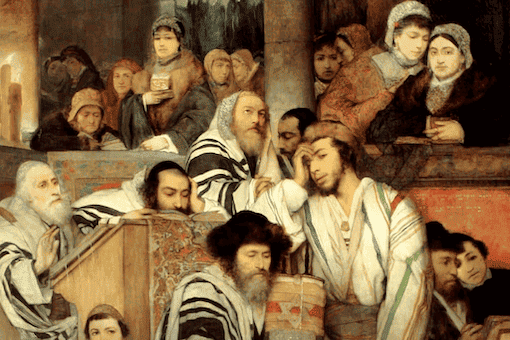
“We know that the Jews were prohibited from investigating the future. The Torah and the prayers instruct them in remembrance. This stripped the future of its magic, to which all those succumb who turn to soothsayers for enlightenment. This does not mean, however, that for the Jews the future turned into homogeneous, empty time. For every second of time was the strait gate through which the Messiah might enter.”
And yet, a “considerable part of the leading intelligentsia,” Benjamin wrote, took up residence in the Grand Hôtel Abysse—“a beautiful hotel, equipped with every comfort, on the edge of an abyss, of nothingness, of absurdity. And the daily contemplation of the abyss, between excellent meals or artistic entertainments, can only heighten the enjoyment of the subtle comforts offered.”
The guests of today’s Hôtel cling to what Benjamin called “homogeneous, empty time.” The war in Gaza fractures Jewish communities into caricatures: liberals urged to renounce Israel to remain acceptable, conservatives sensing siege and abandonment. Opinion surveys harden Israel into a pariah abstraction, stripped of history and people. Institutions once claiming enlightenment—from Paris to Berlin—once again avert their gaze from antisemitic hatred flourishing in their midst.
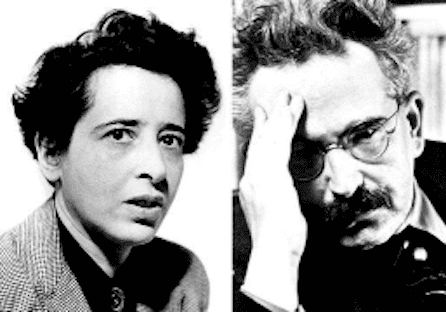
As in Weimar, integration into vast moral-bureaucratic apparatuses breeds conformity, not courage. Convenience replaces responsibility. The cost, Benjamin warned, is always exacted by history.
On this Hanukkah week, Jews return to remembrance—zikkaron—rather than the false promises of progress. The Hôtel remains open. The meals are still exquisite. But beyond its velvet curtains stands the strait gate: narrow, demanding, and ablaze with fragile light.
Like the Maccabean flame, it resists betrayal, refuses amnesia, and endures.
History demands no less.
Walid Sinno
15 December 2025
*Walter Benjamin took his own life after, having already made an arduous trek through southwestern France, precious papers in hand to allow him passage. Upon arriving in Portbou on the night of September 26, 1940, they were told at the police station that the Spanish border had been closed, and that without French exit papers they would be returned and sent to camps. That night, Walter Benjamin took a lethal dose of morphine.
Amazing Walid Sinno