
Close Menu
    Facebook Instagram LinkedIn
    • العربية (Arabic)
    • English
    • Français (French)
    Facebook Instagram LinkedIn
    Middle East Transparent
    • Home
    • Categories
      1. Headlines
      2. Features
      3. Commentary
      4. Magazine
      5. Cash economy
      Featured
      Headlines Samara Azzi

      When Tehran’s Anchor Falls, Will Lebanon Sink or Swim?

      Recent
      2 March 2026

      The Death of Khamenei and the End of an Era

      1 March 2026

      When Tehran’s Anchor Falls, Will Lebanon Sink or Swim?

      1 March 2026

      How a Call From Trump Ignited a Bitter Feud Between Two U.S. Allies

    • Contact us
    • Archives
    • Subscribe
    • العربية (Arabic)
    • English
    • Français (French)
    Middle East Transparent
    You are at:Home»Categories»Headlines»Zaporizhia, prisoner exchanges: the discreet mediation of the Emirates between Moscow and kyiv

    Zaporizhia, prisoner exchanges: the discreet mediation of the Emirates between Moscow and kyiv

    0
    By Gérard Legraud on 3 November 2022 Headlines

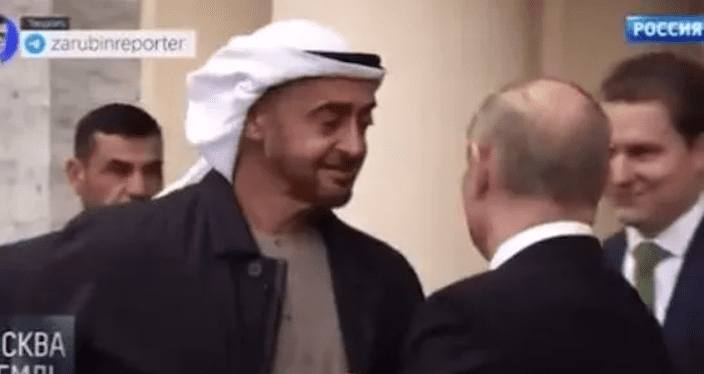
    President of the United Arab Emirates Federation, the Ruler of Abu Dhabi created a surprise two days ago by traveling to Russia for a meeting with President Putin. His goal ? Laying the groundwork for a mediation plan with Ukraine concerning, in particular, the Zaporizhia nuclear power plant. A way, also, for the Gulf country to raise its status on the international scene.


    On energy issues, as well as on the war in Ukraine, Gulf countries, at odds with the Biden administration, are moving away from the traditional alignment of their diplomacy with the positions of the American ally, and towards a more nuanced position placed under the sign of independence and non-alignment. The theoretician of this “new non-alignment” is none other than Mohammed ben Zayed (MBZ), the Ruler of Abu Dhabi, who was elected President of the Federation of the United Arab Emirates on May 14, and whom the New York Times had designated, already in 2020, “the most powerful of Arab leaders”.

    This October 11, MBZ created a surprise by traveling to Saint Petersburg, Russia, where he met at length with President Vladimir Putin. On the menu: bilateral issues related to the common strategy to be adopted within OPEC + (Organization of Petroleum Exporting Countries) to stabilize the hydrocarbon market. It was also, above all, a question of a discreet but audacious Emirati mediation concerning the war in Ukraine. According to a source who followed the MBZ-Putin meeting closely, the main objective was to “lay the groundwork for a mediation plan regarding the war in Ukraine”. A three-pronged plan: a proposal to secure the Zaporizhia nuclear power plant. A concrete offer relating to the exchange of prisoners of war. And finally, a project for dialogue between Moscow and kyiv with a view to a de-escalation that could eventually lead to peace talks.

    A strict Non-alignment

    According to the same source, the Emirati president “shared with Putin the precise points of view of the Ukrainian authorities on all these topics”, which suggests that Abu Dhabi must have consulted with kyiv before the MBZ-Putin meeting. As for the Russian reaction, the source reports that “Vladimir Putin welcomed the progress made by the Emirati mediation, particularly with regard to the file of prisoners exchanges” and “listened with interest to the presentation made to him of the Ukrainian positions on the different aspects” of the Emirati mediation while “expressing the wish to see the efforts undertaken by the Emirates going ahead on all the issues mentioned”. By acting as intermediaries between kyiv and Moscow, the Emiratis are seeking to qualify their position on the crisis in Ukraine, by displaying more neutrality. A sine qua non for effective and credible diplomatic mediation.

    While the Saudi big brother keeps to claiming a brand new diplomatic independence from the United States, after decades of systematic dependence, the Emirates intend to go further on the path of non-alignment. Abu Dhabi aims to become an active intermediary on the international scene. A way of consolidating its diplomatic influence – acquired, in particular, since the Abraham Accords with Israel, in 2020 – which has enabled it to establish itself as a major and essential political power in the Middle East. Obviously, the stakes for Abu Dhabi also include prohibiting its Turkish and Qatari rivals from monopolizing the role of mediators in the crises and conflicts which are tearing the region and the world apart.

    Marianne

    Published on October 13, 2022

    Share. Facebook Twitter LinkedIn Email WhatsApp Copy Link
    Previous Articleالكويت: برنامج عمل النواب…
    Next Article الرئيس عون خرج من بعبدا: ماذا بعد؟
    Subscribe
    Notify of
    guest
    guest
    0 Comments
    Newest
    Oldest Most Voted
    Inline Feedbacks
    View all comments
    RSS Recent post in french
    • Réunion tendue du cabinet : différend entre le Premier ministre et le chef d’état-major des armées, qui a menacé de démissionner ! 3 March 2026 Shaffaf Exclusive
    • En Arabie saoudite, le retour au réalisme de « MBS », contraint d’en rabattre sur ses projets pharaoniques 27 February 2026 Hélène Sallon
    • À Benghazi, quinze ans après, les espoirs déçus de la révolution libyenne 18 February 2026 Maryline Dumas
    • Dans le nord de la Syrie, le barrage de Tichrine, la forteresse qui a résisté aux remous de la guerre civile 17 February 2026 Hélène Sallon
    • Pourquoi le Koweït a classé huit hôpitaux libanais sur la liste du terrorisme ? 8 February 2026 Dr. Fadil Hammoud
    RSS Recent post in arabic
    • جلسة حكومية متوترة: خلاف بين رئيس الحكومة وقائد الجيش الذي هدد بالإستقالة! 3 March 2026 خاص بالشفاف
    • إزاحة الغموض عن مشهد الحرب والسلام في سوريا 2 March 2026 أندرو جي تابلر
    • عندما يغرق قارب طهران، هل سيغرق لبنان أم سَيَنجو؟ 1 March 2026 سمارة القزّي
    • أعرافي.. هل هو المرشد الإيراني القادم؟ 1 March 2026 شفاف- خاص
    • أتضامَن! 1 March 2026 محمّد حسين شمس الدين
    26 February 2011

    Metransparent Preliminary Black List of Qaddafi’s Financial Aides Outside Libya

    6 December 2008

    Interview with Prof Hafiz Mohammad Saeed

    7 July 2009

    The messy state of the Hindu temples in Pakistan

    27 July 2009

    Sayed Mahmoud El Qemany Apeal to the World Conscience

    8 March 2022

    Russian Orthodox priests call for immediate end to war in Ukraine

    Recent Comments
    • Kamal Richa on When Tehran’s Anchor Falls, Will Lebanon Sink or Swim?
    • me Me on The Disturbing Question at the Heart of the Trump-Zelensky Drama
    • me Me on The Disturbing Question at the Heart of the Trump-Zelensky Drama
    • کمیسیون پارلمان ترکیه قانون موقتی را برای روند خلع سلاح پ ک ک پیشنهاد کرد - MORSHEDI on Turkish parliamentary commission proposes temporary law for PKK disarmament process
    • سیاست آمریکا در قبال لبنان: موانعی برای از بین بردن قدرت حزب الله - MORSHEDI on U.S. Policy Toward Lebanon: Obstacles to Dismantling Hezbollah’s Grip on Power
    Donate
    © 2026 Middle East Transparent

    Type above and press Enter to search. Press Esc to cancel.

    wpDiscuz