



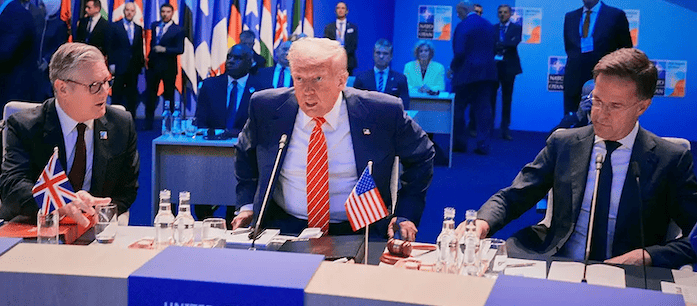
The most destabilizing threats to security alliances rarely come from outside assault alone. More often, they emerge from internal contradictions, asymmetries of power, and the erosion of shared norms. NATO today stands at precisely such a crossroads. While much analytical attention remains focused on Russia’s war in Ukraine, China’s strategic ascent, and instability across the Middle East, the deeper and more corrosive danger lies elsewhere. It lies within the alliance itself.
The return of Donald Trump as a dominant force in U.S. politics has revived an unresolved structural problem that NATO and Europe have long deferred. What happens when the alliance’s leading power no longer acts primarily as a rule-based guarantor of collective security, but increasingly as a transactional, coercive, and norm-indifferent actor. Under such conditions, the alliance does not simply weaken. It becomes internally hazardous.
Greenland, Gaza, and Ukraine are not isolated crises. They are interconnected expressions of a broader shift in how power is exercised by the United States under Trump. This shift directly affects Europe’s security calculus and has accelerated Türkiye’s search for complementary and alternative security arrangements, including a potential defence pact with Saudi Arabia and Pakistan and a broader regional stability framework articulated by Foreign Minister Hakan Fidan.
Together, these developments point to a profound transformation in the global security order, one in which the principal threat is no longer external aggression alone, but the normalization of coercion within alliances themselves.
NATO’s foundational logic and its present crisis
NATO was founded on a deceptively simple but historically radical promise. Collective defence would not be discretionary, improvised, or subject to bilateral bargaining. It would be automatic, predictable, and anchored in respect for sovereignty and international law. The alliance was designed precisely to remove uncertainty from security calculations. Article 5 was therefore never merely a military clause. It was a political covenant, a binding assurance that deterrence would function not through ad hoc decisions or shifting preferences, but through shared commitments upheld regardless of circumstance.
This covenant was built on trust, not sentiment, but institutionalized confidence. Trust that commitments would hold even when inconvenient. Trust that power would be exercised with restraint. Trust that alliances would not become instruments of coercion among their own members.
That trust rested on three foundational assumptions.
First, that the sovereignty and territorial integrity of allies were inviolable. NATO was created in a Europe traumatized by territorial revisionism. Its legitimacy derived from the rejection of forceful border changes and the understanding that no member would ever face pressure, explicit or implicit, over its territory from within the alliance itself. Sovereignty was not conditional. It was absolute.
Second, that security guarantees were not contingent on financial tribute, political alignment on unrelated issues, or transactional compliance. Burden-sharing debates existed, but they operated within a framework of solidarity, not extortion. Collective defence was a shared responsibility, not a service rendered in exchange for payment or obedience. Once security becomes conditional, deterrence collapses, because adversaries sense hesitation and allies begin to hedge.
Third, that power would be exercised within a shared normative framework rather than through coercion. NATO was not merely a military coalition. It was a rules-based security community. International law, multilateral institutions, and collective decision-making were not obstacles to power, but the means by which power was legitimized and stabilized. Force without norms was precisely what NATO was created to prevent.
Donald Trump’s worldview directly undermines all three assumptions.
By repeatedly framing alliances as protection rackets and questioning why the United States should defend others without immediate compensation, Trump recasts collective defence as a commercial transaction. In doing so, he replaces solidarity with calculation and transforms security from a shared good into a negotiable commodity. This logic corrodes deterrence because it introduces doubt at the very moment certainty is required.
By dismissing international law as irrelevant or optional, Trump strips alliances of their moral and legal foundations. Once rules are treated as instruments rather than constraints, allies lose the normative shield that distinguishes collective security from brute power politics. What remains is hierarchy, not partnership.
By employing threats, tariffs, and even territorial rhetoric against allies, Trump introduces coercion into what was deliberately designed as a cooperative system. Pressure becomes a tool of diplomacy, and intimidation replaces consensus. The result is not strength, but fragmentation. Allies begin to calculate risks not only from adversaries, but from the alliance’s own center of gravity.
This is why the warning issued during Trump’s first term by James Mattis remains so relevant. “Allies are a strategic asset, not a burden,” Mattis said, articulating a principle that had guided U.S. grand strategy for decades. Alliances multiply power, distribute risk, and extend legitimacy. They are force multipliers precisely because they are based on trust rather than coercion.
The tragedy for NATO is not merely that this insight has been ignored. It is that it is being actively reversed. When allies are treated as liabilities, when sovereignty is framed as negotiable, and when norms are subordinated to transactional advantage, the alliance ceases to function as a stabilizing architecture. It becomes a source of uncertainty.
And uncertainty, within a collective defence system, is the most dangerous threat of all.
Greenland and the normalization of intra-alliance coercion
The Greenland episode matters far less for its immediate feasibility than for what it reveals about a changing logic of power within alliances. A member state of NATO, Denmark, saw its sovereignty publicly questioned, not by an adversary or a rival bloc, but by another NATO member, the United States. Even if framed as provocation, exaggeration, or negotiation theatre, the episode crossed a line that had long been considered inviolable within the alliance.
The message was clear. Sovereignty is no longer sacrosanct if it collides with the perceived security, strategic, or political interests of the strongest ally.
This is not a trivial shift. NATO was built precisely to remove such uncertainties from the internal dynamics of the alliance. The assumption that no member would ever face territorial pressure from within was foundational. Once that assumption is shaken, the alliance enters uncharted territory.
In alliance politics, intent is secondary to signalling. What matters is not whether annexation was realistically contemplated, but that it was spoken aloud by the leader of the alliance’s dominant power, accompanied by open dismissal of international law as a constraint. Signals shape expectations. Expectations shape behaviour.
When Donald Trump argues that Greenland is “vital for American security” and treats legal and treaty-based objections as irrelevant, he introduces a precedent with global implications. The logic is familiar and deeply corrosive: security necessity overrides sovereignty. Strategic interest trumps law. Power defines legitimacy.
This is precisely the logic NATO was created to oppose.
If security necessity can justify territorial claims, then the alliance abandons its own normative foundations. Borders become conditional. Treaties become provisional. Smaller states are forced to calculate not only external threats, but internal ones.
The echoes are unmistakable.
Moscow hears Crimea. The argument that territorial revision is justified by security concerns has already been deployed, repeatedly and explicitly, by the Kremlin. When the leader of NATO’s central power flirts with similar reasoning, even rhetorically, it weakens the alliance’s moral and strategic position.
Beijing hears Taiwan. The claim that strategic geography and national security override existing legal and political arrangements is central to China’s narrative. Any erosion of the principle of inviolable sovereignty within NATO strengthens that argument.
Smaller allies hear something more immediate and unsettling. Dependence does not guarantee protection from pressure. In certain configurations, it may invite it. When power is asymmetric and norms are weakened, vulnerability increases, not decreases.
For Europe, the Greenland episode has been a sobering moment. It has exposed a structural paradox long obscured by habit and history. Reliance on U.S. power does not automatically shield allies from U.S. coercion. In fact, deep dependence can amplify exposure. The more an ally relies on a single guarantor, the fewer options it has when that guarantor becomes unpredictable or coercive.
This realization has profound implications. It forces European states to reassess assumptions that have underpinned their security planning for decades. It also explains why debates about strategic autonomy, diversification of partnerships, and regional security frameworks have gained renewed urgency.
The danger is not that Greenland will be annexed. The danger is that the unthinkable was spoken, normalized, and defended in the language of security. Once that threshold is crossed, alliances no longer function purely as shields against external threats. They become arenas where power asymmetries are exercised internally.
That is the essence of the threat from within.
Gaza, Ukraine, and the collapse of normative consistency inside the alliance
The war in Gaza and the war in Ukraine are often analyzed as separate crises unfolding in different regions under different strategic logics. Yet when viewed through the lens of alliance behavior, they reveal a shared structural problem that cuts to the heart of NATO’s internal coherence. In both cases, the United States is not coercing allies directly, as in the Greenland episode, but it is reshaping the meaning of law, legitimacy, and commitment in ways that destabilize the alliance from within.
In Gaza, the problem is not absence of power but its unrestrained application. Washington’s unconditional political and military support for Israel, even as civilian casualties mount and humanitarian law concerns intensify, demonstrates how brute force can be normalized when exercised by a preferred partner. By providing diplomatic cover, vetoing ceasefire initiatives, and continuing arms transfers without meaningful conditionality, the United States has reinforced a perception that international law is selectively applied.
This perception is not marginal. It strikes at the core of the post-1945 security order.
As António Guterres stated bluntly, “International humanitarian law is not optional.” Yet U.S. behavior in Gaza repeatedly suggests that legality depends not on norms, but on alignment. Rules appear binding for adversaries, flexible for partners, and irrelevant when strategic priorities dictate otherwise.
For NATO allies, including Türkiye, this double standard is profoundly destabilizing. If international law is contingent, then alliance membership no longer provides legal predictability. Power replaces principle. Norms become instruments rather than constraints.
Türkiye’s vocal criticism of Gaza is often dismissed as ideological or political. In reality, it reflects a deeper strategic concern rooted in historical experience. Selective legality erodes the universal norms that protect medium and smaller powers from arbitrary coercion. Once legality becomes discretionary, no alliance can guarantee long-term security. What remains is hierarchy, not collective defense.
Ukraine exposes a different but equally corrosive dimension of the same internal threat. Here, the United States is the central pillar of support against Russian aggression. Yet that support is increasingly framed in domestic political and transactional terms, particularly under the shadow of Donald Trump’s return.
Donald Trump’s past statements questioning aid to Ukraine, demanding political concessions, and signaling openness to negotiated outcomes favorable to Moscow have already weakened confidence. His reemergence intensifies fears that U.S. policy could swing abruptly from sustained support to imposed settlement, not based on strategic coherence, but on electoral calculations or personal deal-making instincts.
Deterrence depends on credibility. Credibility depends on predictability. When allies and adversaries alike suspect that commitments hinge on election cycles, media pressure, or transactional bargains, deterrence erodes. The danger for NATO is not only the risk of abandonment. It is strategic incoherence. A war supported today may be bargained away tomorrow. A red line declared today may dissolve under domestic pressure tomorrow.
This uncertainty reverberates across the alliance. States begin to hedge. They diversify partnerships. They invest in autonomy rather than integration. The alliance becomes looser, more conditional, and less credible.
For Türkiye, which has carefully balanced relations with both Ukraine and Russia while facilitating initiatives such as the Black Sea grain corridor, this volatility reinforces a lesson learned through experience. Strategic autonomy is not ideological defiance. It is insurance against uncertainty.
Seen together, Gaza and Ukraine illustrate how the threat from within operates not only through coercion against allies, but through the erosion of shared norms and the politicization of commitments. When international law becomes selective and deterrence becomes transactional, the alliance loses its moral center and strategic predictability.
The danger is not simply reputational. It is systemic. An alliance that cannot apply its principles consistently cannot expect its commitments to be believed. And when belief erodes, so does deterrence.
This is the quiet, cumulative threat NATO now faces from within.
When the ally becomes a risk factor
Security studies define threats not by identity, affiliation, or declared intent, but by behavior. A threat does not cease to be a threat because it originates from within an alliance. On the contrary, threats emerging from inside a security system are often more destabilizing precisely because they erode trust, blur expectations, and undermine the assumptions on which collective defense rests.
An internal threat emerges when a powerful actor within an alliance consistently exhibits three characteristics.
First, coercion replaces consensus. Alliances are built on negotiated agreement, compromise, and shared decision-making. When a dominant member begins to rely on pressure tactics rather than persuasion, the alliance’s cooperative logic breaks down. Decisions cease to be collectively owned and instead reflect asymmetric power relationships. Smaller allies comply not because they agree, but because they lack alternatives.
Second, rules are treated as optional rather than binding. Rules are the mechanisms that transform raw power into legitimate authority. When the strongest member of an alliance signals that legal frameworks, treaties, or institutional procedures apply only when convenient, the alliance’s normative foundation erodes. Rules lose their constraining function and become rhetorical tools. What remains is not order, but discretion.
Third, core commitments become unpredictable. Deterrence relies on the belief that commitments will be honored regardless of political cycles, personal preferences, or momentary calculations. When allies cannot anticipate whether promises will be upheld tomorrow, the deterrent value of the alliance collapses. Uncertainty replaces assurance.
Under Donald Trump, all three conditions have increasingly been present.
Trump’s repeated use of tariffs, public threats, and conditional security language toward allies exemplifies the replacement of consensus with coercion. His open skepticism toward international law and multilateral institutions signals that rules are subordinate to power. His fluctuating positions on NATO, Ukraine, and alliance obligations introduce uncertainty into commitments that were once considered automatic.
This does not make the United States an adversary of NATO. It does, however, make it an unreliable ally. And unreliability at the center of an alliance is profoundly destabilizing.
Alliances are hierarchical by nature, but they are sustainable only when hierarchy is moderated by restraint. When the strongest member behaves unpredictably, the entire system is forced to adapt. Smaller allies begin to hedge. Medium powers seek strategic autonomy. Trust thins. Coordination becomes more difficult. The alliance shifts from a collective security mechanism into a loose and conditional arrangement.
The paradox is striking.
NATO was created to constrain power through rules, institutions, and shared norms. It was designed to prevent the arbitrary exercise of force, including by its own members. Today, it increasingly struggles to constrain the behavior of its strongest member. The mechanisms intended to moderate power appear insufficient when confronted with a leadership style that dismisses restraint as weakness.
This creates a structural inversion. The alliance that once reduced uncertainty now generates it. The actor that once anchored predictability becomes a source of volatility. And the security system designed to protect its members from coercion begins, indirectly, to expose them to it.
That is the essence of the threat from within.
Türkiye’s strategic experience and early adaptation
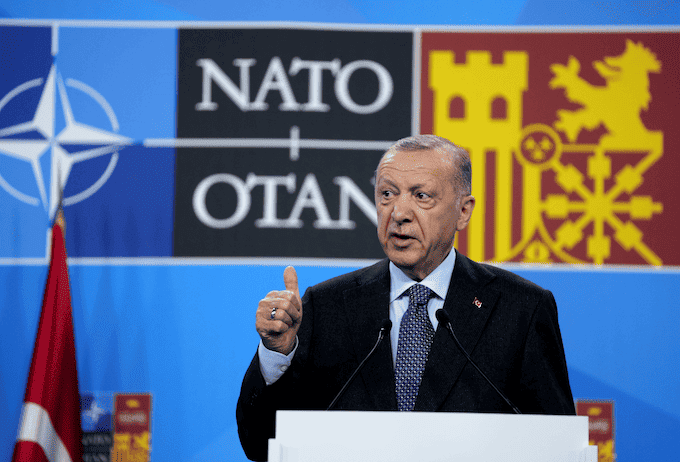
Türkiye has lived with the realities now confronting NATO longer than most of its allies. What Europe is beginning to experience as a shock, Ankara has treated as an operating condition for more than a decade. The erosion of predictability, the politicization of security commitments, and the selective application of alliance solidarity are not new phenomena from Türkiye’s perspective. They are formative experiences.
Ankara has faced U.S. sanctions under CAATSA, arms embargoes imposed during active and unresolved security crises, and sustained U.S. cooperation with armed groups that Türkiye defines as existential threats to its territorial integrity. These were not abstract policy disagreements. They occurred in real time, amid ongoing military operations and immediate security pressures. The message Türkiye absorbed was unmistakable. Alliance membership did not guarantee alignment of threat perceptions, nor did it ensure insulation from coercive measures by the alliance’s strongest member.
These experiences profoundly shaped Türkiye’s strategic culture. They produced not a rejection of alliances, but a deep skepticism toward unconditional reliance on any single patron. Trust was no longer assumed as an automatic byproduct of membership. It became conditional, situational, and contingent on interests rather than declarations.
Europe is now encountering, through Greenland and broader U.S. behaviour, dynamics Türkiye experienced earlier in Syria and the Eastern Mediterranean. What appears novel to many European capitals feels familiar in Ankara. The questioning of sovereignty, the instrumental use of legal arguments, the mixing of security commitments with political leverage, and the readiness to apply pressure inside the alliance all echo earlier episodes in Türkiye’s recent history.
The conclusion Ankara drew from these experiences was pragmatic rather than ideological. Alliances are conditional. Interests diverge. Security environments change faster than institutions adapt. Survival therefore requires flexibility, diversification, and autonomous capacity.
This logic explains Türkiye’s strategic trajectory over the past decade. Ankara remains firmly inside NATO because the alliance still provides critical strategic depth, interoperability, and deterrence value. But Türkiye no longer treats NATO as a singular or sufficient security framework. Instead, it complements alliance membership with diversified partnerships, an increasingly robust domestic defence industry, and the exploration of regional security arrangements beyond traditional Western structures.
This is not hedging born of defiance. It is adaptation born of experience.
The southern flank and NATO’s enduring blind spot
European security debates remain disproportionately focused on the eastern and northern fronts. Russia’s war in Ukraine, the Baltic region, the Arctic, and hybrid threats to Northern Europe dominate strategic discourse. These concerns are real and legitimate. Yet this geographic focus has produced a persistent blind spot. NATO’s southern flank, anchored by Türkiye, is where instability is chronic, multidimensional, and immediate.
From Syria and Iraq to Libya, from the Eastern Mediterranean to the Red Sea, Türkiye operates in a security environment characterized by overlapping conflicts, weak state structures, non-state armed actors, irregular migration flows, energy competition, and great-power intervention. In this environment, hesitation carries immediate costs. Delayed responses translate into security vacuums. Ambiguity invites escalation.
An unreliable United States amplifies these risks. Mixed signals on Syria, abrupt policy reversals, selective engagement, and shifting red lines have repeatedly created vacuums that regional actors moved quickly to fill. In such conditions, Türkiye cannot afford strategic passivity. It must act, often unilaterally or with ad hoc coalitions, to protect its security interests.
At the same time, Türkiye is routinely expected to function as a net security provider on NATO’s southern flank. It absorbs migration pressures, conducts counterterrorism operations, maintains forward military presence, and stabilizes volatile theatres. Yet its threat perceptions are frequently questioned, minimized, or dismissed by allies whose primary strategic focus lies elsewhere. This asymmetry is structurally unsustainable.
An alliance cannot expect one member to shoulder disproportionate security burdens while simultaneously contesting the legitimacy of that member’s security concerns. Over time, such dynamics generate frustration, erode trust, and incentivize strategic autonomy.
If NATO’s internal cohesion weakens further, Türkiye faces a dual risk. Militarily, it may become increasingly overburdened, tasked with containing instability on the alliance’s most volatile frontiers. Politically, it may remain under-consulted in strategic decision-making processes that directly affect its security environment.
This imbalance reinforces the logic behind Türkiye’s diversification strategy. The pursuit of autonomous capabilities and regional frameworks is not a rejection of NATO. It is a response to NATO’s uneven attention and inconsistent solidarity.
Taken together, Türkiye’s early adaptation to alliance unreliability and NATO’s neglect of its southern flank illustrate a broader pattern. When alliances fail to integrate diverse threat perceptions and distribute burdens equitably, members do not exit immediately. They adapt quietly. They hedge. They build alternatives.
That process is already well underway.
A regional response in an age of uncertainty
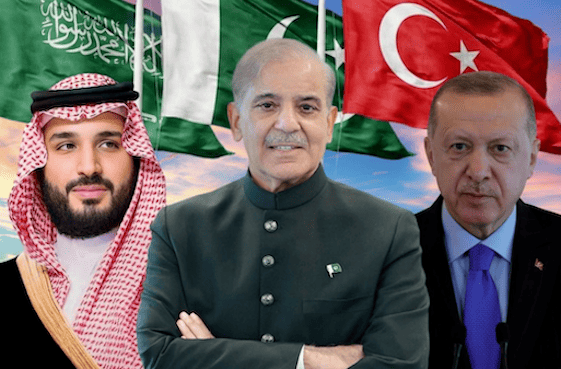
It is against the backdrop of alliance uncertainty, normative erosion, and the growing perception of risk from within established security structures that discussions of a defense arrangement among Türkiye, Saudi Arabia, and Pakistan must be understood. These discussions are not sudden, nor are they purely reactive. They reflect a longer process of strategic reassessment unfolding across regions where traditional security guarantees are no longer assumed to be either sufficient or reliable.
Saudi Arabia and Pakistan have already taken a decisive step in this direction by formalizing a Strategic Mutual Defence Agreement, committing each side to treat aggression against the other as a shared concern. While the operational details remain deliberately opaque, the political signal is unmistakable. Riyadh and Islamabad no longer view external protection as automatic. They seek mutual assurance rooted in shared vulnerability and regional proximity.
In early 2026, discussions reportedly advanced to include Türkiye, creating the contours of a potential trilateral framework spanning the Middle East and South Asia. If realized, such an arrangement would connect three distinct but complementary forms of power. Türkiye brings a large, experienced military and a rapidly expanding defence-industrial base. Saudi Arabia contributes financial capacity, energy leverage, and regional influence. Pakistan adds strategic depth, demographic weight, and nuclear deterrence. Together, these elements would form a security configuration with deterrent credibility and political signaling power extending across multiple regions.
The logic of this initiative is not anti-NATO. Nor is it conceived as an alternative alliance designed to replace existing commitments. Rather, it is post-certainty. It reflects a world in which security guarantees are no longer treated as unconditional, norms are applied unevenly, and alliances are increasingly shaped by transactional calculations. In such an environment, states seek supplementary frameworks that reduce exposure to volatility and hedge against abrupt shifts by external patrons.
This is where the initiative intersects directly with Türkiye’s evolving strategic doctrine.
This broader trajectory has been articulated with unusual clarity by Hakan Fidan. Speaking to a group of reporters, Fidan proposed the creation of a “regional stability pact,” deliberately avoiding the language of military blocs or confrontational alliances. “We need a regional stability pact, whether a platform, agreement, or convention, to primarily foster absolute trust among nations, with deterrence as a secondary aim,” he said.
This formulation is revealing, both in what it emphasizes and in what it consciously downplays.
Trust precedes deterrence. Stability precedes militarization. The sequencing matters. Fidan’s argument reverses the traditional Cold War logic in which deterrence is established first and trust is expected to follow. In the current environment, Ankara appears to be arguing the opposite. Without trust rooted in mutual respect for sovereignty and territorial integrity, deterrence becomes brittle and escalatory rather than stabilizing.
Fidan explicitly linked regional instability to the absence of such trust, warning that unresolved disputes and security vacuums invite external interference and allow terrorist organizations and proxy actors to exploit fragmentation. In this reading, instability is not accidental. It is structural, produced by gaps in governance, legitimacy, and predictable security arrangements.
Seen through this lens, the emerging Türkiye–Saudi Arabia–Pakistan discussions are not primarily about force projection. They are about risk management in a system where predictability has eroded. The objective is not to confront external powers directly, but to reduce dependence on any single guarantor and to limit the exposure created by sudden policy reversals elsewhere.
Not a military bloc, but a hedge against disorder
This distinction is critical. Türkiye’s regional initiative is not framed as a classic military bloc defined by rigid commitments and automatic escalation clauses. It is framed as a flexible architecture, potentially combining political consultation, confidence-building measures, limited security coordination, and deterrence signaling without binding itself to the logic of permanent confrontation.
In this sense, the proposed framework reflects lessons drawn from NATO’s current internal stress. Alliances that rely solely on military deterrence without normative consistency and political trust become vulnerable to internal fracture. When commitments are perceived as transactional or conditional, states seek supplementary arrangements that restore a measure of agency.
For Türkiye, this approach is consistent with its broader strategic adaptation. Ankara remains inside NATO, but it no longer treats NATO as a singular pillar upon which all security planning rests. The pursuit of regional stability mechanisms is not a rejection of alliance logic, but an acknowledgment of its current limits.
For Saudi Arabia and Pakistan, the calculus is similar. Both have experienced moments when external security assurances proved ambiguous or constrained by political considerations beyond their control. A regional framework offers not certainty, but redundancy. And redundancy, in a volatile system, is a form of resilience.
Strategic implications
If such a trilateral framework evolves, its most important impact may not be operational, but psychological. It signals that the era of assumed security guarantees is over. States now operate in an environment where they must plan for alliance volatility as a variable, not an exception.
This has broader implications for the global security order. When regional actors begin constructing parallel stabilizing mechanisms, it reflects not fragmentation for its own sake, but adaptation to uncertainty. The danger lies not in diversification, but in the absence of coordination between overlapping frameworks.
For NATO and Europe, this development should not be read as defiance, but as feedback. It reflects a perception that the alliance’s internal coherence and normative reliability can no longer be taken for granted.
For Türkiye, the message is consistent with its recent strategic trajectory. Stability cannot be outsourced. Trust cannot be improvised. And security, in an age of unpredictability, requires multiple layers of assurance.
In that sense, the emerging discussions among Türkiye, Saudi Arabia, and Pakistan are less about creating a new pole of power than about navigating a world where power has become less restrained, rules less consistent, and guarantees less certain.
They are, fundamentally, a response to the threat from within the system itself.
Europe’s strategic autonomy and its limits
Europe’s response to growing U.S. unpredictability has been a renewed and increasingly urgent emphasis on “strategic autonomy.” Once treated as a long-term aspiration or a conceptual exercise, autonomy is now framed as a necessity driven by volatility in Washington. Yet autonomy without coherence risks becoming fragmentation by another name.
The central problem is not ambition, but structure. Europe lacks a unified threat assessment. Member states continue to perceive risks through divergent geographic and political lenses. Eastern Europe prioritizes deterrence against Russia. Southern Europe focuses on migration, instability in North Africa, and energy security. Northern Europe increasingly looks to the Arctic and hybrid threats. These perspectives are not mutually exclusive, but they are rarely integrated into a single strategic vision.
Europe also lacks a credible independent command structure capable of conducting large-scale, sustained military operations without U.S. leadership. Defense spending has increased, but integration remains shallow. Capabilities are uneven, interoperability incomplete, and political decision-making slow. Autonomy in such conditions risks producing parallel national strategies rather than a coherent collective posture.
Most critically, Europe has yet to reach a clear consensus on the role of Türkiye within any future European security architecture. This ambiguity is not merely diplomatic. It is strategic.
Any European security framework that sidelines Türkiye is structurally incoherent. Geography cannot be negotiated. Türkiye sits at the intersection of Europe, the Middle East, the Black Sea, and the Eastern Mediterranean. Its territory anchors NATO’s southern flank and directly borders some of Europe’s most volatile regions. Capability cannot be improvised. Türkiye fields one of NATO’s largest standing militaries, possesses extensive expeditionary experience, and has developed a defense-industrial base that delivers at scale.
Türkiye’s intelligence reach, operational familiarity with hybrid threats, counterterrorism experience, and regional networks are assets Europe does not possess independently. Autonomy that excludes Türkiye does not enhance European security. It weakens it by creating blind spots precisely where instability is most acute.
Strategic autonomy, if it is to be meaningful, must be inclusive, not exclusionary. Otherwise, Europe risks substituting dependence with division.
The deeper danger: Normalizing coercion
The most dangerous long-term consequence of Donald Trump’s approach to alliances is not any single policy decision. It is normalization.
When coercion becomes routine, expectations change. When threats are used casually against allies, they lose their shock value and become part of the diplomatic grammar. When international law is treated as optional rather than binding, it ceases to function as law and becomes a tool of convenience.
This normalization has cascading effects.
Russia observes Gaza and draws conclusions about the elasticity of humanitarian law. China observes Greenland and notes how security arguments can be deployed to challenge existing territorial arrangements. Middle powers observe the erosion of alliance discipline and conclude that legal predictability is no longer guaranteed.
What begins as rhetorical excess gradually reshapes behavior. Once coercion is normalized at the center of the system, it spreads outward. Rules no longer constrain power. Power defines rules.
For Türkiye, which has consistently argued that selective legality undermines global stability, this normalization is deeply destabilizing. Medium and smaller powers rely on universal norms not out of idealism, but out of necessity. When rules apply only to the weak, alliances lose their protective function.
In such a system, security is no longer collective. It is hierarchical. And hierarchy breeds uncertainty.
Managing power from within
NATO is not collapsing. But it is undergoing its most profound internal stress test since the end of the Cold War. The alliance’s challenge today is not singular. It is cumulative.
NATO faces three intertwined pressures.
First, external threats from revisionist powers that openly challenge territorial integrity and international norms.
Second, internal fragmentation among allies driven by divergent threat perceptions, uneven burden-sharing, and competing strategic priorities.
Third, and most destabilizing, a leading power whose behavior increasingly introduces risk from within rather than reassurance.
In this context, the emergence of regional security initiatives involving Türkiye, Saudi Arabia, and Pakistan should not be misread as defiance or realignment. They are symptoms of uncertainty. They reflect a strategic environment in which trust in traditional guarantors has eroded and states seek redundancy as insurance against unpredictability.
As the late strategist Zbigniew Brzezinski once warned, power without shared values becomes coercive. NATO’s greatest danger today is not invasion from outside. It is corrosion from within.
The alliance’s survival will depend not on how much force it can project outward, but on whether it can restore restraint, predictability, and respect for sovereignty among its own members. Without these, military capability alone cannot sustain credibility.
The defining challenge NATO faces today is no longer only how to deter adversaries. It is how to manage power within the club.
And that is a far more difficult test.