



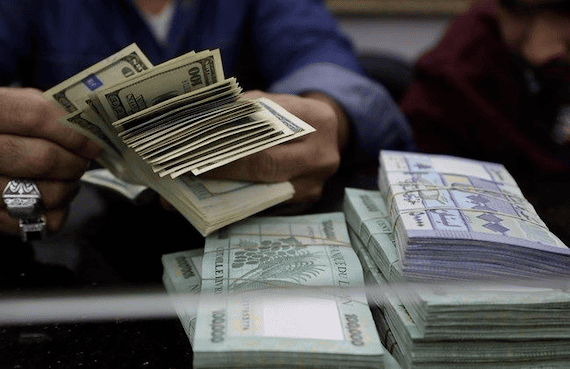
A disturbing legacy of Lebanon’s Sayrafa era is surfacing inside the banking system. Hundreds of relatively junior bank employees are reportedly facing large tax assessments because their personal accounts were used to process Sayrafa transactions for wealthy or influential beneficiaries. The central question is simple: should liability fall on the employee whose name appeared on the account, or on those who organised the transactions and captured the profit?
According to banking sources and people familiar with the cases, more than 300 employee accounts across several institutions may have been used as conduits. At the height of Sayrafa, Banque du Liban sold dollars at a rate that was often more favourable than the parallel-market rate. Because access was limited and the system operated by quotas, additional accounts allowed larger volumes to be processed and the restrictions to be circumvented.
The World Bank’s May 2023 Lebanon Economic Monitor helps explain the incentive. It described Sayrafa as a weak and inefficient monetary instrument that produced only short-lived currency stability. The gap between the Sayrafa and parallel-market rates created a lucrative arbitrage opportunity, while access to the platform was opaque and unequal. The World Bank estimated that participants on the buying side may have earned more than $2.5 billion in arbitrage profits from the platform’s inception through early 2023.
That figure was an estimate of potential arbitrage gains, not an audited calculation of Banque du Liban‘s direct losses. Nevertheless, the wider conclusion was stark: scarce foreign-exchange resources were used without adequate transparency over who obtained the dollars or retained the economic benefit. Sayrafa did not resolve the causes of the lira’s depreciation; it redistributed value to those with access.
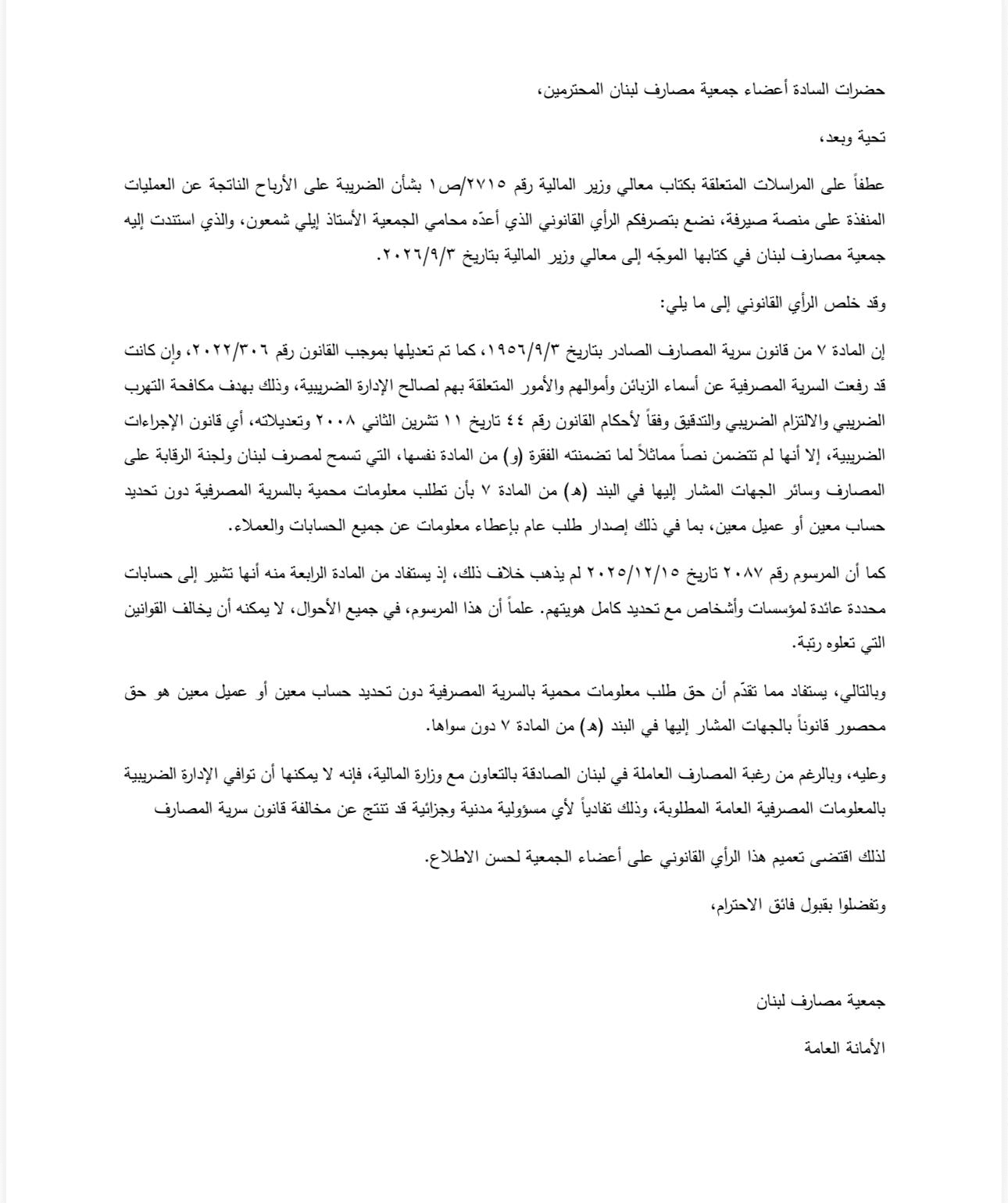
According to the accounts provided, management at certain banks turned to the people over whom it had the greatest leverage: junior employees. Many earned about $800 a month, yet transactions entirely disproportionate to their salaries passed through their accounts. Employees say they were instructed, encouraged or placed under pressure by people above them and believed the arrangement was known to, and protected by, their institution.
This imbalance of power matters. A request from those controlling an employee’s salary, promotion and continued employment – particularly during one of Lebanon’s worst economic crises – cannot be treated as an ordinary bargain between equal parties. The employees supplied their names and accounts; others supplied the funds, organised the transactions and allegedly retained the gains.
The scale and repetition point to a systematic practice implemented at branch level, not hundreds of spontaneous and identical trading decisions by low-paid employees. If more than 300 accounts were used in a similar way, the proper questions are who selected those accounts, who authorised the transactions, where the Lebanese pounds originated and where the purchased dollars ultimately went.
At least one major bank appears to have recognised the seriousness of the conduct. According to sources, it dismissed people it found responsible for allowing the arrangements to take place. That response suggests the transactions warranted internal investigation and disciplinary action. Other institutions should disclose whether they conducted comparable reviews and whether responsibility extended beyond junior staff to branch or senior management.
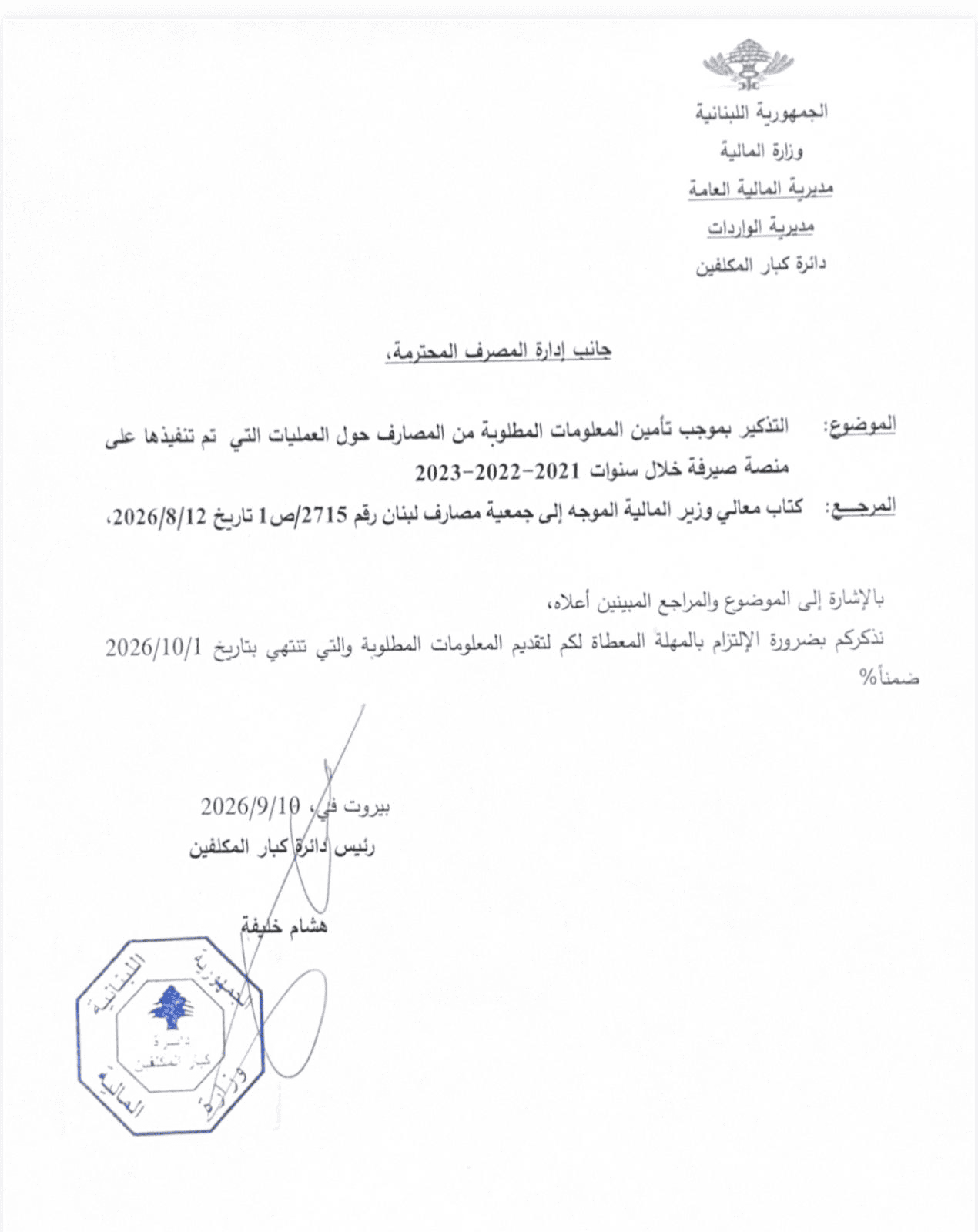
The Ministry of Finance is now seeking to collect a 17 percent tax on profits attributed to Sayrafa transactions. Taxing genuine profits is reasonable. The problem is that the registered account holder may not be the person who received the money. Employees earning less than $10,000 a year reportedly face tax assessments of $20,000 or more for gains they say belonged to others.
There is a straightforward way to test these claims. The Ministry could require the Sayrafa tax to be paid directly from the same account through which the relevant transactions were conducted. If many of those accounts lack the funds and default, despite appearing on paper to have generated substantial profits, that would be strong evidence that the account holders did not retain the economic benefit. It would not, by itself, identify the ultimate beneficiary, but it would give the authorities a clear basis for tracing the money further and testing whether employee accounts were used as pass-through vehicles.
Banks are resisting disclosing the relevant accounts to the Ministry of Finance by invoking banking secrecy. That position is difficult to reconcile with existing tax practice. The Ministry of Finance already taxes interest earned on bank deposits, and banks have supplied the account-related information required to assess or collect that tax. There is therefore a precedent for providing tax authorities with information connected to customer accounts. Banking secrecy should not become a selective shield when the issue is profit generated through a state-sponsored foreign-exchange platform.
A forensic review should reconstruct the full chain: the source of the Lebanese pounds, the employee account used for the Sayrafa purchase, the destination of the dollars and the identity of the ultimate beneficiary. Banque du Liban, the Banking Control Commission and the Ministry of Finance should have the records necessary to do this through lawful supervisory and tax channels.
Institutions that permitted these transactions had compliance departments, senior managers, auditors and monitoring systems. An account belonging to an employee earning a few hundred dollars a month should not have processed volumes grossly inconsistent with that employee’s financial profile without generating questions. If management instructed, facilitated or knowingly permitted the use of an employee’s account for a third party, responsibility cannot be pushed downward when the tax bill arrives.
The solution is not to abandon the Sayrafa tax. It is to tax the real beneficiaries. The Ministry should suspend disputed assessments against employees while it obtains the transaction records, applies the same-account payment test and traces the proceeds. Where the evidence shows that an account was used as a conduit, investigators should pursue those who organised the transaction and retained the profit.
Lebanon cannot correct the abuses of Sayrafa by billing the people at the bottom of the hierarchy. The platform’s final injustice should not be that the powerful kept the gains while junior employees were left with the tax liability.