
Close Menu
    Facebook Instagram LinkedIn
    • العربية (Arabic)
    • English
    • Français (French)
    Facebook Instagram LinkedIn
    Middle East Transparent
    • Home
    • Categories
      1. Headlines
      2. Features
      3. Commentary
      4. Magazine
      5. Cash economy
      Featured
      Headlines Khalil Youssef Beidas

      The Panic Seeps to Dodge City

      Recent
      25 January 2026

      Federalism Is the Only Shield Lebanon and Iraq Have Left in a Nuclearizing Middle East

      25 January 2026

      The Panic Seeps to Dodge City

      23 January 2026

      Inside the Bank Audi Play: How Public Money Became Private Profit

    • Contact us
    • Archives
    • Subscribe
    • العربية (Arabic)
    • English
    • Français (French)
    Middle East Transparent
    You are at:Home»Categories»Features»Iran’s Prospective Supreme Leader Visited the Israel-Lebanon Border

    Iran’s Prospective Supreme Leader Visited the Israel-Lebanon Border

    0
    By Jerusalem Post on 8 February 2018 Features

     Border tour seen as message that Tehran is not deterred by Israeli threats to clear the region of Iranian influence.

     BY TAMAR BEN-OZER

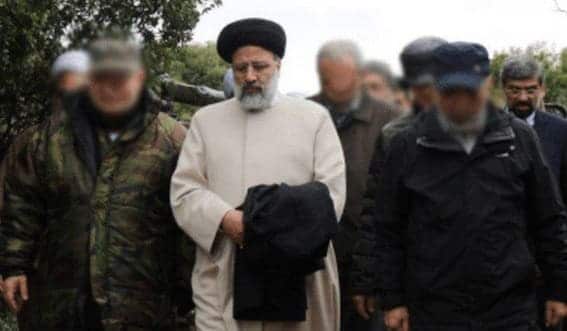
    Ayatollah Sayyed Ebrahim Raisi, a member of Iran’s Assembly of Experts who is thought to be the designated successor of Iranian Supreme Leader Ali Khamenei, visited Lebanon and Syria at the end of January 2018.

    Raisi toured the border between Israel and Lebanon accompanied by Hezbollah military commanders and Iranian officers.

    During the tour, Raisi stated that “Jerusalem’s liberation is near.”

    In remarks translated by the Middle East Media Research Institute (MEMRI) he said: “Thanks to the resistance movement, Palestine has so far succeeded in withstanding Israel, and they [the Palestinians]have learned that it is fighting and steadfastness, not the negotiating tables, that determine the fate of their country.”

    Raisi also commended Hezbollah on its efforts to strengthen Islamic culture in Lebanon.

    “Hezbollah is not only in the arena of fighting, but it is also solving the problems of the people and providing them aid. This is the unique aspect of the Islamic movements. Hezbollah’s mission does not end with military and defense matters; it must play a role in various and diverse tasks in building Islamic culture,” MEMRI reported.

    In addition to the tour of the border, Raisi met with a number of Lebanese leaders and government officials. He paid visits to the families of two deceased terrorist leaders, Imad Mughniyeh and Mustafa Badr al-Din.

    Raisi’s visit comes days after Prime Minister Netanyahu and additional Israeli officials spoke out against Iran’s building a “missile factory” in Lebanon, referring to its plans to instate facilities in Lebanon for manufacturing precision weapons.

    “It would appear that this visit by a senior Iranian figure close to Khamenei was meant to convey to Israel that Iran is not deterred by the Israeli threats and is determined to help Hezbollah strengthen its military capabilities in Lebanon, Brig.-Gen. (ret.) Dr. Shimon Shapira, a senior research associate at the Jerusalem Center for Public Affairs and former military secretary at the Prime Minister’s Office said on the center’s website. “Iran also intends to help mobilize support for Hezbollah among the Shiite community for the Lebanese parliamentary elections this year, as Iran and Hezbollah work to boost Hezbollah’s political power in Lebanon’s domestic arena.”

    Elliott Abrams, former deputy national security advisor and senior fellow for Middle Eastern studies at the Council on Foreign Relations analyzed the border visit in a post on the Council on Foreign Relations’ website.

    “Raisi’s Lebanon/Israel border visit delivers several messages,” he wrote. “First, borders have no meaning for Iran; the Islamic Republic is determined to be the dominant player in Iraq, Syria and Lebanon. Second, the governments of those countries have no control of their own borders and territory; Iranian military and terrorist leaders can come and go as they please. Third, whether Lebanon gets into a conflict with Israel will be determined by decisions made in Tehran, not in Beirut.”

    Jerusalem Post

    Share. Facebook Twitter LinkedIn Email WhatsApp Copy Link
    Previous Articleحضرة الناخب أنت المسؤول عن إنقاذ لبنان: دولة أم محمية
    Next Article Card. Zen on the bishops of Shantou and Mindong
    Subscribe
    Notify of
    guest
    guest
    0 Comments
    Newest
    Oldest Most Voted
    Inline Feedbacks
    View all comments
    RSS Recent post in french
    • Au Liban, des transactions immobilières de l’OLP suscitent des questions 18 January 2026 L'Orient Le Jour
    • Pourquoi la pomme de la tyrannie tombe-t-elle toujours ? 10 January 2026 Walid Sinno
    • La liberté comme dette — et comme devoir trahi par les gouvernants 2 January 2026 Walid Sinno
    • La « Gap Law »: pourquoi la précipitation, et pourquoi les Français ? 30 December 2025 Pierre-Étienne Renaudin
    • Au Liban, une réforme cruciale pour sortir enfin de la crise 23 December 2025 Sibylle Rizk
    RSS Recent post in arabic
    • لِشهرين أم لِسنتين: الانتخابات النيابية مؤجّلة حُكماً! 25 January 2026 كمال ريشا
    • ثرثرة على ضفة الحركة (2): “الفلسطينيّة” و”العربيّة” 25 January 2026 هشام دبسي
    • الهَلَع يتسرَّب إلى دودج سيتي 25 January 2026 خليل يوسف بيدس
    • قضية “بنك عودة”: كيف تحوّلت الأموال العامة إلى أرباح خاصة 24 January 2026 سمارة القزّي
    • حوارٌ ضروري حول قبرص، والأمن، ونصف القصة الغائب 24 January 2026 يوسف كانلي
    26 February 2011

    Metransparent Preliminary Black List of Qaddafi’s Financial Aides Outside Libya

    6 December 2008

    Interview with Prof Hafiz Mohammad Saeed

    7 July 2009

    The messy state of the Hindu temples in Pakistan

    27 July 2009

    Sayed Mahmoud El Qemany Apeal to the World Conscience

    8 March 2022

    Russian Orthodox priests call for immediate end to war in Ukraine

    Recent Comments
    • Nadim Shehadi on The Panic Seeps to Dodge City
    • Yusuf Kanli on A necessary conversation: On Cyprus, security, and the missing half of the story
    • Mohamed on Inside the Bank Audi Play: How Public Money Became Private Profit
    • JudgmentalOne on A necessary conversation: On Cyprus, security, and the missing half of the story
    • Drivers Behind Audi’s Top-Level Management Shake-Up - Middle East Transparent on Lebanon’s banks are running out of excuses
    Donate
    © 2026 Middle East Transparent

    Type above and press Enter to search. Press Esc to cancel.

    wpDiscuz