
Close Menu
    Facebook Instagram LinkedIn
    • العربية (Arabic)
    • English
    • Français (French)
    Facebook Instagram LinkedIn
    Middle East Transparent
    • Home
    • Categories
      1. Headlines
      2. Features
      3. Commentary
      4. Magazine
      5. Cash economy
      Featured
      Headlines Khalil Youssef Beidas

      The Panic Seeps to Dodge City

      Recent
      25 January 2026

      Federalism Is the Only Shield Lebanon and Iraq Have Left in a Nuclearizing Middle East

      25 January 2026

      The Panic Seeps to Dodge City

      23 January 2026

      Inside the Bank Audi Play: How Public Money Became Private Profit

    • Contact us
    • Archives
    • Subscribe
    • العربية (Arabic)
    • English
    • Français (French)
    Middle East Transparent
    You are at:Home»Categories»Features»Russian influence over Hizbullah may reduce chances of escalation with Israel

    Russian influence over Hizbullah may reduce chances of escalation with Israel

    0
    By Jane's on 4 February 2016 Features

    Yaakov Lappin, Tel Aviv – IHS Jane’s Defence Weekly

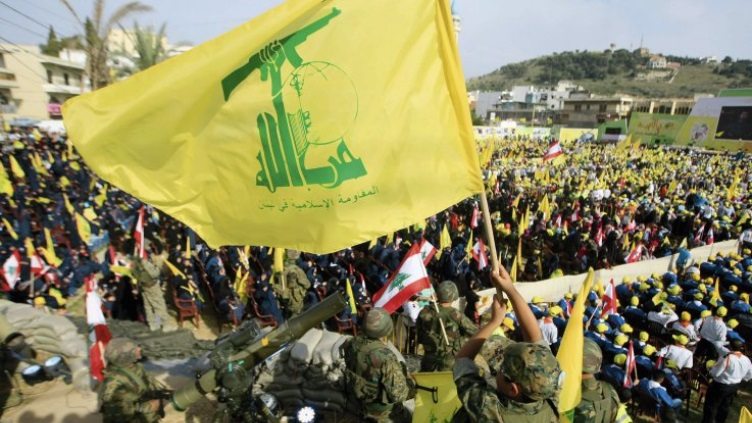
    The IDF believes that the Russian military presence in Syria is having a moderating effect on the Lebanese militant group Hizbullah. Source: PA Photos

    Russia’s growing influence over the Iran-Syria-Hizbullah alliance may help prevent any sudden escalations with Israel, according to recent Israel Defense Forces (IDF) assessments.

    The IDF views the Russian and US military presence in the region as stabilising influences that can counter the instability caused by the proliferation of heavily armed sub-state actors in Syria.

    According to this view, Russia’s ongoing dialogue with Hizbullah could restrain the Lebanese Shia group from responding to perceived Israeli airstrikes with attacks that could escalate into a conflict.

    In December 2015, Israel reportedly launched an airstrike that killed the notorious Hizbullah operative Samir Kuntar in a Damascus suburb. Hizbullah responded with a relatively limited bomb attack on heavily armoured IDF vehicles in the disputed Mount Dov (Shebaa Farms) border area on the Israeli-Lebanese border.

    The IDF assesses that, behind closed doors, Hizbullah’s leadership is torn by dilemmas when it comes to formulating responses to such developments.

    The IDF also believes that reports of Russia arming Hizbullah to make it a more effective ally in Syria are baseless.

    Russia’s influence is not the only moderating factor; Hizbullah is also growing more affiliated to the Lebanese state, making it more accountable, although its influence on domestic politics is also growing as a result.

    It is also suffering some budgetary problems, such paying salaries on time, due to Iran’s failure to transfer around 10% of the group’s USD1 billion annual budget.

    Meanwhile, it currently maintains 6,000-7,000 fighters in Syria, according to IDF estimates, and 1,300 have been killed there, twice the figure it suffered during the 2006 war with Israel. Some 10,000 Hizbullah fighters have been injured in Syria.

    In light of the fact that Hizbullah has an estimated total conscripted fighting force of 20,000, and roughly the same number of reserve fighters, those figures are highly significant to Hizbullah’s order of battle.

    Jane’s

    Share. Facebook Twitter LinkedIn Email WhatsApp Copy Link
    Previous ArticleTo End Syria’s War, Help Assad’s Officers Defect
    Next Article After four months, Russia’s campaign in Syria is proving successful for Moscow
    Subscribe
    Notify of
    guest
    guest
    0 Comments
    Newest
    Oldest Most Voted
    Inline Feedbacks
    View all comments
    RSS Recent post in french
    • Au Liban, des transactions immobilières de l’OLP suscitent des questions 18 January 2026 L'Orient Le Jour
    • Pourquoi la pomme de la tyrannie tombe-t-elle toujours ? 10 January 2026 Walid Sinno
    • La liberté comme dette — et comme devoir trahi par les gouvernants 2 January 2026 Walid Sinno
    • La « Gap Law »: pourquoi la précipitation, et pourquoi les Français ? 30 December 2025 Pierre-Étienne Renaudin
    • Au Liban, une réforme cruciale pour sortir enfin de la crise 23 December 2025 Sibylle Rizk
    RSS Recent post in arabic
    • لِشهرين أم لِسنتين: الانتخابات النيابية مؤجّلة حُكماً! 25 January 2026 كمال ريشا
    • ثرثرة على ضفة الحركة (2): “الفلسطينيّة” و”العربيّة” 25 January 2026 هشام دبسي
    • الهَلَع يتسرَّب إلى دودج سيتي 25 January 2026 خليل يوسف بيدس
    • قضية “بنك عودة”: كيف تحوّلت الأموال العامة إلى أرباح خاصة 24 January 2026 سمارة القزّي
    • حوارٌ ضروري حول قبرص، والأمن، ونصف القصة الغائب 24 January 2026 يوسف كانلي
    26 February 2011

    Metransparent Preliminary Black List of Qaddafi’s Financial Aides Outside Libya

    6 December 2008

    Interview with Prof Hafiz Mohammad Saeed

    7 July 2009

    The messy state of the Hindu temples in Pakistan

    27 July 2009

    Sayed Mahmoud El Qemany Apeal to the World Conscience

    8 March 2022

    Russian Orthodox priests call for immediate end to war in Ukraine

    Recent Comments
    • Nadim Shehadi on The Panic Seeps to Dodge City
    • Yusuf Kanli on A necessary conversation: On Cyprus, security, and the missing half of the story
    • Mohamed on Inside the Bank Audi Play: How Public Money Became Private Profit
    • JudgmentalOne on A necessary conversation: On Cyprus, security, and the missing half of the story
    • Drivers Behind Audi’s Top-Level Management Shake-Up - Middle East Transparent on Lebanon’s banks are running out of excuses
    Donate
    © 2026 Middle East Transparent

    Type above and press Enter to search. Press Esc to cancel.

    wpDiscuz