
Close Menu
    Facebook Instagram LinkedIn
    • العربية (Arabic)
    • English
    • Français (French)
    Facebook Instagram LinkedIn
    Middle East Transparent
    • Home
    • Categories
      1. Headlines
      2. Features
      3. Commentary
      4. Magazine
      5. Cash economy
      Featured
      Headlines Khalil Youssef Beidas

      The Panic Seeps to Dodge City

      Recent
      25 January 2026

      Federalism Is the Only Shield Lebanon and Iraq Have Left in a Nuclearizing Middle East

      25 January 2026

      The Panic Seeps to Dodge City

      23 January 2026

      Inside the Bank Audi Play: How Public Money Became Private Profit

    • Contact us
    • Archives
    • Subscribe
    • العربية (Arabic)
    • English
    • Français (French)
    Middle East Transparent
    You are at:Home»Categories»Headlines»Gulf states offer: improving relations with Israel in return for halting construction in the settlements

    Gulf states offer: improving relations with Israel in return for halting construction in the settlements

    0
    By Ynet on 17 May 2017 Headlines

    The Wall Street Journal reports of a document agreed upon by Saudi and Emirates’ leaders under the influence of Donald Trump: a freeze on settlement construction and the start of political negotiations in exchange for normalization with Israel.

    Persian Gulf states offered to take concrete steps to improve relations with Israel if Prime Minister Benjamin Netanyahu moves to restart the Middle East peace process by halting construction in the settlements and easing the siege on the Gaza Strip. The Wall Street Journal reported that the proposal was presented to Israel and the United States ahead of President Donald Trump’s visit next week.According to the report, the measures proposed by the United Arab Emirates include the establishment of telecommunications lines with Israel, the approval of Israeli planes to pass through their national air space and the removal of various trade restrictions. Saudi Arabia and the United Arab Emirates expressed their willingness to carry out these measures. Netanyahu’s office refused to comment on the report.


    Trump and the King of Saudi Arabia (Photo: AFP, MCT)

    Trump and the King of Saudi Arabia (Photo: AFP, MCT)


    The position of the Gulf States, it was reported, is detailed in a document that has been agreed upon and has yet to be published. Its goal is to align itself with President Trump’s intention to harness Arab states to help promote peace in the Middle East.

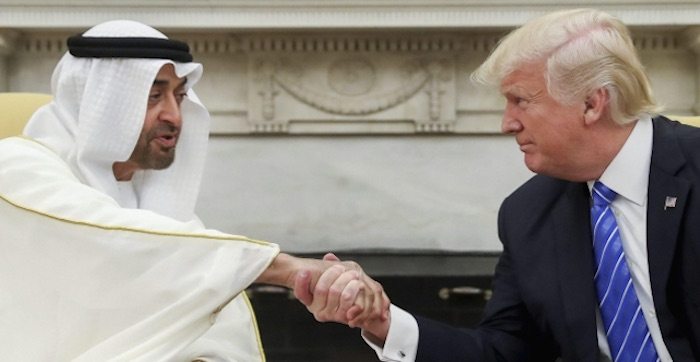
    Trump is currently devoting time, meetings and trips to diplomacy in the Middle East. Abu Dhabi’s crown prince, Mohammed bin Zayed Al Nahyan, met the president in Washington on Monday. The president will take off for Saudi Arabia on Friday and will continue as aforesaid to Israel.

    The current initiative of the Sunni Gulf states continues the improvement—most of which is unofficial—in relations with Israel in recent years, mainly against the background of the joint resistance to Shiite Iran and the struggle against ISIS. “We no longer see in Israel an enemy but a potential opportunity,” said an Arab official involved in the talks.

    In recent years, Israel and the Gulf countries have increased their intelligence cooperation, among other things, around the arms shipments that the Iranians have transferred to their armed branches in Yemen, Syria, and Lebanon. According to the report, Israeli officials have recently held secret visits to the Persian Gulf, mainly in the United Arab Emirates, although there are no formal diplomatic relations between the two countries

    YNET

    Share. Facebook Twitter LinkedIn Email WhatsApp Copy Link
    Previous ArticleSkirmishes over culture strain alliance between Saudi rulers, clerics
    Next Article Israelis send medicine and other medical aid to Syrian children
    Subscribe
    Notify of
    guest
    guest
    0 Comments
    Newest
    Oldest Most Voted
    Inline Feedbacks
    View all comments
    RSS Recent post in french
    • Au Liban, des transactions immobilières de l’OLP suscitent des questions 18 January 2026 L'Orient Le Jour
    • Pourquoi la pomme de la tyrannie tombe-t-elle toujours ? 10 January 2026 Walid Sinno
    • La liberté comme dette — et comme devoir trahi par les gouvernants 2 January 2026 Walid Sinno
    • La « Gap Law »: pourquoi la précipitation, et pourquoi les Français ? 30 December 2025 Pierre-Étienne Renaudin
    • Au Liban, une réforme cruciale pour sortir enfin de la crise 23 December 2025 Sibylle Rizk
    RSS Recent post in arabic
    • لِشهرين أم لِسنتين: الانتخابات النيابية مؤجّلة حُكماً! 25 January 2026 كمال ريشا
    • ثرثرة على ضفة الحركة (2): “الفلسطينيّة” و”العربيّة” 25 January 2026 هشام دبسي
    • الهَلَع يتسرَّب إلى دودج سيتي 25 January 2026 خليل يوسف بيدس
    • قضية “بنك عودة”: كيف تحوّلت الأموال العامة إلى أرباح خاصة 24 January 2026 سمارة القزّي
    • حوارٌ ضروري حول قبرص، والأمن، ونصف القصة الغائب 24 January 2026 يوسف كانلي
    26 February 2011

    Metransparent Preliminary Black List of Qaddafi’s Financial Aides Outside Libya

    6 December 2008

    Interview with Prof Hafiz Mohammad Saeed

    7 July 2009

    The messy state of the Hindu temples in Pakistan

    27 July 2009

    Sayed Mahmoud El Qemany Apeal to the World Conscience

    8 March 2022

    Russian Orthodox priests call for immediate end to war in Ukraine

    Recent Comments
    • Nadim Shehadi on The Panic Seeps to Dodge City
    • Yusuf Kanli on A necessary conversation: On Cyprus, security, and the missing half of the story
    • Mohamed on Inside the Bank Audi Play: How Public Money Became Private Profit
    • JudgmentalOne on A necessary conversation: On Cyprus, security, and the missing half of the story
    • Drivers Behind Audi’s Top-Level Management Shake-Up - Middle East Transparent on Lebanon’s banks are running out of excuses
    Donate
    © 2026 Middle East Transparent

    Type above and press Enter to search. Press Esc to cancel.

    wpDiscuz