



Syria has liberated itself from the Assad regime. Israel’s ferocious military campaign against Hezbollah has effectively liberated Lebanon, too. Unlike Syria, however, Lebanon hasn’t yet internalized its emancipation. Regrettably, if political elites in Beirut do not seize the moment, this fleeting opportunity for Lebanon to become a sovereign and stable state will pass. An early test will come on January 9, when Lebanese parliamentarians meet to elect a president, an office vacant since October 2022.
For the past fifty years, Lebanon has been a paradigm of dysfunction. Since 1975, Lebanon endured a 15-year civil war triggered by Palestinian terrorists, a brutal military occupation by Syria’s Assad regime, and repeated Israeli incursions and invasions. After Syria withdrew in 2005, Lebanon suffered nearly two decades of Iranian occupation via its proxy Hezbollah, which routinely intimidated and murdered its local opponents.
Many of Lebanon’s woes have been self-inflicted. The European Union parliament described Lebanon’s ongoing financial crisis as a “man-made disaster caused by a handful of men across the political class.” Successive Lebanese Governments ignored the criminal storage of some 3,000 tons of ammonium nitrate at Beirut Port that precipitated a massive and deadly August 2020 explosion. When the Syrian occupation ended, instead of consolidating the victory, several ostensibly pro-west Lebanese politicians entered into electoral coalition with Hezbollah, strengthening the organization politically.
Lebanon’s biggest problem is leadership. Most of the political elites in Lebanon—known as Zuama or “political bosses”—profit from the status quo and do not embrace change. Indeed, they are renowned for corruption, parochialism and sectarianism.
Despite their appalling record of governance and perennial disregard for the well-being of the Lebanese people, these politicians have been provided with a once in a lifetime chance to alter the status quo and end the tyranny of Hezbollah domination. This rare opportunity comes courtesy of Israel.
In September, after a year of unprovoked Hezbollah missile and drone attacks, Israel attacked back. Over the course of two months, Israel decapitated the organization’s leadership and degraded its strategic weapons stockpiles and military infrastructure. The fall of Syria’s Bashar al-Assad regime earlier this month amplified the impact of Israel’s operations. Hezbollah, which during the civil war slaughtered thousands of civilians in the service of Assad, cannot rearm via Syrian territory.
Improbably but predictably, Hezbollah has claimed victory over Israel. But it’s difficult to construe the concessions in the November US-brokered ceasefire agreement as anything other than unconditional surrender. Not only did Hezbollah sign off on the provisions of United Nations Security Council Resolution 1701, mandating the end of the group’s presence in South Lebanon, it agreed to the implementation of UNSCR 1559, the complete disarmament of all militias throughout Lebanon. While Hezbollah clearly has no intention to disarm, its feint assent to such unfavorable terms smacks of weakness.
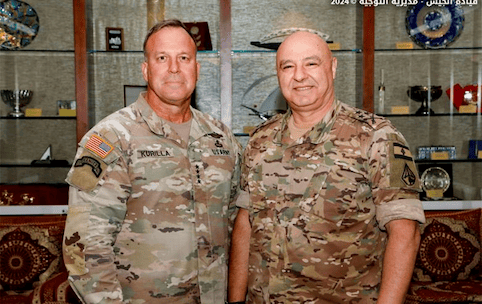
Optimally, the ceasefire and Hezbollah’s diminished stature would empower Beirut finally to exert sovereignty in the south, and, eventually throughout the entire state. Regrettably, though, it’s not clear Beirut will capitalize. The Government is deploying the Lebanese Armed Forces (LAF) to the south, but could balk at directing these forces to proactively dismantle Hezbollah’s military infrastructure and confiscate its weapons. A second phase of disarmament in the north consistent with UNSCR 1559 is difficult to imagine.
The concern for Lebanon’s politicos is that confrontation with the Shiite militia will reignite civil war. Perhaps more salient are apprehensions that, notwithstanding the end of Assad, Hezbollah will reconstitute. Even though Israel substantially degraded Hezbollah, an estimated 15,000 Hezbollah is armed with AK-47s, RPGs, and Kornet anti-tank missiles remain in Lebanon. Given the organization’s sordid and extensive history of assassinations, the threat continues to resonate.
Despite the challenges, it is a uniquely propitious time for Lebanon. Going forward, support of the heretofore risk averse Zuama will be critical. In the coming days, Parliament will elect a new president from a diverse slate of candidates ranging from those consigned to the status quo and Hezbollah, and others advocating for reform and change. To encourage if not compel Lebanon’s leadership to embrace the opportunity afforded by Israel’s degradation of Hezbollah, Washington will likely have to condition economic and military assistance on LAF performance enforcing UN resolutions. Recalcitrant Lebanese politicians may likewise need to be sanctioned.
In the Biblical account of the Exodus, it took Moses 40 years to lead the liberated Jewish people from Egypt to Canaan. According to tradition, it took so long to travel a mere 170 miles because after more than 400 years of bondage, these former slaves were not prepared to be a sovereign nation. Lebanon, unfortunately, doesn’t have the same luxury of time. Absent an immediate and concerted effort to consolidate the setbacks to Hezbollah, the organization will rebuild. With the continued support of Washington–and some courageous politicians in Beirut—however, Lebanon could finally reach the Promised Land of sovereignty.
*Former assistant secretary of state for Near East affairs during the Trump administration