



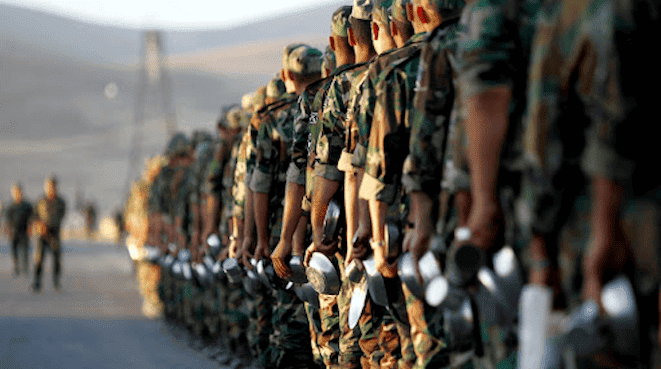
The recent decision by Hayat Tahrir al-Sham (HTS) to halt mandatory military service in Syria after the potential fall of the Assad regime marks a pivotal shift with deep socio-political implications for the future of the country.
For nearly five decades, conscription has been a powerful tool of control for the Assad regime, with profound effects on Syria’s demographic, social, and political fabric.
As conscription included ALL male citizens of Syria, one estimate is that it touched not less than 12 millions Syrians. In short, the Assad regime transformed the modern notion of ‘citizen military service’ in a modern ‘nation state” to a medieval regime of ‘serfdom’!
At its core, the conscription system deprived millions of young Syrians, especially Sunni men, of basic opportunities such as education, vocational training, and the chance to forge a future. These young men, forcibly recruited into the Syrian army, saw their aspirations crushed as they were sent to fight in conflicts that often seemed to have little to do with their lives. Education, once a pathway to social mobility, became a distant dream for many, while practical skills, such as learning a trade or profession, were rendered out of reach. The result was a generation of young Syrians whose prospects were stifled, making it difficult for them to contribute meaningfully to the economic and social growth of the country. Especially that the conscription was supplantd by a “keeping” (‘Ihtifaz‘) mechanism were some categories of conscripts were kept in military service indefinitively- sometimes for over 10 years.
The effects of forced conscription were not only economic but also deeply personal. By stripping young men away from their communities and families, conscription disrupted social structures, particularly among Syria’s Sunni majority. The loss of young men to military service meant that many could not pursue traditional rites of passage, such as marriage or family life. This social alienation, combined with the economic hardships imposed by prolonged military service, significantly affected Syria’s demographic dynamics. For many young Sunnis, the conscription system acted as a barrier to settling down, raising families, and contributing to the nation’s demographic growth. As a result, Syria’s demographic balance began to shift, with the Sunni majority bearing the brunt of the social and psychological costs of the regime’s policies.

Moreover, conscription in Assad’s Syria was not merely a mechanism for filling military ranks—it was also a tool for ideological indoctrination.
The Assad regime used the military to instill loyalty and subservience not only to the state but also to the regime itself and its Alawite ruling elite. Young men, especially from the Sunni community, were subjected to intense political education, often imbued with the regime’s glorification of the Assad family and the Alawite sect’s central role in Syria’s governance. This was not simply about military readiness but about shaping the hearts and minds of the population to venerate the regime, unquestionably hate « the Zionist enemy » (totalitarian regimes NEED a permanent real or imaginary enemy- as portrayed in George Orwell’s 1984 novel),suppress dissent, and ensure that the Assad family’s grip on power remained unchallenged. The pervasive culture of fear and allegiance built within the ranks of the army was designed to keep dissent at bay and fortify the Alawite-dominated regime’s control over Syria’s diverse social and political landscapes.
Hostage Taking
The strategic use of conscription, however, went beyond indoctrination—it was also a tool for political suppression. By forcibly drafting young Sunni men into the army, the Assad regime essentially took entire families hostage. The presence of these young men in the military not only removed them from their communities but also made it difficult for families to organize resistance or rebel against the regime. In many ways, conscription became a form of human leverage, preventing revolts and discontent from spreading through Syrian society. Those who dared to challenge the regime faced the threat of retribution against their sons and husbands, who were held in the military’s tight grasp. This form of control was not unique to Syria; similar tactics have been employed by regimes like Stalin’s Soviet Union and Maoist China, where military conscription was not just about defense but about ensuring loyalty, quelling dissent, and maintaining absolute power.
HTS’s decision to end mandatory conscription, therefore, is not just a military strategy but a symbolic act of resistance against a regime that has long used its military as a means of subjugation.
By dismantling this coercive system (later used even by some oppostion militias), HTS may open the door to a restructured society where young men can reclaim their futures—free from the shackles of forced service and indoctrination. This move could also pave the way for broader social and demographic changes, particularly among the Sunni population, whose social and familial dynamics were irrevocably disrupted by decades of conscription policies. However, the decision also raises questions about the future of Syria’s military structure and whether this will lead to greater instability or provide the foundation for rebuilding a more inclusive and democratic nation.
Regardless of the outcome, HTS’s stance signals a significant shift in the way Syrians may view their relationship with military service and state control in the years to come.