



As the AP Exclusive has proven to be “controversial”, METransparent suggests that its readers should , also, read “The AP’s controversial and badly flawed Iran inspections story, explained“.
*
VIENNA (AP) — Iran, in an unusual arrangement, will be allowed to use its own experts to inspect a site it allegedly used to develop nuclear arms under a secret agreement with the U.N. agency that normally carries out such work, according to a document seen by The Associated Press.
The revelation is sure to roil American and Israeli critics of the main Iran deal signed by the U.S., Iran and five world powers in July. Those critics have complained that the deal is built on trust of the Iranians, a claim the U.S. has denied.
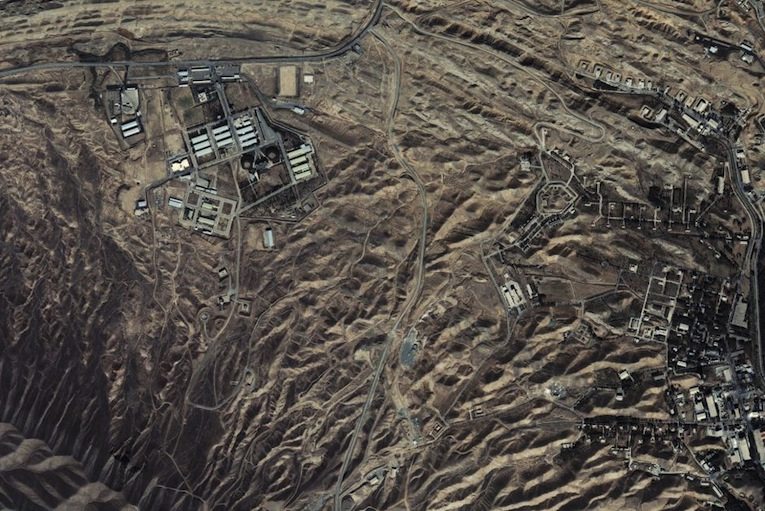
The investigation of the Parchin nuclear site by the International Atomic Energy Agency is linked to a broader probe of allegations that Iran has worked on atomic weapons. That investigation is part of the overarching nuclear deal.
The Parchin deal is a separate, side agreement worked out between the IAEA and Iran. The United States and the five other world powers that signed the Iran nuclear deal were not party to this agreement but were briefed on it by the IAEA and endorsed it as part of the larger package.
Without divulging its contents, the Obama administration has described the document as nothing more than a routine technical arrangement between Iran and the U.N.’s International Atomic Energy Agency on the particulars of inspecting the site.
Any IAEA member country must give the agency some insight into its nuclear program. Some countries are required to do no more than give a yearly accounting of the nuclear material they possess. But nations— like Iran — suspected of possible proliferation are under greater scrutiny that can include stringent inspections.
But the agreement diverges from normal inspection procedures between the IAEA and a member country by essentially ceding the agency’s investigative authority to Iran. It allows Tehran to employ its own experts and equipment in the search for evidence for activities that it has consistently denied — trying to develop nuclear weapons.
Evidence of that concession, as outlined in the document, is sure to increase pressure from U.S. congressional opponents as they review the July 14 Iran nuclear deal and vote on a resolution of disapproval in early September. If the resolution passed and President Barack Obama vetoed it, opponents would need a two-thirds majority to override it. Even Senate Majority Leader Mitch McConnell, a Republican, has suggested opponents will likely lose.
The White House has denied claims by critics that a secret “side deal” favorable to Tehran exists. U.S. Secretary of State John Kerry has said the Parchin document is like other routine arrangements between the agency and individual IAEA member nations, while IAEA chief Yukiya Amano told Republican senators last week that he is obligated to keep the document confidential.
But Republican critics are bound to harshly criticize any document that cedes to Iran the right to look for the very nuclear wrongdoing that it has denied committing. Olli Heinonen, who was in charge of the Iran probe as deputy IAEA director general from 2005 to 2010 ,said he can think of no instance where a country being probed was allowed to do its own investigation.
Iran has refused access to Parchin for years and has denied any interest in — or work on — nuclear weapons. Based on U.S., Israeli and other intelligence and its own research, the IAEA suspects that the Islamic Republic may have experimented with high-explosive detonators for nuclear arms at that military facility and other weapons-related work elsewhere.
The IAEA has repeatedly cited evidence, based on satellite images, of possible attempts to sanitize the site since the alleged work stopped more than a decade ago.
The document seen by the AP is a draft that one official familiar with its contents said doesn’t differ substantially from the final version. He demanded anonymity because he isn’t authorized to discuss the issue.
It is labeled “separate arrangement II,” indicating there is another confidential agreement between Iran and the IAEA governing the agency’s probe of the nuclear weapons allegations.
The document suggests that instead of carrying out their own probe, IAEA staff will be reduced to monitoring Iranian personnel as these inspect the Parchin site.
Iran will provide agency experts with photos and videos of locations the IAEA says are linked to the alleged weapons work, “taking into account military concerns.”
That wording suggests that — beyond being barred from physically visiting the site — the agency won’t even get photo or video information from areas Iran says are off-limits because they have military significance.
IAEA experts would normally take environmental samples for evidence of any weapons development work, but the agreement stipulates that Iranian technicians will do the sampling.
The sampling is also limited to only seven samples inside the building where the experiments allegedly took place. Additional ones will be allowed only outside of the Parchin site, in an area still to be determined.
“Activities will be carried out using Iran’s authenticated equipment consistent with technical specifications provided by the agency,” the agreement says. While the document says that the IAEA “will ensure the technical authenticity” of Iran’s inspection, it does not say how.
The draft is unsigned but the signatory for Iran is listed as Ali Hoseini Tash, deputy secretary of the Supreme National Security Council for Strategic Affairs instead of an official of Iran’s nuclear agency. That reflects the significance Tehran attaches to the agreement.
Iranian diplomats in Vienna were unavailable for comment, while IAEA spokesman Serge Gas said the agency had no immediate comment.
The main focus of the July 14 deal between Iran and six world powers is curbing Iran’s present nuclear program that could be used to make weapons. But a subsidiary element obligates Tehran to cooperate with the IAEA in its probe of the allegations.
The investigation has been essentially deadlocked for years, with Tehran asserting the allegations are based on false intelligence from the U.S., Israel and other adversaries. But Iran and the U.N. agency agreed last month to wrap up the investigation by December, when the IAEA plans to issue a final assessment on the allegations.
Both Iran and the IAEA were upbeat when announcing the agreement last month. But Western diplomats from IAEA member nations who are familiar with the probe are doubtful that Tehran will diverge from claiming that all its nuclear activities are — and were — peaceful, despite what they say is evidence to the contrary.
They say the agency will be able to report in December. But that assessment is unlikely to be unequivocal because chances are slim that Iran will present all the evidence the agency wants or give it the total freedom of movement it needs to follow up the allegations.
Still, the report is expected to be approved by the IAEA’s board, which includes the United States and other powerful nations that negotiated the July 14 agreement. They do not want to upend their July 14 deal, and will see the December report as closing the books on the issue.
Senate Appropriations Committee subcommittee chairman Lindsay Graham, a Republican presidential hopeful, last week asked for “any and all copies of side agreements between Iran and the IAEA associated with the Iran nuclear deal.” He threatened to cut off U.S. funding for the U.N. agency otherwise.
*
What Iran’s hostile reaction to the Parchin issue means for the nuclear deal