
Close Menu
    Facebook Instagram LinkedIn
    • العربية (Arabic)
    • English
    • Français (French)
    Facebook Instagram LinkedIn
    Middle East Transparent
    • Home
    • Categories
      1. Headlines
      2. Features
      3. Commentary
      4. Magazine
      5. Cash economy
      Featured
      Headlines Axios

      Scoop: French plan to end Lebanon war includes recognition of Israel

      Recent
      15 March 2026

      Scoop: French plan to end Lebanon war includes recognition of Israel

      13 March 2026

      Iran Alone

      13 March 2026

      A Farewell to a Mind That Spoke with History: In memory of Prof. Dr. İlber Ortaylı

    • Contact us
    • Archives
    • Subscribe
    • العربية (Arabic)
    • English
    • Français (French)
    Middle East Transparent
    You are at:Home»Categories»Headlines»America should get behind Saudi Arabia’s revolutionary crown prince

    America should get behind Saudi Arabia’s revolutionary crown prince

    0
    By Dennis Ross on 14 February 2018 Headlines
     I have just returned from my second trip to Saudi Arabia since Mohammed bin Salman, the 32-year-old crown prince, became the driving force for change in the kingdom. His efforts to transform Saudi society amount to a revolution from above. Many seem to equate him with the shah of Iran, who thought he could Westernize his country without modernizing its social, religious roots and was ultimately swept away in the revolution that produced the Islamic Republic of Iran.
    I see him as more like Mustafa Kemal Ataturk — a leader who revolutionized Turkey by taking away the power of the religious base and secularizing the country.
    To be sure, “MBS,” as he is known, is not trying to secularize Saudi Arabia. In his words, he is trying to “restore” Islam to its true nature and turn it away from those who sought to spread an intolerant, austere faith that created a justification for violence against all non-believers. Part of his challenge is that the Wahhabi interpretation of Islam — which guided the clerical establishment in the kingdom from its emergence in the late 1920s — promoted that very “us vs. them” belief system. The clerics were allowed by the royal family to run the educational system, enforce strict social mores within the kingdom and, especially after the revolution in Iran in 1979, finance madrassas internationally to spread its toxic worldview. Perhaps, that is why there is a cottage industry of skeptics of MbS’s mission and prospects for success.Ironically, the skeptics are primarily outside Saudi Arabia and not in it. In my visits, which were a year apart, whether meeting at the College of Entrepreneurship, the MiSK Foundation, the Intelligence or Foreign Ministries, or “Etidal” — the Global Center for Combating Extremist Ideology — the new prominence of women is unmistakable. Equally impressive is the youth of those one meets in all these institutions.

    At Etidal, which means moderation and is not just monitoring extremist messaging but also forging a counter-narrative of religious coexistence, the average age of the Saudi engineers, programmers and graphic designers is 26. With two thirds of the Saudi population under the age of 30, that should not be surprising. And it is Saudi youths who convey great energy and enthusiasm; they insist that they own the change and are committed to remaking their country.

    The drive for change in Saudi Arabia is more credible because it is homegrown, not a response to outside pressure. It is being driven by an understanding that Saudi Arabia cannot sustain governance based on the lowest common denominator among all the factions of the royal family, the approval of the Wahhabi clerics, an economy dependent almost exclusively on oil for revenue and 80 percent of Saudi households dependent on the government.

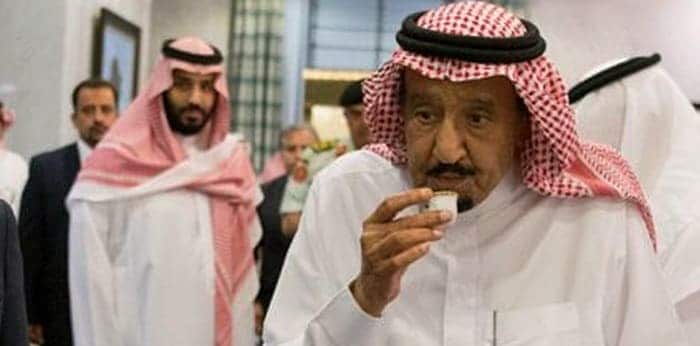
    MBS and his father, King Salman bin Abdul Aziz, understand this. Moreover, I suspect that the crown prince, who set up the MiSK Foundation for cultivating learning and a knowledge-based society before he came to power, read the mood of Saudi young people and saw a readiness for change. He saw, I believe, the potential that could be drawn upon even as he understood the danger of perpetuating the status quo. In this connection, during a visit to the Saudi Royal Court’s Center for Studies and Media Affairs, I was shown extensive polling on attitudes within the kingdom and how traditional views on the role of government, religious institutions and women are undergoing change. Saudi youths, not surprisingly, are far more open than the third of the population over 30.

    When speaking to one Saudi senior official about his daughter who is 16, I was struck by the obvious pride he felt in saying, “she believes she can do anything now.” That is not Saudi Arabia yet, as women still require the approval of a male relative to travel abroad.

    Still, if it was not for the turmoil and conflict that are consuming the region, the big story in the Middle East would be the transformation taking place in Saudi Arabia. The absence of a successful model of development produced the appeal of secular nationalists such as Gamal Abdel Nasser and Saddam Hussein on the one hand, and Islamists on the other — all claiming they had the solution for what plagued the region and its injustice and backwardness.

    We in the United States have a tremendous stake in MBS’s success, and his upcoming three-week visit to America will offer an opportunity for help where we can while a chance to be honest with him. It may go against the administration’s grain, but allowing more Saudi students to come and stay for postgraduate internships clearly would have an impact in the kingdom. At the same time, MBS also needs to hear that arresting bloggers or journalists who criticize the royal court will not create the atmosphere that fosters real innovation and creativity — but will have a chilling effect on the high-tech sector here whose investment and collaboration MBS seeks. Similarly, the anti-corruption campaign has merit, provided it is transparent and is seen to promote a rule of law that all external investors can count on.

    On foreign policy, the administration should emphasize that we need to avoid surprises and do more to coordinate approaches. President Trump should propose a high-level policy channel to think through together the implications of sensitive decisions before they are taken. Had the Trump administration gone to the Saudis two months before making its declaration on Jerusalem, it might have framed its decision in a way that was less disruptive to its own peace efforts. Similarly, on Yemen, Qatar and Lebanon, had the Saudis discussed their options with the United States first, we might have created a more effective division of labor to achieve our shared aims.

    MBS is a Saudi revolutionary, and the success of his policies will be felt not just in Saudi Arabia. So would their failure.


    Dennis Ross is counselor at the Washington Institute for Near East Policy and served in senior national security positions for Presidents Ronald Reagan, George H.W. Bush, Bill Clinton and Barack Obama.

    The Washington Post

    Share. Facebook Twitter LinkedIn Email WhatsApp Copy Link
    Previous ArticleSurrendering a Brussels mosque: A Saudi break with ultra-conservatism?
    Next Article Expanding regional rivalries: Saudi Arabia and Iran battle it out in Azerbaijan
    Subscribe
    Notify of
    guest
    guest
    0 Comments
    Newest
    Oldest Most Voted
    Inline Feedbacks
    View all comments
    RSS Recent post in french
    • Le Liban entre la logique de l’État et le suicide iranien 3 March 2026 Dr. Fadil Hammoud
    • Réunion tendue du cabinet : différend entre le Premier ministre et le chef d’état-major des armées, qui a menacé de démissionner ! 3 March 2026 Shaffaf Exclusive
    • En Arabie saoudite, le retour au réalisme de « MBS », contraint d’en rabattre sur ses projets pharaoniques 27 February 2026 Hélène Sallon
    • À Benghazi, quinze ans après, les espoirs déçus de la révolution libyenne 18 February 2026 Maryline Dumas
    • Dans le nord de la Syrie, le barrage de Tichrine, la forteresse qui a résisté aux remous de la guerre civile 17 February 2026 Hélène Sallon
    RSS Recent post in arabic
    • كيف تحول التيار الرسمي للقوميين العرب إلى معادين للعروبة؟ 14 March 2026 حسين الوادعي
    • تقييم متشائم: بأُمرة “الحرس” مباشرةً، 30 الف مقاتل في حزب الله ومعركة طويلة 13 March 2026 خاص بالشفاف
    • 500 ألف دولار شهريا لنبيه برّي لدعم نفوذ إيران في بيروت 12 March 2026 إيران إنترناشينال
    • بالفيديو والصور: بلدية صيدا “قَبَعت” القرض الحسن من شارع رياض الصلح! 12 March 2026 خاص بالشفاف
    • “طارق رحمن”: الوجه الجديد في عالم التوريث السياسي 12 March 2026 د. عبدالله المدني
    26 February 2011

    Metransparent Preliminary Black List of Qaddafi’s Financial Aides Outside Libya

    6 December 2008

    Interview with Prof Hafiz Mohammad Saeed

    7 July 2009

    The messy state of the Hindu temples in Pakistan

    27 July 2009

    Sayed Mahmoud El Qemany Apeal to the World Conscience

    8 March 2022

    Russian Orthodox priests call for immediate end to war in Ukraine

    Recent Comments
    • hello world on Between fire and silence: Türkiye in the shadow of a growing regional war
    • بيار عقل on Did Iran just activate Operation Judgement Day?
    • Kamal Richa on When Tehran’s Anchor Falls, Will Lebanon Sink or Swim?
    • me Me on The Disturbing Question at the Heart of the Trump-Zelensky Drama
    • me Me on The Disturbing Question at the Heart of the Trump-Zelensky Drama
    Donate
    © 2026 Middle East Transparent

    Type above and press Enter to search. Press Esc to cancel.

    wpDiscuz