



by Cortney Harding
Ayham Homsi is a hard guy to get ahold of.
Sure, living on an inverted schedule during Ramadan was part of the problem. But Homsi is also busy trying to sort out his visa so he can fly to the US and work with a western artist. After making music for fifteen years, the Saudi producer is ready to hit the big time. And he couldn’t have done it without the web.
Soundcloud, YouTube, and Spotify have fundamentally transformed the music business in the west, changing the way artists make money and access fans, the platforms have been even more earth-shattering for artists in other markets.
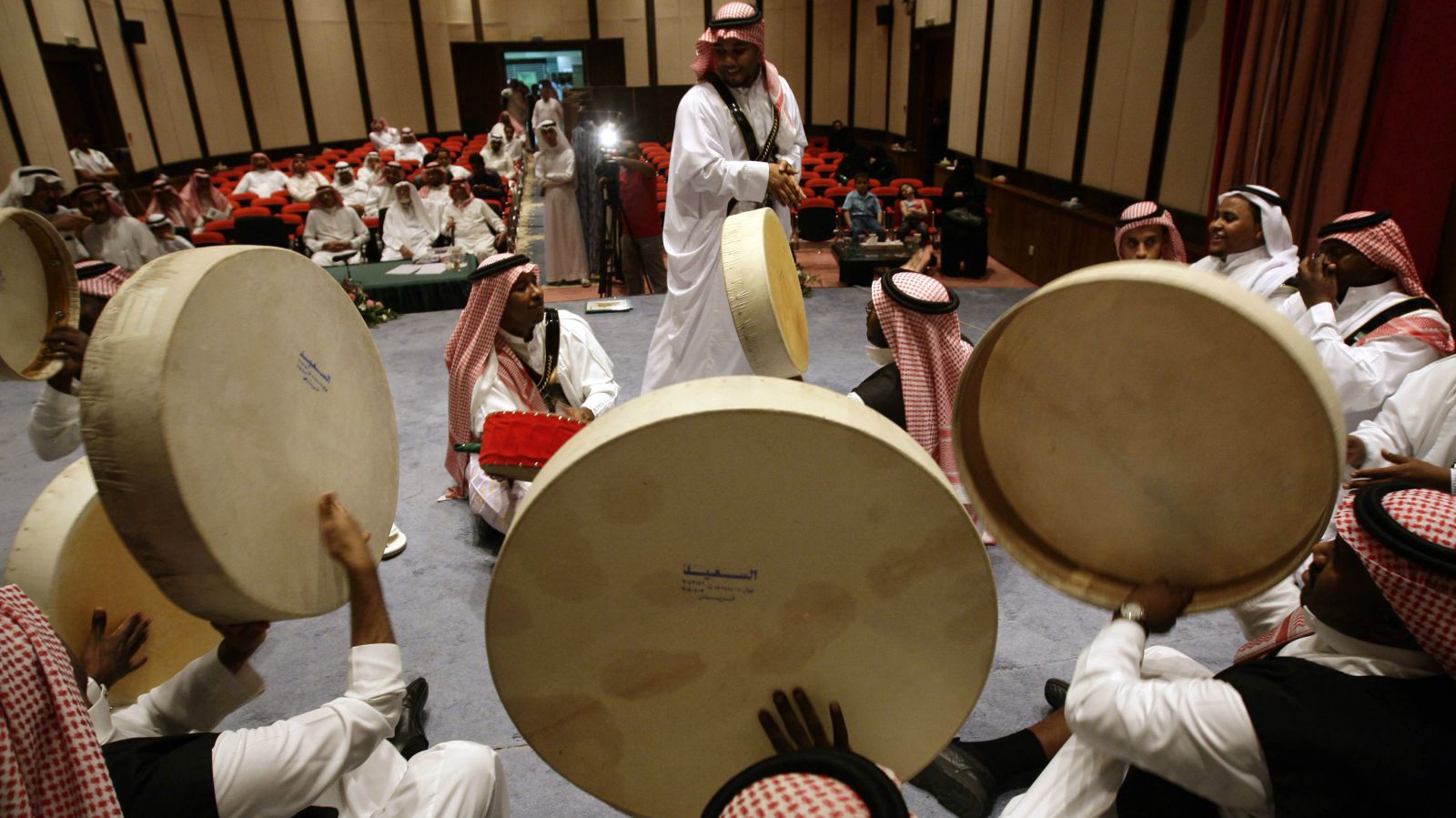
In Saudi Arabia, the conservative Islamic conservative movement of Wahabism dominates the culture. A strict interpretation of Wahhabism states that all music is sinful; the practical application of this tends towards a crackdown on western style music over local traditional music.
It means most western style pop artists stay underground rather than risk performing in public although there are a handful of private shows at homes and embassies. So the web has become a lifeline for musicians like Homsi who want to share their music—something that would have been next to impossible even fifteen years ago.
Before the rise of the web, it wasn’t easy to get western music in Saudi, although enterprising teens could always find a way. One of the founders of the Saudi punk band Sound of Ruby was introduced to rock music via an Asian cable channel; Homsi and his friend and collaborator Anas Arabi would buy records in Syria or Lebanon and bring them home to share with friends. Now, however, anyone with an Internet connection can find all of the world’s music -no personal connections or travel required.
Beyond simply consuming music, artists can also share their work, a feat that was nearly impossible in the days before the web.
The Saudi government doesn’t crack down on artists leaving the country to tour, although depending on the passport they carry, getting to the US or Europe might be impossible. Still, even building a fanbase in the Gulf States can reap rewards—the hip-hop duo Blak Royalty, based in Jeddah, recently partnered with Coke for a regional ad campaign.
For most Saudi artists, making money from their music seems to be a non-starter—and that’s OK with them. For Sound of Ruby, their income has amounted to “the cost of a Happy Meal,” but “that’s not really [their]purpose.” All the members of the band have day jobs and see their art as a way to express feelings they couldn’t otherwise. Despite the lack of a clear path to making a living, Saudi youth are starting bands and creating art in droves—Homsi estimates there are hundreds of rappers in Jeddah alone, all recording on laptops and posting online. Propellerhead, a Swedish site that allows people to upload clips of tracks and add to others clips, says Saudi Arabia is its third biggest market.
As far as lyrical content, Saudi artists still walk a fine line. Songs criticizing the leadership in Syria, for example, don’t attract negative attention, but a track protesting young men’s inability to go to the mall in an all-male group drew criticism. Many tracks err on the side of caution, praising the royal family and celebrating parents and devout partners. Even if songs are wildly positive, many in Saudi still believe that any music is sinful. The prevailing sentiment seems to be that as long as artists don’t shove their music in anyone’s face, they can play and record in bedrooms and basements.
While there are certainly some well-known female Saudi musicians, including Shams, who released songs that criticized George W Bush and called for women to be allowed to drive, the majority of artists in the punk and hip-hop space tend to be male. Primary consumers tend to be harder to pinpoint—because so much of the listening is done online or on a mobile device, in private, it might actually allow women more freedom to listen to music than they might have had if they were buying it in public, or going to shows.
Arabi says he’s received messages from Syrian refugees in several countries in response to some of his more political songs.
But things might change as more Saudi artists attract international attention. A Saudi singer named Hamza Hawsawi recently won the X Factor Middle East and signed a deal with Sony—on the show, he sang Western pop songs in English. Rapper Slo Moe has crossed the million-view mark for some of his YouTube videos, and Arabi says he’s received messages from Syrian refugees in several countries in response to some of his more political tracks. No one has managed a crossover hit as of yet, but as more artists come out of the woodwork, it seems increasingly likely.
All the artists agree that without the web and the rise of opening sharing services, none of this would have been possible. As a member of the Saudi metal band Al Namrood said, “The internet is gateway to the world for us, so closing that gate putting us in a lifeless prison.”