



Shaffaf Exclusive
The Question No One Dares Ask
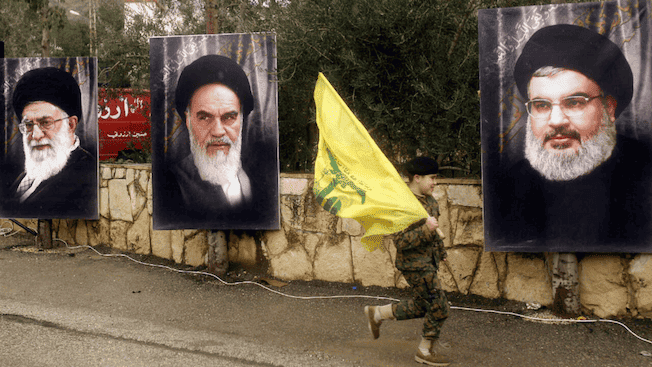
Walking through the streets of Dahieh, Beirut’s southern suburb, you see them everywhere: portraits of Ayatollah Ali Khamenei alongside Hassan Nasrallah, hanging from lampposts, plastered on building facades, watching over a community that has come to depend on Tehran’s largesse for survival.
But here’s the uncomfortable truth Lebanese politicians whisper in private but never say publicly: What happens now that Khamenei is dead?
Now that he is gone, he’ll take with him the entire architecture of Iran’s regional strategy—an architecture in which Lebanon wasn’t just a piece, but perhaps the crown jewel. For a country already on its knees, barely breathing through the worst economic collapse in modern history, this looming transition could be the final blow that breaks us.
Or—and hear me out—it could be the catalyst that finally forces us to save ourselves.
The Patron We Love to Hate
Let’s be honest about what Iran means to Lebanon.
For my Shia neighbors in the South, Iranian support isn’t abstract geopolitics—it’s the hospital that treats their children, the cash payment that keeps them fed, the generator that powers their homes when the state provides two hours of electricity per day. It’s real, tangible, and irreplaceable.
For others—Christians in Achrafieh, Sunnis in Tripoli, Druze in the Shouf—Iranian influence is the suffocating hand that prevents Lebanon from breathing, the veto power that blocks every reform, the foreign agenda that supersedes our national interest.
Both perspectives are true. And that’s precisely our problem.
Iran, through Hezbollah, has become both Lebanon’s life support and its parasite. We depend on it because our state has failed, and our state continues to fail partly because that dependency removes any incentive for reform.
The Coming Storm
Now that Khamenei is gone—Lebanon will face a reckoning we’re catastrophically unprepared for.
The Money Will Dry Up
That $1bln USD annual pipeline to Hezbollah? Don’t expect a smooth transition. Iranian succession battles are notoriously messy. Supreme Leader candidates will be too busy consolidating power in Tehran to worry about maintaining services in The south and Baalbek.
What this means practically:
- The hospitals Hezbollah runs will run out of medicine
- The monthly stipends supporting 150,000 families will stop
- The fuel shipments that have kept some lights on will cease
- The reconstruction money promised after the war in the south will vanish.
For hundreds of thousands of Lebanese, this isn’t political abstraction. It’s existential.
The Political Earthquake
So what happens when that backing becomes uncertain.
I’ve spoken with political analysts, former ministers, and militia commanders (all off the record, naturally—this is Lebanon). The consensus is sobering: no one knows.
Will Hezbollah become more Lebanese, forced to compromise without Tehran’s unconditional backing? Will it fragment into competing factions backed by different Iranian power centers? Will it double down on militancy to prove its revolutionary credentials?
The answer matters enormously. One path leads to political opening; another leads to internal instability.
What I Fear Most
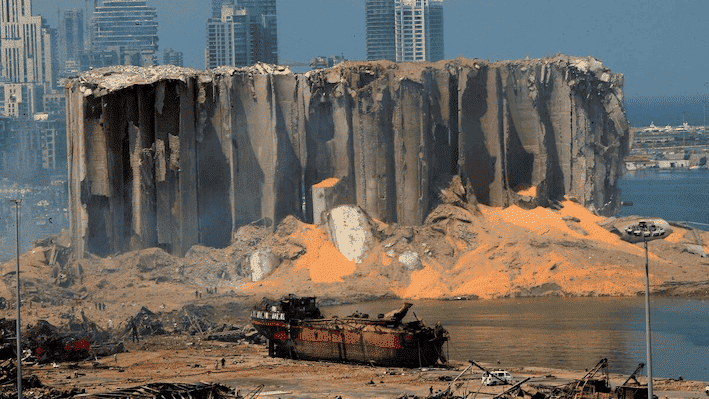
I’ve covered Lebanon’s the financial crises for years—the currency collapse, the bank heist by our own government dodgy fiscal policies and financial elite, the port explosion, the exodus of doctors and engineers. But this potential scenario keeps me up at night.
Because it combines all our worst vulnerabilities:
The Service Gap
When Hezbollah’s welfare system falters, who fills the gap? The Lebanese state that can’t provide electricity? The international community that conditions aid on reforms our politicians refuse? The Gulf states that won’t invest while Hezbollah maintains its arsenal?
The vacuum will be filled by desperation, and desperate people make dangerous choices.
The Sectarian Powder Keg
For three decades, Hezbollah’s overwhelming military superiority has paradoxically maintained a kind of peace—the peace of imbalance, where challenging the status quo seems futile.
But if that superiority becomes questionable, if funding dries up, if internal divisions emerge, other communities might see a moment to rebalance power. And in Lebanon, rebalancing power has historically meant only one thing.
I’m not predicting civil war. I’m saying the conditions that prevented one could evaporate quickly.
What I Hope For (Against All Odds)
But here’s what keeps me from complete despair: crises reveal truth.
For years, Lebanese politicians have blamed our paralysis on regional dynamics, foreign interference, and geopolitical complexity. These excuses, while not entirely false, have provided cover for corruption, incompetence, and the wholesale looting of our country.
A leadership transition in Iran would strip away these excuses.
Imagine a scenario where:
- Hezbollah, facing funding uncertainty, actually negotiates a political settlement
- The international community, seeing an opening, offers conditional support for serious reforms
- Saudi Arabia and Iran, both distracted by internal transitions, agree to a Lebanese détente
- Our politicians, unable to hide behind regional patrons, face direct accountability to Lebanese citizens
Is this likely? Probably not. Lebanese exceptionalism usually manifests in our unique ability to choose the worst possible option.
But it’s possible. And possibility is a rare commodity in Lebanon these days.
What We Must Do Now
Waiting for Iran’s succession crisis to hit us is national suicide. We need to prepare, even though preparation requires admitting uncomfortable realities.
For the Shia Community
You deserve better than dependency. Hezbollah’s social services exist because the Lebanese state abandoned you. But services provided by a militia answerable to Tehran aren’t sustainable or dignified.
Demand that Hezbollah’s resources be integrated into state institutions. Insist on social services as a right of citizenship, not a gift from a foreign-backed patron.
For Other Communities
Schadenfreude won’t save you. When Hezbollah’s social services collapse, the resulting chaos won’t stay neatly contained in Shia areas. Poverty spreads. Desperation spreads. Conflict spreads.
The goal shouldn’t be Hezbollah’s humiliation but Lebanon’s reconstruction—which requires bringing everyone, including Shia citizens, into a functional state framework.
For All of Us
We need a national contingency plan. Who will provide emergency services if Hezbollah’s network fails? How will we prevent sectarian opportunism from turning political opening into conflict? What reforms can we implement immediately to demonstrate we’re serious about change?
These conversations should be happening in parliament, in civil society, in universities.
The Bitter Truth
I’ll end with an observation that won’t make me popular: Lebanon hasn’t been truly sovereign since 1975.
We’ve been occupied by Syria, controlled by militias, and pawns in regional power games. We’ve outsourced our security, our politics, and increasingly our economy to foreign patrons.
Iranian influence through Hezbollah is just the latest chapter in our long history of dependence.
Khamenei’s death won’t automatically restore our sovereignty. It will simply remove one pillar of our current dysfunction. What we build afterward—whether a functioning state or a failed one, whether renewed conflict or genuine reform—depends entirely on choices we make now.
The uncomfortable question isn’t what happens now that Khamenei is dead.
It’s whether we’re capable of saving ourselves, or whether we’ve grown so accustomed to patronage and paralysis that independence itself has become frightening.
I wish I knew the answer.
First published on Mar 1, 2026
مهم مقال سماره مجرد طرح الاسئلة عمن سيملأ الفراغ بعد الخامنئي هو بحد ذاته مدعاة لبحث ما ستؤول اليه الامور كي لا نتفاجأ بالاسوأ