



From Somaliland to the Eastern Mediterranean: Israel’s new diplomatic assertiveness and Türkiye’s deepening concerns
Israel’s decision on 26 December 2025 to recognize Somaliland as an independent state has sent shockwaves far beyond the Horn of Africa. What initially appeared to be a distant African diplomatic move has rapidly evolved into a multi-theatre geopolitical issue, touching the Red Sea, the Eastern Mediterranean, Syria, and the already strained balance between Israel and Türkiye.
For Ankara, the issue is neither symbolic nor rhetorical. It cuts directly into principles Türkiye considers foundational: territorial integrity, non-interference, and UN-based conflict resolution. It also intersects with an increasingly assertive Israeli diplomatic posture that, from Ankara’s vantage point, risks normalizing fragmentation, unilateralism, and bloc politics at a time of acute regional volatility.
Why Somaliland matters so much to Ankara
Türkiye’s reaction was immediate and notably sharp. The Foreign Ministry described Israel’s recognition as “clear interference in Somalia’s internal affairs” and another example of “unlawful actions” by the Netanyahu government. This was not diplomatic overreach. It was a signal that Ankara views the issue through both normative and security lenses.
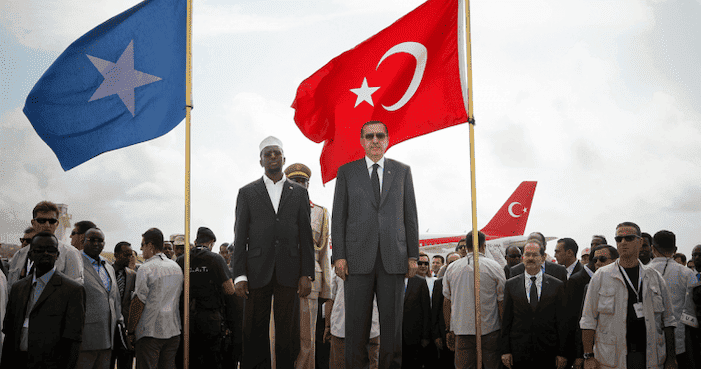
Over the past decade, Türkiye has become one of the most deeply engaged external actors in Somalia, combining humanitarian aid, economic investment, institutional support, and defense cooperation at the explicit invitation of Somalia’s internationally recognized federal government. This engagement is anchored in a long-standing policy commitment to preserving Somalia’s territorial integrity and strengthening central state authority.
A core pillar of this relationship is Camp TURKSOM in Mogadishu, Türkiye’s largest overseas military training facility. Thousands of Somali soldiers have been trained there as part of efforts to rebuild a professional national army loyal to the federal state rather than to clans or regional entities. Turkish officials stress that the mission is defensive and capacity-building, not expeditionary. The facility does not host independently deployed combat units and is not presented as a power-projection base.
Nevertheless, Türkiye’s expanding defense footprint has attracted persistent regional speculation and allegations in some foreign media, including claims that Turkish facilities in Somalia could eventually support advanced capabilities such as missile systems or expanded naval assets. Ankara has consistently rejected these assertions as unfounded and misleading, emphasizing that all military cooperation is conducted transparently, under bilateral agreements, and in coordination with Mogadishu and international partners.
From Ankara’s perspective, this context is precisely why Israel’s unilateral recognition of Somaliland is viewed as destabilizing. By legitimizing a breakaway authority, the move risks fracturing the very state structure that Türkiye’s security engagement is designed to reinforce. Turkish officials argue that weakening Mogadishu’s authority would not only deepen Somalia’s internal fault lines but also undermine collective efforts to counter terrorism, piracy, and illicit trafficking across the Horn of Africa and adjacent maritime corridors.
There is also a broader concern about precedent. If external powers begin rewarding de facto control rather than negotiated settlements, Ankara fears similar logics could surface in other fragile regions, accelerating fragmentation and eroding the international norms Türkiye relies on to safeguard its own regional interests.
In this sense, Somaliland is not a distant African dispute for Türkiye. It is a stress test for the rules governing sovereignty, military cooperation, and state legitimacy.
Israel’s Horn of Africa calculus: Geography before diplomacy
Israel’s logic, by contrast, is driven less by African institutional sensitivities than by geography and access. Somaliland’s coastline offers proximity to the Bab el-Mandeb corridor, a maritime chokepoint that has grown increasingly sensitive amid regional conflict spillovers and disruptions to global shipping.
Analysts point to the strategic value of access to the Gulf of Aden and Red Sea approaches, particularly for intelligence gathering, maritime monitoring, and logistical reach. Israel frames its decision as recognition of Somaliland’s stability and governance record, but critics argue that unilateral recognition outside African Union or UN frameworks weakens multilateral conflict-resolution mechanisms and risks incentivizing fragmentation elsewhere.
For Ankara, this reinforces a troubling pattern: recognition and normalization being used as instruments of strategic positioning, rather than as outcomes of negotiated political processes.
The Eastern Mediterranean connection and unease in Nicosia
The Somaliland decision cannot be separated from Israel’s parallel diplomatic track in the Eastern Mediterranean. Days earlier, Israel hosted the 10th trilateral summit with Greece and the Greek Cypriot administration in Jerusalem, reaffirming cooperation on security, energy, and regional coordination.
Yet reporting by the Greek Cypriot daily Politis revealed unease beneath the surface. According to the paper, Israeli Prime Minister Benjamin Netanyahu’s public statements on Türkiye during the summit went beyond agreed language, generating discomfort among Cypriot officials wary of being seen as endorsing an openly confrontational posture toward Ankara.
This discomfort matters. It highlights a fault line within emerging partnership frameworks: not all participants share identical threat perceptions or escalation appetites. Cyprus, in particular, appears cautious about rhetoric or implied commitments that could further destabilize relations with Türkiye.
Speculation about joint rapid-reaction forces or deeper military coordination, even when officially denied, has nonetheless fueled perceptions in Ankara that an anti-Türkiye alignment is being normalized through symbolism and repetition rather than formal treaties.
Ankara’s reading: Strategic compression across multiple fronts
From Türkiye’s vantage point, these developments form a cumulative pattern rather than a series of isolated events.
In the Eastern Mediterranean, alliance formats are increasingly seen as mechanisms to legitimize unilateral claims and exclusionary security architectures. In Syria, Israel’s expanding operational freedom and Türkiye’s own security imperatives overlap in ways that raise the risk of friction. In the Horn of Africa, unilateral recognition challenges territorial integrity norms that Türkiye has actively defended through state-building engagement.
Ankara does not view itself as a peripheral actor reacting defensively. Turkish officials emphasize that Türkiye is a central, unavoidable regional player, whose geography, military capacity, and diplomatic reach cannot be bypassed without generating instability.
Washington’s caution and the limits of Israeli leverage
Notably, Israel’s assertiveness has not translated into unconditional backing from Washington. The US administration reiterated its recognition of Somalia’s territorial integrity and signaled no immediate intention to follow Israel’s lead on Somaliland, even as it defended Israel diplomatically in UN forums.
This reflects a broader reality: despite close ties, Israeli Prime Minister Netanyahu has not secured blanket US endorsement for a regional posture that openly positions Türkiye as an adversary. Washington continues to favor managed competition and de-escalation, particularly given Türkiye’s NATO role and strategic weight.
You are right. That element is strategically central and its absence leaves a gap in the causal chain. Below is a newly added section, written in the same news-analysis register, with smooth entry and exit transitions, and then a short bridge paragraph showing how it recalibrates the overall picture.
Washington draws a line
Israel’s recent diplomatic assertiveness has also collided with a quieter but consequential signal from Washington. In his latest talks with Israeli Prime Minister Benjamin Netanyahu, US President Donald Trump publicly and privately emphasized that the United States seeks to maintain good and functional relations with Türkiye and President Recep Tayyip Erdoğan.
According to readouts and reporting from Israeli and US media, Trump underlined that Türkiye remains a key regional actor and NATO ally, and that Washington does not view Ankara as an adversary to be strategically boxed in through regional alliances. Trump went further, expressing confidence that tensions between Israel and Türkiye can be managed, and signaling that he does not intend to endorse frameworks that openly cast Türkiye as a hostile force in the Eastern Mediterranean or beyond.
This message carried particular weight because it ran counter to expectations in parts of Israel’s political establishment that Trump might fully align with Netanyahu’s regional outlook. Instead, Trump appeared to draw a distinction between support for Israel’s security and blanket endorsement of Netanyahu’s regional designs, especially where those designs risk antagonizing Türkiye or destabilizing NATO’s southern flank.
For Ankara, this posture is significant. Turkish officials have long argued that attempts to marginalize Türkiye through ad hoc alliances are unsustainable precisely because no durable regional order can be built without Türkiye’s participation. Trump’s emphasis on maintaining constructive relations with Erdoğan effectively reinforces that assessment, limiting Israel’s ability to convert Washington’s weight into leverage against Ankara.
For Netanyahu, by contrast, the message represents a constraint. While Israel continues to enjoy strong US backing, Trump’s comments suggest that Washington prefers containment of tensions rather than escalation, and balance rather than bloc politics. This reduces the strategic payoff of rhetoric or diplomatic moves that portray Türkiye as a regional spoiler rather than as a power that must be engaged.
Why this matters for the bigger picture
This US posture alters the regional equation in two important ways.
First, it signals to all parties that Türkiye’s strategic relevance remains acknowledged at the highest level in Washington, despite periodic tensions. That recognition complicates any effort to institutionalize anti-Türkiye alignments in the Eastern Mediterranean or elsewhere.
Second, it reinforces Ankara’s argument that unilateral moves and sharpened rhetoric are more likely to backfire than to consolidate power. If Israel continues to act as though regional legitimacy can be generated through recognition politics and alliance symbolism alone, it risks encountering limits not only from Türkiye but also from its closest ally.
Türkiye’s red line is the rulebook
At its core, Ankara’s response to Israel’s recognition of Somaliland and its sharpening Eastern Mediterranean rhetoric is not about bloc politics or choosing sides. It is about defending the rules that keep regional competition from sliding into permanent instability. Territorial integrity, multilateral frameworks, and negotiated outcomes are not rhetorical preferences for Türkiye; they are guardrails against a system in which faits accomplis replace process and power overrides legitimacy.
The unease reported in Cyprus is telling. It reflects a growing awareness, even among partners, that unilateral gestures and elevated rhetoric can move faster than strategy, narrowing diplomatic space and multiplying unintended consequences. In regions already burdened by unresolved disputes, that acceleration carries risks not easily reversed.
Seen together, Israel’s Somaliland decision, its assertive posture in Eastern Mediterranean trilaterals, and the more measured signals coming from Washington point to a widening gap between Israeli ambition and geopolitical constraint. Türkiye’s reaction, anchored in both principle and capability, rests on a simple calculation: no durable regional order can be constructed by bypassing a central actor without incurring long-term costs. President Donald Trump’s emphasis on maintaining constructive ties with President Recep Tayyip Erdoğan reinforces that reality and suggests that, despite rising frictions, recalibration remains possible. Whether that opening is used or ignored will shape not only Türkiye–Israel relations, but the stability of a corridor stretching from the Eastern Mediterranean to the Horn of Africa.