




In Lebanon, the hawala system is no longer confined to the margins of the economy. Based on direct observations inside hawala shops across the country, it has become a preferred financial channel for a wide range of legitimate individuals and businesses who feel increasingly pushed out of the formal banking system. The expansion of hawala use reflects not only criminal intent, but systemic failures in banking fees, transfer limits, and compliance rigidity that are driving ordinary citizens toward informal alternatives.
Lebanese Abroad: Wiring Money Home from the Gulf
One of the most prominent users of the hawala system today are Lebanese expatriates living in the Gulf, particularly those sending large sums of money to support parents and family members back in Lebanon.
Bank transfers and formal remittance services such as Western Union impose monthly caps on remittances.
Faced with these obstacles, Lebanese workers in the Gulf increasingly rely on hawala operators to send large and regular amounts of money home. For them, hawala is faster, cheaper, and unrestricted by arbitrary limits. This migration away from banks is not illegal behaviour ,it is a rational economic response to rising costs and constraints.
Banks Are Driving Away Legitimate Clients
The Lebanese banking sector should take note: by raising fees and tightening access, banks are actively dismantling their own business models. Many of the clients turning to hawala are exactly the customers banks should want to retain — salaried expatriates, families receiving support, and small entrepreneurs.
Instead, the financial system is effectively outsourcing these transactions to an unregulated parallel network.
Small and Medium Enterprises Under AML Pressure–
Another major group using hawala consists of small and medium enterprises (SMEs) struggling with excessive cash flows and limited banking access.
Due to heightened Anti-Money Laundering (AML) scrutiny, many SMEs face refusals to deposit cash, demands for extensive documentation they cannot provide, account freezes and prolonged reviews.
As a result, small business owners who deal heavily in cash are paying suppliers in the Gulf through hawala networks. Transactions move quickly, with no intrusive questioning about the source of funds. For businesses already operating under tight margins and scarce administrative resources, hawala becomes the only viable way to maintain operations.
Crucially, most SMEs in Lebanon do not have sophisticated or updated bookkeeping systems. They operate with minimal staff and basic record-keeping. Expecting them to meet complex, international-level compliance standards without transitional support is unrealistic — and counterproductive.
Land Sales and High-Value Transfers
Contrary to the assumption that hawala only handles small sums, large-value transactions are increasingly common.
One observed transaction involved a man walking into a hawala shop with approximately USD 400,000 in cash, which was then transferred to Sydney as payment for a land sale. The land had been purchased in Lebanon from a Lebanese seller residing in Australia.
The reason the buyer avoided the banking system was straightforward: he could not justify the source of the cash to the bank, anticipating extensive questioning, documentation requests, and potential rejection. Hawala completed the transaction efficiently where banks could not.
This pattern is not isolated. Many real estate transactions involving overseas recipients are now settled through hawala when banking pathways become too burdensome.
Trade and Luxury Goods Payments
Hawala is also facilitating cross-border trade for private individuals. In one case, a buyer paid a watch dealer in Dubai through a hawala operator after the watch had already been delivered to Lebanon. Again, the choice was driven by speed, ease, and certainty — not criminal activity.
Inside the Hawala Shops: A Parallel Banking System
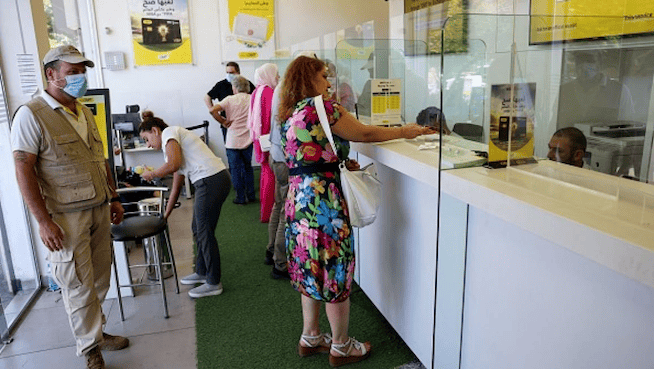
Spending time inside a hawala shop feels increasingly like sitting in a bank branch. While observing operations, numerous transactions flowed continuously, often under USD 20,000 each, processed efficiently hour after hour.
Large sums flowing into Lebanon were mainly destined for:
Large sums flowing out of Lebanon frequently related to:
This constant volume underscores one reality: hawala is filling a vacuum left by formal institutions.
Policy Implications: What Banks and the Central Bank Must Confront
The expansion of hawala in Lebanon is not happening in spite of the banking system — it is happening because of it.
Lebanese banks must reassess:
Meanwhile, the Central Bank must confront an uncomfortable truth: over-enforcement of AML rules without adapting them to Lebanon’s economic reality is driving SMEs and ordinary citizens underground.
When compliance becomes impossible rather than manageable, it does not stop transactions — it merely relocates them outside oversight.
Regulation Without Exclusion
Hawala’s growth in Lebanon is a symptom, not a cause. It reflects broken trust, restrictive banking policies, and a failure to design financial regulation that accommodates small businesses and cash-based realities.
If banks continue on their current path, they will further marginalize themselves while reinforcing informal networks they cannot control. A recalibration is urgently needed — one that balances compliance with accessibility, and regulation with economic survival.
Failing that, the underground economy will continue to expand, not because people prefer it — but because they are left with no alternative.