



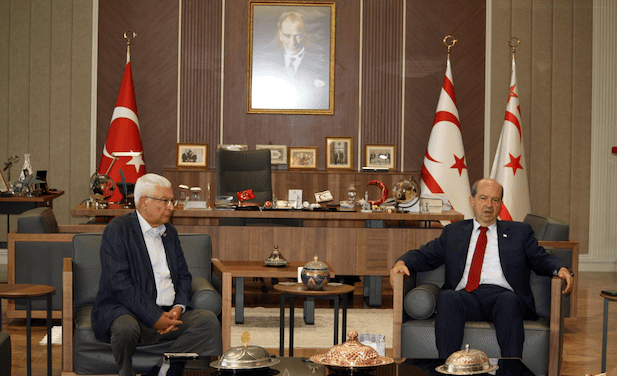
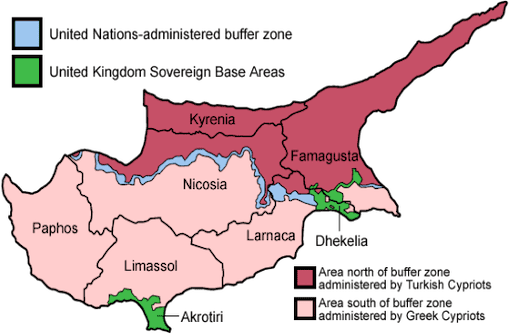
The Turkish Republic of Northern Cyprus will go to the polls on October 19. These elections will determine not only who will be the new president, but also the will of the Turkish Cypriot people regarding the future, their vision for a solution, and how they will be represented in the world.
Last week, I was on the island with a group of journalists. We met with presidential candidates, party leaders, prominent politicians, and people from different segments of society, and conducted interviews. These meetings clearly showed that the election atmosphere is not limited to the statements of leaders; the agenda of citizens on the street is dominated by the high cost of living, the search for justice, and debates about will.
Two Paths: Tatar and Erhürman
Two powerful figures are at the center of the election race: incumbent President Ersin Tatar and Republican Turkish Party (CTP) leader Tufan Erhürman. The rhetoric of the two leaders represents not only different political understandings but also two separate roadmaps for the future of the Turkish Cypriot people.
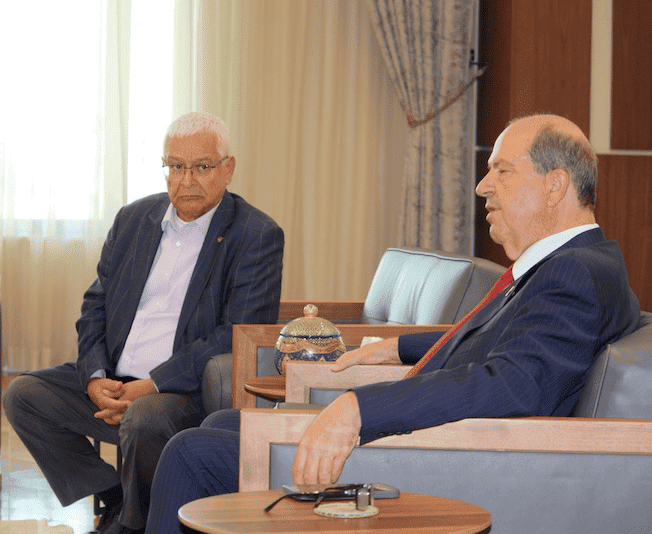
Ersin Tatar: “There can be no security without two sovereign states”
Tatar’s line has been clear since the 2020 elections: to close the door on the federation option and defend the “two-state solution” thesis in full harmony with Turkey. According to him, federation would take the Turkish Cypriots back to past adventures, leading to the withdrawal of Turkish troops from the island and the weakening of the guarantor system. That is why he constantly reiterates the following thesis: “Our future can only be secured with two sovereign states.”
Tatar’s arguments are not solely security-focused. He describes the military relations established by Southern Cyprus with Israel, the US, and France, as well as their radar and missile systems, as an “open threat to the island.” In this context, Tatar argues that Cyprus faces the risk of turning into a “missile field” rather than a tourism paradise. According to him, the only solution is for Turkish Cypriots to further consolidate their own state and increase Turkey’s strategic support in all areas.
Another claim by Tatar is that the discourse of “federation” has lost its credibility in the international community. According to him, the Greek Cypriot side will never accept genuine political equality with Turkish Cypriots. Therefore, the search for a “federation” is merely a waste of time. For this reason, Tatar sees the search for a federation as a “dead dream” and says that the main goal is to get the world to accept the existence of the TRNC.
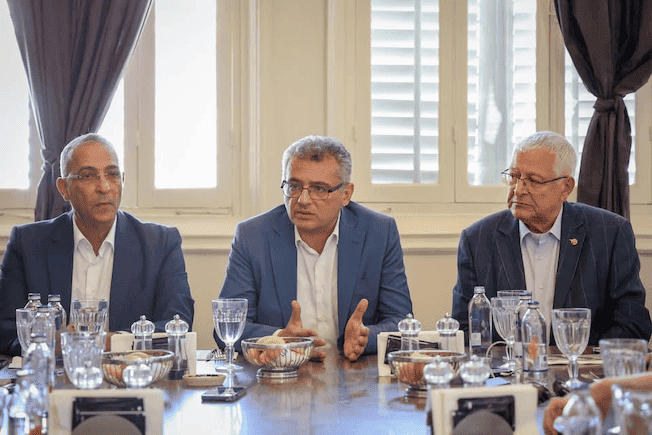
Tufan Erhürman: “We lost five years, now we must return to the table”
Tufan Erhürman, on the other hand, speaks from a completely different perspective. According to him, Tatar’s term was “five wasted years.” The office of the presidency, which should have made the Turkish Cypriot people visible, did the opposite and made them invisible. The statement, “The presidency made Turkish Cypriots invisible during these five years,” is Erhürman’s harshest criticism of Tatar’s administration.
Erhürman’s priority is to regain the ground lost in the international arena. The way to do this is to return to the negotiating table. But this time with a clear framework. Erhürman sets four basic conditions for a new process:
1. Political equality should not be subject to negotiation – The fact that Turkish Cypriots are an equal founding people should not be open to debate.
2. Timed negotiations – Negotiations should not go on indefinitely, but should be held within a set time frame to ensure progress.
3. Focus on results – Negotiations should be conducted not just for the sake of negotiating, but to produce a solution.
4. Preventing a return to the status quo – If negotiations fail, there should be no return to the old situation; alternative paths must be pursued.
In Erhürman’s vision, federation is still on the table. However, this federation is not uncertain as it was in the past; it is a model supported by mechanisms that will produce results and guarantee political equality. According to him, the problems of daily life cannot be solved unless the Turkish Cypriots become visible and legitimate within international law.
The difference between the two paths
The difference between Tatar and Erhürman is actually based on two fundamental concerns of the Turkish Cypriot community: security and legitimacy.
• Tatar prioritizes security. He believes that without Turkey’s military and political support, the Turkish Cypriots cannot survive. In his view, a two-state solution is not just a political model, but a guarantee of existence.
• Erhürman, on the other hand, prioritizes legitimacy. He believes that no solution can be lasting without establishing ties with the world and ensuring the visibility of Turkish Cypriots. For him, a federation is not just an ideal; it is the most realistic path that the international community can accept.
In other words, Tatar says “security first, recognition later”; Erhürman, on the other hand, is on the line of “visibility and equality first, lasting security later.”
Kudret Özersay: “There is a much deeper problem than the election”
Kudret Özersay, leader of the People’s Party, chose not to run in this election. However, not running does not mean his voice is not being heard. On the contrary, his assessments have become one of the fundamental elements shaping the election atmosphere. Özersay views the issue not only through the lens of the presidency but also through the lens of the entire structure of the state.
According to Özersay, the biggest problem facing Turkish Cypriots is not the debate over the solution model, but the state’s internally decaying structure. The fake diploma scandal, allegations of corruption, rumors of bribery, and the culture of favoritism cast a shadow not only over politics but also over social life. This situation erodes the public’s trust in the state. In his words, “The presidency is not enough to change this order.”
Özersay’s emphasis actually changes the framework of the elections. While leaders debate solution models, Özersay places the need for good governance and justice at the center of the problem. According to him, the public is now asking the question, “What kind of state?” rather than “Which solution model?”
Turkey’s interventions and the debate over will
One of Özersay’s most notable criticisms is Turkey’s direct intervention in Cyprus’ elections and government formation processes. Citing the events of the 2020 elections and how the government was subsequently shaped, he says these interventions have created a lasting perception among the public: “Ankara will decide anyway.”
This perception not only overshadowed political competition; it also influenced voter behavior. As the candidates and party officials we interviewed emphasized, this perception lowers voter turnout and creates despair among citizens. For this reason, Özersay continues to be one of the most discussed figures in the election atmosphere.
Distance from the elections
Özersay’s observations also explain why he is not running for office. In his view, the office of the presidency cannot produce a solution to the system’s decay due to its limited authority. Therefore, he prefers social struggle and raising political awareness over candidacy. His words, “No matter what solution model we discuss without meeting society’s need for justice and trust, the result will not change,” summarize this approach.
In our conversations on the streets of the island, frequent reference was made to Özersay’s approach. For many citizens, corruption, lack of meritocracy, and fake diplomas are more concrete and urgent problems than even the complex issues surrounding the Cyprus problem. A significant portion of the public is aligning with Özersay’s thesis, saying, “Let’s get our house in order first.”
Serdar Denktaş: “There have been no talks for five years”
Serdar Denktaş was the founding president of the recently established Tam Party, but today he is only a member. His party has no official stance in the election process; however, Denktaş has openly declared his support for Tufan Erhürman on an individual basis. His approach is not limited to his choice of candidate; it also involves a deep reckoning that will determine the direction of society.
The Cyprus issue is secondary, the agenda is the high cost of living – According to Denktaş, the Cyprus issue is not on the public’s agenda, but rather the serious problems of daily life: the high cost of living, fake diploma scandals, corruption, and the informal economy. He sums up this picture by saying, “The public’s priority is not the question of a solution, a federation, or two states; it is the fire in the kitchen.”
We frequently heard this observation during our contacts with candidates and citizens. While many citizens describe the solution discussions as “a game played by politicians at the top,” Denktaş directly expresses this sentiment: “Putting the Cyprus issue on the election agenda obscures social realities.”
Crisis of will: “This election is a turning point” – Denktaş’s strongest emphasis is on the loss of will. He says that in the last five years, the TRNC’s dependence on Ankara has deepened, and political decisions have been shaped more by Turkey’s preferences than by the will of society. The interventions and pressure on the press during the 2020 elections are, for him, prime examples that prove this picture.
With the statement “This election is a turning point,” he explains that it is imperative for the people to reclaim their own will. According to him, going to the polls and voting is not just about electing a new leader, but also means “Cypriot Turks reaffirming their own existence.”
Concern for representation: “A president I won’t be ashamed of” – Denktaş’s personal support for Erhürman is more about representation than solution models. His words, “He will be a representative I won’t be ashamed of watching,” crystallize this perspective. How Turkish Cypriots are perceived internationally is more important to him than which model is being discussed at the negotiating table.
This concern is decisive not only at the diplomatic level but also in terms of the community’s self-confidence. According to Denktaş, Turkish Cypriots want a president who can make their voice heard and exist with their own identity.
For future generations – Denktaş also takes a distant approach to the solution discussions, seeing it as an issue that future generations will shape. He believes that today’s priority is to preserve the social structure, establish an order that allows young people to stay in the country, and regain the will. “The solution to the Cyprus problem will inevitably come up one day,” he says, “but first we must put our own house in order.”
In our conversations on the streets of the island, we find a broad segment of the population listening to Denktaş’s rhetoric. Middle-aged voters, in particular, strongly agree with his emphasis on “will and representation.” For some, Denktaş is still a figure who carries the “legacy of the Denktaş surname”; for others, he is a voice outside the current political establishment, able to speak more freely.
The Turkey factor: An inevitable determinant
The common thread in our conversations with candidates, party leaders, and different segments of the public was Turkey’s decisive role in the elections. No one denies this reality; the real difference lies in how this role is defined and how it should be managed.
Full alignment with Ankara – For President Ersin Tatar, alignment with Turkey is not merely a foreign policy choice, but also the fundamental basis of his political existence. The clear support from Ankara strengthens his thesis of a “two-state solution.” Tatar emphasizes at every opportunity that “there can be no security without Turkey,” stressing the vital importance of Turkey’s guarantor status and the presence of Turkish troops on the island. His line is perfectly aligned with Turkey’s foreign policy. This positions Tatar as both a reliable partner in Ankara’s eyes and “Turkey’s representative on the island” in the eyes of critics.
“Standing firm without being confrontational” – Tufan Erhürman advocates a more balanced approach to relations with Turkey. His words, “standing firm without being confrontational,” summarize his line. That is, a stance that does not quarrel with Ankara or burn bridges, but at the same time defends the will of society and independent views. Erhürman’s vision is to establish cooperation with Turkey based on mutual respect. This approach is seen as a “tension-free but independent” alternative, especially among young voters and civil society circles.
The harshest criticism comes from Özersay – Kudret Özersay is the most vocal critic of Turkey’s direct interference in Cyprus’ elections and government processes. He cites the interference in the 2020 elections and the pressure during the government formation process as examples. According to him, such steps not only overshadow political competition but also reinforce the perception among the public that “Ankara will decide anyway.” This perception directly affects voter behavior; it lowers turnout and creates hopelessness among citizens. Özersay’s stance resonates particularly with those who emphasize independence and will.
Consultation and respect – Serdar Denktaş, on the other hand, views relations with Turkey as a “necessary reality.” However, his approach is neither one of complete compliance like Tatar’s nor harsh criticism like Özersay’s. Denktaş emphasizes consultation and mutual respect. According to him, relations with Ankara should not be based on receiving instructions; rather, they should be a process based on presenting reasons, negotiating, and mutual respect. “Turkey is our reality, but we must manage this reality on honorable terms,” he says, pointing to the middle ground.
In our conversations on the island streets, we clearly felt the shadow of the Turkey factor. For some citizens, Turkey’s support is a guarantee of security and survival. For others, it is a threat to the erosion of political will, loss of self-confidence, and the legitimacy of elections. This divided perception will be one of the most critical determinants at the ballot box.
Security and Regional Balances
Not only domestic politics but also regional security occupies an important place on the island’s agenda. The security agreements, radar systems, and missile defense investments that Southern Cyprus has made with Israel, the US, and France in recent years were frequently discussed in our meetings with the candidates.
• Ersin Tatar views these partnerships as a direct threat. According to him, the Greek Cypriot side is turning the island from a “tourism paradise” into a “missile field.” Tatar views the military partnerships established with Israel, the presence of American bases, and the activities of the French navy in the Eastern Mediterranean as developments that “target Turkish Cypriots.” He argues that the only guarantee against this scenario is Turkey’s military presence and the guarantor system.
• Tufan Erhürman approaches the issue from a different angle. According to him, the real problem is that Turkish Cypriots are being left out of these processes. While the Greek Cypriot side cooperates with international actors, the absence of Turkish Cypriots at the table means that their will is being ignored. In Erhürman’s view, the issue is not just security; it is also one of visibility and legitimacy. “Any agreement made while we are not at the table is a decision taken over our heads,” he says, emphasizing international law and representation.
• Serdar Denktaş, on the other hand, offers a more pragmatic assessment. He believes that the Greek Cypriot side’s security policies are certainly dangerous, but the real problem is that the Turkish Cypriot side only voices its concerns in the form of rallies. He criticizes this, saying, “It is not enough to speak out in the streets; this issue should have been brought to the UN.” In other words, for Denktaş, the problem is not only the Greek Cypriots’ military steps, but also the Turkish Cypriot side’s inability to give weight to these issues at the diplomatic table.
This whole picture shows that Cyprus is not just an internal problem of two communities, but also an important part of the geopolitical chessboard in the Eastern Mediterranean.
The real agenda of the people
No matter what major topics the candidates discuss, there is a completely different atmosphere on the island streets. The agenda of the citizens we chat with in coffee houses, university campuses, transit gates, or marketplaces is much more concrete.
• Financial hardship and the high cost of living are common complaints. The depreciation of the Turkish lira has significantly reduced purchasing power against the euro. Price increases in everything from electricity to rent, fuel to basic foodstuffs, are making daily life difficult for the people. Many are now more concerned with “making ends meet” than with discussions of solutions.
• The search for justice has become even more visible, especially with the fake diploma scandals that have erupted in recent years. Citizens believe that merit has been lost and that the administration of justice has become politicized. This has led to the notion of “state decay” resonating with the public.
• Issues of identity and citizenship are also prominent topics. In particular, the inability of children born to mixed marriages to obtain citizenship is frequently raised as both a humanitarian and legal issue. Many families suffer deeply because their children are left “without identity.”
In short, there is a serious gap between the candidates’ agendas and the real priorities of the people. While politicians discuss “solution models,” the people are focused on the fire in their kitchens, their children’s future, and their need for justice.
The real question at the ballot box
Although the October 19 elections appear to be a presidential race on the surface, they are essentially a much bigger test. The outcome of the ballot box will show what kind of roadmap the Turkish Cypriot people want for the future.
• Ersin Tatar aims to institutionalize a two-state solution in full alignment with Turkey. For him, this election is an opportunity to reaffirm the guarantee of existence.
•Tufan Erhürman wants to bring the negotiation process and political equality back to the table. In his view, this election is a chance to regain lost visibility and international legitimacy.
•Serdar Denktaş takes an individual stance out of concern for will and representation. For him, this election is a turning point that will show whether Turkish Cypriots will act based on their own will or remain dependent on Ankara.
Whatever the outcome, the October 19 elections will be closely watched not only in Nicosia, but also in Ankara, Brussels, Athens, and New York. Because this election will show not only who will be president, but also to what extent the Turkish Cypriot community can assert its will.