
Close Menu
    Facebook Instagram LinkedIn
    • العربية (Arabic)
    • English
    • Français (French)
    Facebook Instagram LinkedIn
    Middle East Transparent
    • Home
    • Categories
      1. Headlines
      2. Features
      3. Commentary
      4. Magazine
      5. Cash economy
      Featured
      Headlines Khalil Youssef Beidas

      The Panic Seeps to Dodge City

      Recent
      25 January 2026

      Federalism Is the Only Shield Lebanon and Iraq Have Left in a Nuclearizing Middle East

      25 January 2026

      The Panic Seeps to Dodge City

      23 January 2026

      Inside the Bank Audi Play: How Public Money Became Private Profit

    • Contact us
    • Archives
    • Subscribe
    • العربية (Arabic)
    • English
    • Français (French)
    Middle East Transparent
    You are at:Home»Categories»Features»To bank depositors in Lebanon (Confronting Banks, Banque du Liban and Government)

    To bank depositors in Lebanon (Confronting Banks, Banque du Liban and Government)

    0
    By Toufic Gaspard on 18 September 2022 Features, Headlines

    Executive Summary


    To Bank Depositors in Lebanon

    (Confronting Banks, Banque du Liban, and Government)


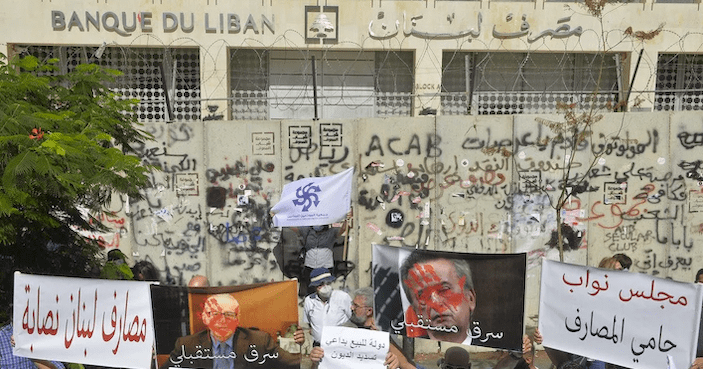
    Bank depositors in Lebanon continue to bear practically alone the impact of the banking collapse. To regain their rights and effectively confront banks, BDL and Government, they need first to understand what happened, determine degrees of responsibility, then act.

    Two collapses have occurred in Lebanon, not one, a banking collapse and a Lira collapse, with different natures, causes and impact. Unlike today, the similar Lira collapse in the mid-1980s happened in the context of strong and very $-liquid banks that continued to normally operate.

    The cause of and responsibility for the current banking collapse is BDL’s mismanagement through its “financial engineering” that led to negative net reserves, alongside the banks’ mismanagement that put around 80% of their $-deposit resources at BDL, thus taking their $ liquidity to a very low 7% for the sake of extraordinary but short-term profits. Independently of the banking collapse, the Lira’s collapse is the result of a lax fiscal policy by Government and widespread corruption, making Lebanon live for years beyond its means in the context of a fixed exchange rate and an unprecedented balance of payments in deficit since 2011.

    An Appendix explains the sources and uses of $ available to BDL during 2015-19. At least $33 billion outflow from BDL are unaccounted for. The likely explanation is that most of these funds correspond to bank profits, mainly in Liras, and other Lira assets that have been exchanged for $ from BDL through market operations. It is also quite likely that these profits have been transferred in $ outside Lebanon, not in favor of the banking institutions but in favor of their main shareholders.


    A course of action is proposed to bank depositors.

    1. Confront banks, BDL and Government with the explanation of and responsibility for what happened, a responsibility to be mirrored in an eventual distribution of losses.
    2. Propose that banks should re-capitalize or be subjected to bankruptcy proceedings, as is normal in any country, which would put a stop to continuing bank losses that are eventually paid by depositors, and invite foreign banks to operate in Lebanon, which would lay the basis for a normally operating banking system.

    iii)       Ask BDL to justify its ad hoc circulars that impose harsh “haircuts” and ceilings particularly on Lira withdrawals from all deposits, leading to a sharp and continuous fall in money supply by more than 95% relative to end 2019, compared to a fall of about two thirds in current GDP . Withdrawal ceilings should be relaxed, and haircuts much reduced, since this BDL policy puts all the burden of adjustment only on depositors, and unnecessarily reduces effective demand, thus straining economic activity and growth.


    READ THE FULL REPORT IN PDF:


    Konrad lebanese bankers final one
    Share. Facebook Twitter LinkedIn Email WhatsApp Copy Link
    Previous Articleملامح الهزيمة تلاحق بوتين إلى سمرقند
    Next Article تهريب الدواء والوقود للحزب: “ميشال ذمّي” يشحذ من أميركا رواتب جيش هرب 5000 من جنوده!
    Subscribe
    Notify of
    guest
    guest
    0 Comments
    Newest
    Oldest Most Voted
    Inline Feedbacks
    View all comments
    RSS Recent post in french
    • Au Liban, des transactions immobilières de l’OLP suscitent des questions 18 January 2026 L'Orient Le Jour
    • Pourquoi la pomme de la tyrannie tombe-t-elle toujours ? 10 January 2026 Walid Sinno
    • La liberté comme dette — et comme devoir trahi par les gouvernants 2 January 2026 Walid Sinno
    • La « Gap Law »: pourquoi la précipitation, et pourquoi les Français ? 30 December 2025 Pierre-Étienne Renaudin
    • Au Liban, une réforme cruciale pour sortir enfin de la crise 23 December 2025 Sibylle Rizk
    RSS Recent post in arabic
    • (شاهد الفيديو ولا تضحك): “دويلة تعتقل دولة وتصادر شاحنتي سلاح مُهَرَّب من سوريا! 27 January 2026 إم تي في
    • لِشهرين أم لِسنتين: الانتخابات النيابية مؤجّلة حُكماً! 25 January 2026 كمال ريشا
    • ثرثرة على ضفة الحركة (2): “الفلسطينيّة” و”العربيّة” 25 January 2026 هشام دبسي
    • الهَلَع يتسرَّب إلى دودج سيتي 25 January 2026 خليل يوسف بيدس
    • قضية “بنك عودة”: كيف تحوّلت الأموال العامة إلى أرباح خاصة 24 January 2026 سمارة القزّي
    26 February 2011

    Metransparent Preliminary Black List of Qaddafi’s Financial Aides Outside Libya

    6 December 2008

    Interview with Prof Hafiz Mohammad Saeed

    7 July 2009

    The messy state of the Hindu temples in Pakistan

    27 July 2009

    Sayed Mahmoud El Qemany Apeal to the World Conscience

    8 March 2022

    Russian Orthodox priests call for immediate end to war in Ukraine

    Recent Comments
    • Nadim Shehadi on The Panic Seeps to Dodge City
    • Yusuf Kanli on A necessary conversation: On Cyprus, security, and the missing half of the story
    • Mohamed on Inside the Bank Audi Play: How Public Money Became Private Profit
    • JudgmentalOne on A necessary conversation: On Cyprus, security, and the missing half of the story
    • Drivers Behind Audi’s Top-Level Management Shake-Up - Middle East Transparent on Lebanon’s banks are running out of excuses
    Donate
    © 2026 Middle East Transparent

    Type above and press Enter to search. Press Esc to cancel.

    wpDiscuz