



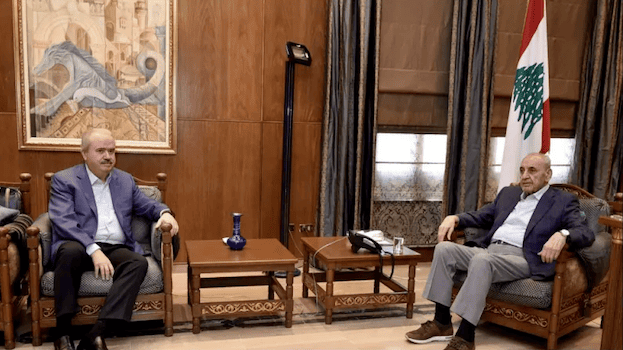
In the midst of Lebanon’s continuing financial collapse, now entering its sixth year, a growing debate is taking shape within international and domestic policy circles over the country’s capacity—and willingness—to implement credible economic reforms. Central to this debate is Yassine Jaber, the recently appointed Minister of Finance in Prime Minister Nawaf Salam’s cabinet. His appointment has drawn scrutiny due to his long-standing political alignment with Speaker of Parliament Nabih Berri, whose Amal Movement has exercised significant control over Lebanon’s public institutions for decades.
While Jaber is nominally presented as an independent technocrat, several current and former officials interviewed for this report suggest that his role within the new government may serve to extend the influence of existing patronage networks into the core of Lebanon’s financial restructuring efforts.
Central Bank Leadership and the Vice Governors File
One of Jaber’s first actions as Finance Minister has been to advance nominations for the four Vice Governors of the Banque du Liban (BDL). Internal government memoranda reviewed by this reporter indicate that the top candidate for reinstatement is Wassim Mansouri, who served previously as acting governor. Mansouri was closely linked, according to public records and media investigations, to a small group of officials—Salim Khalil, Mohammad Hamdoun, and Mohammad Baalbaki—who managed substantial foreign currency operations at the height of Lebanon’s currency stabilization efforts.
Multiple sources confirmed that these operations, while aimed at slowing the depreciation of the Lebanese pound, lacked sufficient transparency and were largely managed outside the formal governance structures of the BDL. The proposed return of Mansouri and his team is raising alarms among international observers who worry about the entrenchment of political influence in currency management.
Stalemate Over the Banks’ Resolution Law
A second point of contention is the draft Banks’ Resolution Law, which seeks to restructure Lebanon’s insolvent commercial banking system. The BDL under Governor Karim-Antoine Souaid has called for a series of amendments to ensure the independence of the central bank, the application of international banking standards, and protections for small depositors. These amendments have not yet been accepted by the Ministry of Finance.
People familiar with the internal deliberations suggest that Jaber’s position is tied to a broader negotiation. According to diplomatic sources, the Minister of Finance has conditioned his approval of the revised law on concessions in unrelated appointments, specifically: the selection of a new financial prosecutor, and the chairmanship of Intra Investment Company, a central bank-affiliated holding company with significant public assets. Critics argue that these linkages politicize what should be a purely regulatory reform and risk undermining the independence of Lebanon’s financial institutions.
Infrastructure and Economic Geography
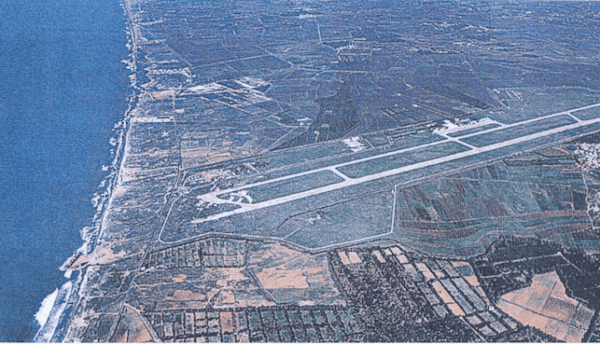
The Ministry of Finance has also remained noncommittal on the reopening of the René Moawad Airport in northern Lebanon. Although the Ministry of Public Works has positioned the airport’s reactivation as a regional development priority, official documents show delays in budgetary approvals and coordination with customs and civil aviation authorities.
Former transport officials and northern business leaders believe that the delays are politically motivated. They argue that a functioning international airport in the North would shift trade and tourism revenues away from Rafic Hariri International Airport, which is widely regarded as a revenue stronghold for established political actors. The Ministry of Finance’s inaction, they say, reflects broader dynamics in which infrastructure is managed not solely for national development, but for fiscal and political control.
International Scrutiny and the Road Ahead
Jaber, a long-serving parliamentarian and former minister, holds a degree in business from the American University of Beirut and has overseen multiple portfolios over the past three decades. Though not a trained lawyer or finance professional, he commands substantial influence within the Amal bloc and has access to high-level interlocutors in regional capitals.
His role is now under close observation by international donors, including the International Monetary Fund, the World Bank, and members of the Quintet (U.S., France, Saudi Arabia, Egypt, and Qatar). Senior diplomats from two of those states confirmed that Jaber’s current positions on the Banks’ Resolution Law and the vice governors’ nominations have already been raised in confidential diplomatic channels and may influence the timeline and conditionality of future disbursements.
An IMF staff-level agreement remains in progress, but progress is contingent on Lebanon’s ability to demonstrate a coherent and depoliticized approach to restructuring its financial system. The concern among Western donors is that institutional reforms will be subordinated to the same political economy dynamics that contributed to the collapse in the first place.
In private meetings with fund representatives, the central bank governor has stressed the need for a firewall between political actors and financial regulators. It remains to be seen whether the government—and the Ministry of Finance in particular—will endorse this model or revert to the practices of negotiated appointments and inter-factional compromise.
Conclusion
As Lebanon approaches a defining moment in its relationship with the international financial community, the conduct and decisions of key officials, including Finance Minister Jaber, will determine the credibility of the government’s reform narrative. The country’s economic survival depends not just on technical plans, but on political willingness to insulate financial governance from partisan interest.
For now, donors are watching. The architecture of reform has been laid out, but its success may hinge on whether figures like Yassine Jaber act as transitional stewards—or gatekeepers of the status quo.