



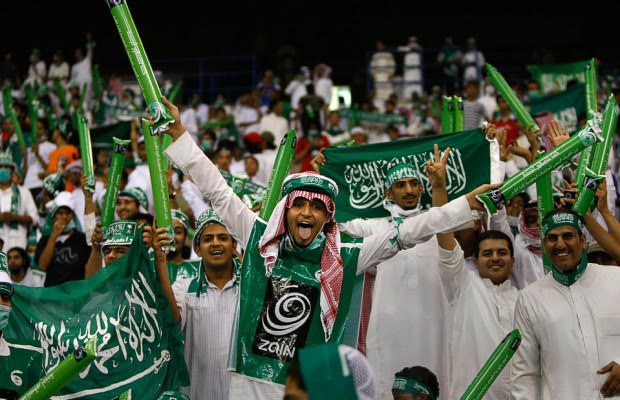
Saudi Arabia is using soccer and its influence in the Asian Football Confederation (AFC) to expand its campaign to isolate Iran, complicate Iran’s return to the international fold in the wake of the nuclear agreement, strengthen Iranian hardliners in advance of next month’s crucial elections in the Islamic republic, and deflect attention from mounting criticism of the kingdom’s human rights record.
The campaign in the wake of this month’s execution of 47 people including Shiite cleric Sheikh Nimr al Nimr, sparked an international outcry, a rupture in diplomatic relations between Saudi Arabia and Iran, and a Saudi effort to rally the Arab and Muslim world against the Islamic republic.
Iran had long warned that it would react strongly to the execution of Mr. Al-Nimr, a fierce opponent of the ruling Al Saud family whose inclusion in the execution of a large number of Al Qaeda operatives was designed to spark a crisis with Iran on the eve of the lifting of international sanctions in the wake of the international community’s nuclear agreement with Iran and in the advance of the Iranian elections.
Iran goes to the polls next month in parliamentary elections that constitute a test of strength of hard line opposition to President Hassan Rouhani’s attempts to return the Islamic republic to the international community and get international sanctions lifted. Iran will also be electing a new Assembly of Experts, the council likely to eventually appoint a successor to Iranian spiritual leader Ayatollah Ali Khamenei.
A refusal by some of Saudi Arabia’s most prominent soccer clubs, several of which are headed by members of the kingdom’s ruling family, to play 2016 Asian Championship League matches serves to reinforce Saudi Arabia’s effort to portray Iran as a revolutionary, dangerous and unstable state.
The clubs argued in the wake of the storming earlier this month of the Saudi embassy in Tehran that Iran would not be able to guarantee the safety of Saudi teams. They said they were urging the SAFF to persuade the AFC to move their matches to neutral values.
“If Iran is unable to protect embassies, how will it protect stadiums? We demand that the Saudi and Iranian teams play in a neutral country,” tweeted Saudia Arabian Football Federation (SAFF) vice president Muhammad Al-Nuwaiser. A Saudi sports program reported that the SAFF had “opened an Iranian terrorism file.”
Prince ‘Abd Al-Rahman bin Musa’id, the former president of Al-Hilal SC, one of the clubs refusing to play in Iran, called on clubs in other Gulf states to follow the example of their Saudi counterparts on the grounds that “we cannot guarantee the safety of our sons while in that enemy country.”
Fellow Gulf Cooperation Council members Kuwait and Bahrain followed Saudi Arabia in breaking off diplomatic relations with Iran while the United Arab Emirates said it had downgraded its ties to the Islamic Republic.
In a statement, the AFC said it was monitoring the situation and would make decisions on the basis of its regulations. A SAFF request would put AFC President Salman Bin Ebrahim Al Khalifa, who is campaigning to become the head of troubled world soccer body FIFA, in a bind.
A member of the ruling family of Bahrain that has long accused Iran of meddling in its internal affairs and has Saudi troops station on the island kingdom ever since they were called in to help brutally squash a popular uprising in 2011, would find it difficult to reject a Saudi request.
To be sure, Saudi-Iranian confrontations on soccer pitches have frequently been tense encounters with both sides blaming the other and lodging official complaints. Nonetheless, the use of soccer in the two countries’ long-standing dispute comes at a moment that Saudi Arabia projects Iran as posing an existential threat to the kingdom.
In many ways Iran is, even if Saudi Arabia has sought to camouflage the real threat by framing it in terms of Iranian support for terrorism, attempts to topple conservative Arab monarchs and Tehran’s support for the regime of Syrian President Bashar al-Assad.
Underlying the Saudi campaign is however a far deeper concern that the kingdom has harboured since the Iranian revolution that in 1979 toppled the Shah of Iran. The revolution produced a regime that was not only revolutionary but offered an alternative model of Islamic government that involved a degree of popular sovereignty as opposed to Saudi Arabia’s absolute monarchy.
The danger that Iran represents is compounded by the fact that Iran within a number of years of the lifting of international sanctions would challenge Saudi regional dominance. With a population of 80 million, huge oil reserves, an industrial base, geo-strategic location, a battle-hardened military, and a long civilizational history, Iran would be fielding assets Saudi Arabia would find hard to compete with.
As a result, Saudi Arabia has long waged a covert war against Iran. It has pumped billions of dollars into the propagation of Wahhabism, its puritan interpretation of Islam, in a bid to garner influence in Muslim communities across the globe and counter any appeal Iran’s revolution may have. Saudi Arabia also supported and co-funded Iraq leader Saddam Hussein’s eight-year long war against Iran in the 1980s, the 20th century’s longest conventional war in which up to one million people were killed.
In a continuation of Saudi Arabia’s campaign against Iran, the kingdom now appears bent on delaying, if not preventing, Iran’s return to the international fold for as long as possible. The refusal of the Saudi clubs to play on Iranian soil is part of that bid.
“We don’t want Tehran,” said a headline in Al Riyadiyya, a Saudi sports newspaper. Referring to past incidents during Saudi-Iranian matches, columnist Fahd Al-Roqi charged that Iranians were “motivated…by a Persian-Safavid hatred of the Arabs, especially of the people of the Arabian Peninsula and the Gulf.”
Iranian hostility was evident in stadia where Iranian fans shouted “political, sectarian, and religious slogans offensive to our religious leaders and our rulers… and performed (Shi’ite) religious rites in the stands,” Mr. Al-Roqi said in a reflection of Wahhabi ideology that views Shiites, the majority of Iran’s population, as heretics.
James M. Dorsey is a senior fellow at the S. Rajaratnam School of International Studies, co-director of the University of Wuerzburg’s Institute for Fan Culture, a syndicated columnist, and the author of The Turbulent World of Middle East Soccer blog and a forthcoming book with the same title.