




But there are large divides between Catholics who attend Mass weekly, and those who don’t, in what they want from the church
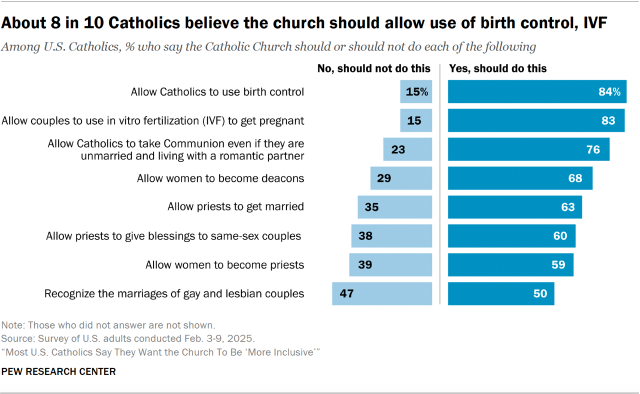
With the death of Pope Francis, the College of Cardinals is expected to gather May 7 to choose the next head of the Catholic Church. A Pew Research Center survey conducted in early February – before the pope’s hospitalization on Feb. 14 – finds that majorities of U.S. Catholics express views that differ from church teachings on issues such as birth control, marriage and the priesthood. For example:
- 84% of U.S. Catholics say the church should allow Catholics to use birth control.
- 83% say the church should allow couples to use in vitro fertilization (IVF) to get pregnant.
- 68% say the church should allow women to become deacons.
- 63% say the church should allow priests to get married.
- 59% say the church should ordain women as priests.
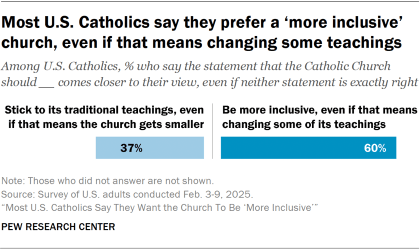
When asked to choose which of two contrasting statements comes closer to their view, 60% of U.S. Catholics say the church “should be more inclusive, even if that means changing some of its teachings,” while 37% say the church “should stick to its traditional teachings, even if that means the church gets smaller.”
On all these topics, there are large differences between the responses of Catholics who go to church at least once a week and those who do not.1 Those who say they go weekly are:

- 20 percentage points less likely to favor allowing women to serve as deacons (54% vs. 74%)
- 20 points less likely to favor allowing priests to get married (49% vs. 69%)
- 18 points less likely to favor allowing Catholics to use birth control (72% vs. 90%)
- 17 points less likely to favor allowing couples to use IVF (71% vs. 88%)
Slightly more than half of Catholics who attend Mass weekly (56%) say the church should not allow women to become priests, while 66% say the church should not recognize the marriages of gay and lesbian couples.
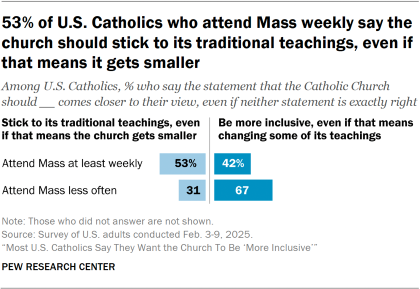
Additionally, Catholics who attend Mass weekly are 22 points more likely than Catholics who don’t go to Mass weekly to say they think the church should stick to its traditional teachings, even if that means the church gets smaller.
(Among the U.S. Catholic population overall, roughly three-in-ten say they attend Mass at least once a week, while the remainder say they go less often or not at all. For more information about the religious and demographic characteristics of U.S. Catholics, read “10 facts about U.S. Catholics.”)
Still, most weekly Mass attenders say the church should allow Catholics to use birth control (72%) and IVF (71%). A majority (59%) also says the church should permit people to receive Communion even if they are unmarried and living with a romantic partner. And about half favor ordaining women as deacons, allowing priests to marry, and permitting priests to give blessings to same-sex couples.
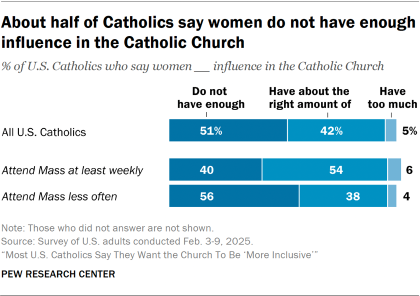
When asked about the influence of women in the church, 51% of U.S. Catholics say women “do not have enough” influence, while 42% say women currently have “about the right amount” of influence. Far fewer (5%) say women have “too much” influence.
The survey also finds:
- Women are somewhat more likely than men to want a “more inclusive” church, and to say women don’t have enough influence in the church.
- Catholic Republicans and independents who lean Republican tend to take more traditional stances than Catholic Democrats and Democratic leaners on the survey’s questions about ordaining women, allowing priests to get married, allowing Catholics to use birth control and IVF, and other questions.
This is one of a series of reports on a Pew Research Center survey conducted Feb. 3-9, 2025, among a nationally representative sample of 1,787 Catholic adults. The survey was completed prior to Pope Francis’ Feb. 14 hospitalization and his death in April.
An earlier report focused on U.S. Catholics’ opinions about Francis and his two immediate predecessors, Benedict XVI and St. John Paul II. Future reports will explore various kinds of connections to Catholicism among U.S. adults and delve into American Catholics’ involvement in parish life.
For more on views of Pope Francis, read “Pope Francis and public opinion: Key findings from our surveys.”
For more on how U.S. Catholics have answered some of these questions in past surveys, jump to this report’s section on trends.
Views on inclusivity in the church
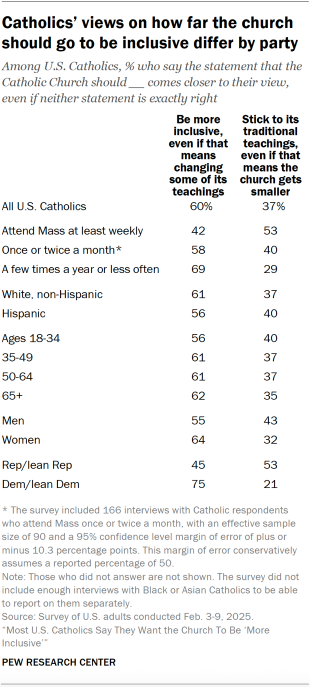
When asked which of two broad statements about the church’s direction comes closer to their view, 64% of Catholic women say the Catholic Church should be “more inclusive, even if that means changing some of its teachings,” while 32% say the church should “stick to its traditional teachings, even if that means the church gets smaller.” Among Catholic men, 55% say they prefer a more inclusive church and 43% say the church should stick to its traditional teachings.
There is a stark partisan divide on this question. Three-quarters of Catholics who are Democrats or lean Democratic prefer a more inclusive church, even if that means changing some teachings. Among Catholics who are Republicans or GOP leaners, slightly less than half (45%) say the church should be more inclusive.
(According to the 2023-24 Religious Landscape Study, about half of Catholics who are registered voters – 53% – identify with or lean toward the Republican Party, while 43% affiliate with the Democratic Party. For more, refer to “10 facts about U.S. Catholics.”)
There are no significant differences by age or between White and Hispanic Catholics on this topic.
Views about birth control and IVF

Overall, 84% of U.S. Catholics say the church should allow Catholics to use birth control, and 83% say the church should permit couples to use in vitro fertilization (IVF) to get pregnant.
Support for these ideas is lower among Catholics who attend Mass weekly and among Catholic Republicans than it is among Catholics who attend Mass less often and among Catholic Democrats.
Still, majorities in every Catholic subgroup we analyzed say they think the church should allow Catholics to use birth control and IVF.
Views about Communion for unmarried cohabiting couples, blessings for same-sex couples, recognizing marriages of gay and lesbian couples
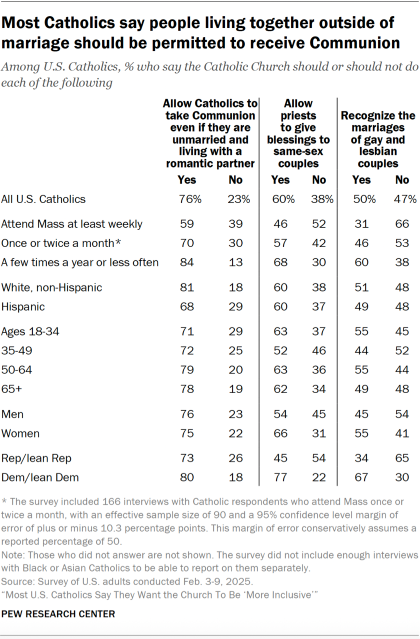
About three-quarters of U.S. Catholics (76%) say the church should allow Catholics to take Communion even if they are unmarried and living with a romantic partner. Support for this idea is lower among Catholic Republicans than Catholic Democrats, and lower among Catholics who attend Mass weekly than among those who attend less often. Still, majorities in all these groups say the church should allow people living with a romantic partner to receive Communion.
Six-in-ten Catholics say the church should allow priests to bless same-sex couples. And half of Catholics say the church should recognize marriages of gay and lesbian couples.
But most Catholics who attend Mass weekly oppose having the church recognize marriages of gay and lesbian couples, as do most Catholics who are Republicans or GOP leaners. By contrast, most Catholics who attend Mass a few times a year or less often say the church should recognize the marriages of gay and lesbian couples, as do most Catholic Democrats.
Views about marriage and gender in the priesthood and the diaconate
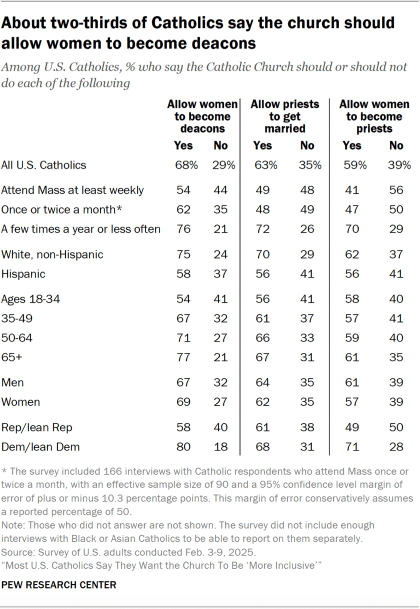
Most U.S. Catholics say the church should allow women to become deacons (68%), should allow priests to marry (63%), and should allow women to become priests (59%).
But Catholics who attend Mass weekly are less likely than Catholics overall to express these views. For example, 54% of Catholics who attend Mass weekly say the church should allow women to become deacons and 41% say the church should allow women to become priests.
Related: Under Pope Francis, the College of Cardinals became less European
Trends in views about birth control, the priesthood and sexuality
Pew Research Center has asked some of the questions analyzed in this report in previous surveys.
The percentage of U.S. Catholics who say the church should allow Catholics to use birth control is about the same now as it was in early 2024 and somewhat higher than when we asked these questions roughly a decade ago. A similar pattern emerges on the question of whether the church should allow Catholics to take Communion even if they are unmarried and living with a partner.
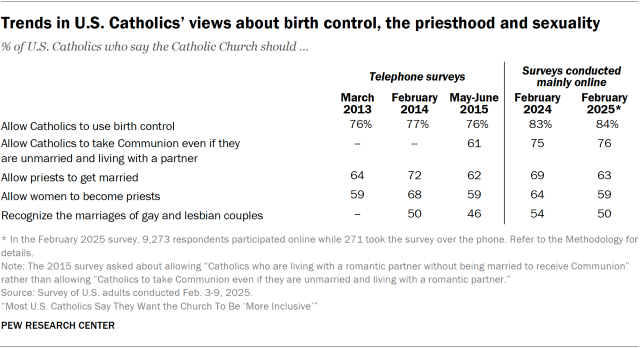
On the other hand, the percentages of Catholics who support letting priests get married, letting women become priests, and recognizing the marriages of gay and lesbian couples have dipped slightly since the same questions were last asked in 2024, and are roughly on par with readings from about a decade ago.2
Views of women’s influence in the church
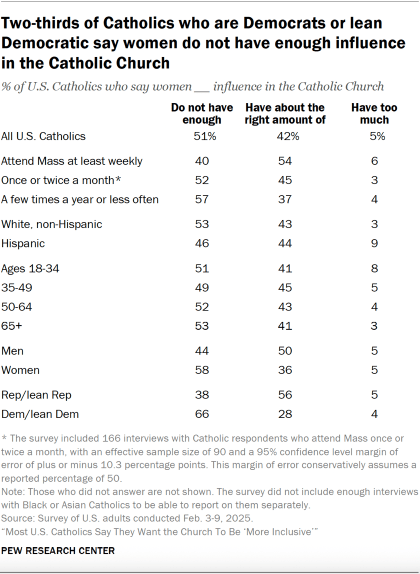
About half of U.S. Catholics (51%) say women do not have enough influence in the Catholic Church, while about four-in-ten (42%) say women have about the right amount of influence. A small share – just 5% – say women have too much influence in the church.
Among Catholics who attend Mass weekly, the most common response to this question is that women have about the right amount of influence in the Catholic Church. By contrast, most Catholics who attend Mass a few times a year or less often say women do not have enough influence.
About six-in-ten Catholic women (58%) feel that women do not have enough influence in the church, compared with 44% of Catholic men who express this view.
Looking at partisan breakdowns, two-thirds of Catholic Democrats say that women do not have enough influence in the church, compared with 38% of Republican Catholics.

Among Catholics who feel that women don’t have enough influence in the church, 87% say the church should allow women to be deacons and 80% want to allow women to be priests.
Among Catholics who think that women currently have about the right amount of influence, far fewer say the church should allow women to become priests (36%) or deacons (48%).