



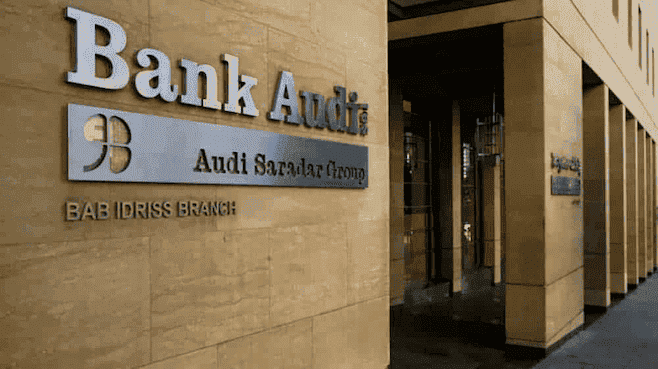
When the governor of Lebanon’s central bank revealed this week that one of the country’s largest lenders had quietly transferred US $280 million to a client during the height of capital controls, it confirmed what many Lebanese already knew in their bones: the banking system was never broken — it was rigged.
For years, ordinary citizens have been told their money simply “isn’t available.” Students have been stranded abroad without tuition. Families have watched their savings evaporate. Pensioners have been forced into poverty. Yet, at the same time, a single favoured client — foreign, wealthy and well-connected — could move hundreds of millions of dollars out of the country with ease.
This is not just a scandal. It is a grotesque display of moral bankruptcy.
The bank in question is Bank Audi. The client, a Qatari citizen.
A tale of two depositors
Since Lebanon’s financial collapse in 2019, the country’s banks have imposed draconian restrictions on withdrawals and transfers. The justification has always been the same: to preserve what little liquidity remained. But this week’s revelation tears that justification apart. There were always two classes of depositor — the powerless and the privileged.
Bank Audi’s transfer to a Qatari client exposes the system for what it truly is: a private vault for the elite, guarded by institutions that pretend to act in the public interest while serving only those with influence.
The silence of the powerful
What makes this episode particularly galling is the silence that surrounds it. Bank Audi’s board of directors has issued no statement, no apology, no explanation. The Association of Banks in Lebanon, whose moral compass has long been missing, has remained mute. And the country’s regulators — already compromised by years of cronyism — have offered only shrugs.
Equally troubling is the quiet complicity of international stakeholders. Institutions that are shareholders in Bank Audi, such as the European Bank for Reconstruction and Development (EBRD) and entities linked to the IMF, speak often of transparency, governance and reform in fragile economies. Yet where are their voices now? Will they continue to support a compromised board, or will they act to bring accountability to the current management?
A systemic betrayal
This is not an isolated act of corruption. It is a symptom of a deeper rot — a system built on insider privilege, opacity and impunity. Lebanon’s financial collapse did not simply happen; it was engineered by a small elite who treated the country’s banking sector as their personal escape hatch.
The $280 million transfer is merely the latest confirmation that while ordinary Lebanese were made to believe that capital controls applied to everyone, in reality, the rules were different for those who mattered.
The path forward
The response must begin with truth. Bank Audi owes the public full disclosure — who approved the transfer, when it happened and under what authority. The central bank and the courts must investigate. Depositors must be compensated, not ignored. And international shareholders must decide whether they stand for reform or for rot. Before demanding reform across an entire sector, they should start by reforming the bank in which they hold shares.
For years, the country’s citizens have been told to endure. They have endured enough.
If $280 million can find its way to Doha while ordinary Lebanese cannot withdraw their savings to buy food, then this is no longer a financial crisis. It is a moral one.
It is very clear and obvious to every body 1_ The first responsdiility falls in the all banks in Lebanon. 2_ The international law all over the world says clearly (know your customer) 3_on what basis you lended funds to the government or any without Knowing their status that they can pay back their debt. 4_ does this apply in your rules and regulations to the poor people ? 5_I know so many influenced people transfered their funds abroad. 6_ Banks as well as the central bank are partners for the collapse 7_you created the hair cut only imposed on… Read more »