



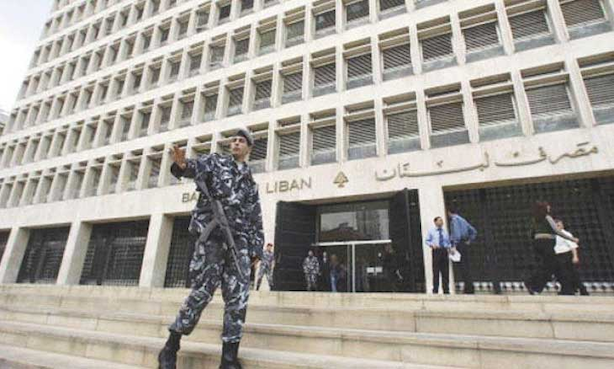
Lebanon’s financial crisis has entered its sixth year with no comprehensive resolution in sight — a timeline that, in Lebanese governance terms, still qualifies as “under discussion.” The banking system remains effectively paralysed, depositor confidence has long since evaporated, and the economy continues to operate under severe liquidity constraints. Yet amid the institutional fragmentation that has characterised the post-2019 period, one rare point of agreement has emerged: depositors with balances below $100,000 should be compensated in full.
Both the government and the central bank have converged on this principle. The dispute lies elsewhere, primarily in the treatment of larger depositors, and in the broader question of how losses should ultimately be allocated between the state, the banking sector, and the Central bank. That remains politically contentious and financially complex. But it should not prevent action where alignment already exists.
The upcoming debate in parliament over the forthcoming Financial Stabilisation and Deposit Repayment Act illustrates the problem. In theory, the legislation could provide a framework for restructuring the banking sector and resolving depositor claims. In practice, Lebanon’s political calendar and regional environment make rapid passage improbable. With parliamentary elections approaching (May 2026) and geopolitical tensions rising, the likelihood of meaningful consensus anytime soon remains limited — unless Lebanon’s political class suddenly discovers efficiency, an outcome that would surprise not only markets but also most historians.
International investment banks have taken note. A recent Goldman Sachs research paper suggested that resolving Lebanon’s Eurobond default is likely to take years, with delays driven less by the technicalities of reform than by persistent geopolitical uncertainty. The paper highlights the narrow window available before the May 26 elections, and the additional time that could be lost in the inevitable process of government formation thereafter — a process that tends to unfold with all the urgency of a leisurely constitutional seminar.
Bank of America has similarly warned that elections and regional instability could materially affect the prospects of passing the FSDR law in parliament.
The implication is clear: Lebanon’s depositors may once again be asked to wait — not because a solution is unattainable, but because the political system remains structurally incapable of delivering one quickly. Depositors have already waited six years. At this point, patience is no longer a virtue; it is a substitute for policy.
That is precisely why the central bank should prioritise the one area where consensus is already established. Compensating depositors below $100,000 would not only represent a minimal measure of fairness, it would also constitute one of the few available mechanisms for injecting liquidity back into an economy that has been steadily contracting.
The scale is significant. Estimates suggest roughly 550,000 accounts now hold less than $50,000, while nearly 700,000 accounts fall below the $100,000 threshold. Resolving these balances would address the majority of remaining depositor accounts and restore purchasing power to households and small businesses that have been operating under severe financial repression — effectively serving as the country’s unofficial social safety net, though without the benefit of being voluntary.
Moreover, the regional backdrop adds urgency. War economies typically experience contraction, reduced investment, and heightened demand for cash hoarding. Lebanon, however, could use this moment to stimulate controlled liquidity rather than allow further economic suffocation. If the region is heading toward instability, Lebanon should at least avoid adding self-inflicted stagnation to the list.
A pragmatic approach would involve expanding compensation through digital mechanisms. Increasing monthly access limits through payment cards — potentially up to $20,000 as a one off payment — would keep liquidity circulating within the formal economy, reduce dependence on physical cash, and mitigate the leakage of dollars into illicit or unproductive channels. It would also help prevent cash from continuing its remarkable ability to vanish into the sort of sectors where accounting standards fear to tread.
The one-off advance payment of $20,000 per eligible depositor could provide immediate relief, while remaining “deductible” from final settlements once a broader restructuring law is eventually passed. Such a measure would cover a substantial portion of accounts below $100,000 and would represent a realistic interim step in the absence of legislative closure.
None of this resolves the harder questions surrounding larger deposits, sovereign debt restructuring, or the ultimate distribution of losses. But Lebanon’s crisis has repeatedly demonstrated the costs of allowing the perfect to obstruct the possible — particularly when “perfect” is perpetually scheduled for after the next election, the one after that, or perhaps the next geopolitical cycle.
The central bank now has an opportunity to act decisively where agreement already exists. Delivering on increasing compensation for smaller depositors would constitute a concrete confidence-building measure — and arguably the most immediate step available to restart liquidity in a system that remains choked by delay. Whether the central bank chooses to increase monthly withdrawals to $2,000 or opts instead for a one-off advance payment of $20,000, both approaches merit serious consideration. Each would represent a practical step toward restoring liquidity to a system that has been suffocating for years, and each would offer depositors tangible relief while broader legislative solutions remain stalled.
Lebanon cannot afford to wait for a comprehensive miracle before taking partial but meaningful steps forward. Miracles may be culturally familiar. They are, however, a notoriously unreliable foundation for economic planning.