



And today, the one Lebanese official who has demonstrated genuine courage finds himself alone in the very state he is trying to defend.
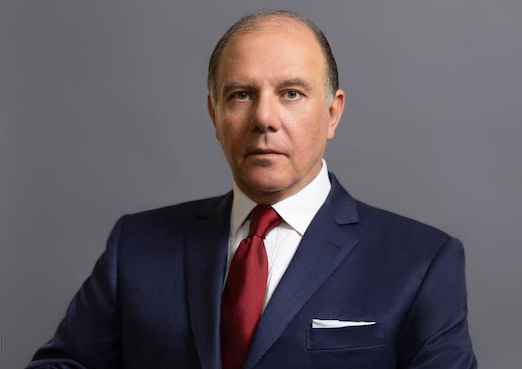
Karim Souaid, Lebanon’s central bank governor, is facing an aggressive, coordinated attack by the Iranian regime’s mouthpieces and Hezbollah terror chief executive for doing what his predecessors never dared: enforcing anti–money laundering rules, shutting down illicit financial channels, and attempting to rebuild the credibility of Lebanon’s monetary system.
This work is not cosmetic. It is the first real attempt in years to align Lebanon with international norms, restore confidence in its financial institutions, and disrupt the networks that have profited from the country’s collapse.
Yet Souaid stands alone.
A troubling silence at a critical moment
The global media outlets that rushed to undermine his nomination have gone completely silent now that he is being targeted for confronting illicit finance linked to Iran and its proxies. The hypocrisy — Western journalists eager to lecture Lebanon on reform become suddenly mute when a reformer is attacked for doing his job
But can one reasonably expect a higher moral ground from international media when Lebanon’s own political class is standing by?
Not a single Lebanese official has publicly defended him—not the cabinet, not political parties, not even the ministers who claim to champion reform. This same government that rushed to defend the seaside rock in Beirut (that wasn’t going anywhere), refuses now to stand by the principle of monetary sovereignty—or the public servant upholding it.
The contrast is grotesque.
Souaid is not merely cleaning up the central bank or curbing on terror financing. He is translating into action the very commitments sworn by President Joseph Aoun: to restore state authority, uphold the rule of law, and prevent Lebanon from becoming a corridor for illicit regional financing.
His role should have unified the political class. Instead, it has exposed its paralysis.
Their silence is loud and Washington, for the first time in decades, is running out of patience.
‘It’s beyond midnight’ in Washington
The phrase circulating through U.S. policy circles today is sobering: “It’s beyond midnight for Lebanon.”
Just days before Lebanon’s Independence Day, the U.S. abruptly canceled the Lebanese Armed Forces (LAF) Commander’s meetings in Washington. For a military institution that has long been the backbone of U.S. engagement in Lebanon, such a last-minute cancellation is not administrative—it is a warning.
Then came an even more dramatic signal: Senator Lindsey Graham, who only weeks earlier stood in Beirut offering a pathway to a U.S.–Lebanon strategic defense agreement, publicly declared the LAF “not a good investment for America.”
When a long-time advocate of U.S. support for Lebanon speaks this starkly, it reflects more than personal frustration. In Washington, it reflects a view that has reached across agencies: the belief that Lebanon’s political class is morally bankrupt, that it won’t defend its own sovereignty (physical and legal), even when it comes under direct assault.
For years, the United States has invested heavily in Lebanese stability—funding the LAF, supporting the central bank, underwriting social programs, and insulating Lebanon diplomatically from regional storms. This support has been based on good faith: the belief that, despite dysfunction and paralysis, key Lebanese institutions were still committed to sovereignty.
But support requires reciprocity and Washington is drawing conclusions. Those are now hardening.
Lebanon still has a narrow window
Its leaders can condemn publicly the morally bankrupt Iranian regime’s mouthpieces accusations, and reinforce the need for Lebanon to restore international standards as a sovereign duty. They can stand behind the governor of BDL (for that is to say stand by a sovereign Lebanon!). They can signal to Washington that Lebanon still contains the institutional DNA of a functioning republic.
Or they can remain silent—tacitly consenting to their role as an Iranian satrap and be confined to a long and agonizing irony curtain .
“In brief, what disturbed us was the behavior not of our enemies but of our friends” said Arendt in her follow up analysis of the Eichmann trial. Souaid never expected much from friends when he set out for his mission to serve Lebanon, and he is not backing down now.
“The time is out of joint: Ô cursed spite
That ever I was born to set it right!”