



Beirut’s deceptive narrative is part of a general Arab and Palestinian style
Describing Israeli retaliation to Palestinian and Lebanese attacks as an “Israeli aggression” has become so prevalent that no one bothers to correct it. In fact, such “Israeli aggression” is now being taken — especially in the West — for granted.
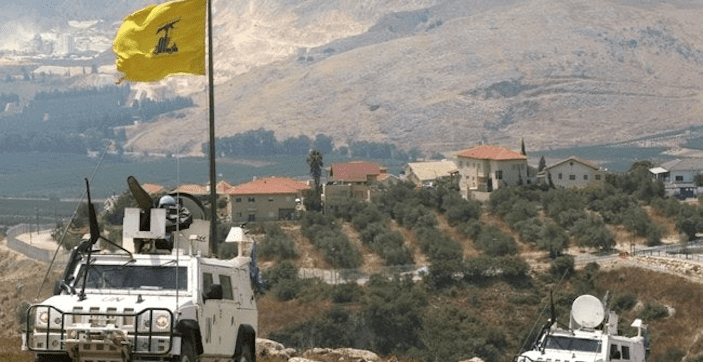
This week, rockets were launched from lawless Lebanon into Israel, on several occasions. Israel retaliated. Yet, Lebanese President Michel Aoun “denounced the Israeli aggression,” and instructed Lebanon’s Envoy at the UN to lodge a complaint against such “aggression.” One can only wonder how the UN will accept such a complaint, when the UN peace force in southern Lebanon described the situation as such: “UNIFIL has detected rocket launches from Lebanon and return artillery fire.”
Reading most Arabic media outlets, one gets the impression that Israel is a bully that, unprovoked, regularly invades Palestinian towns in the West Bank and Gaza, searches homes, kills young Palestinian men and arrest and torture minors and women.
But then when reading the Hebrew media, one comes to the conclusion that over 90 percent of Israel’s violence against Palestinians, Lebanese or other Arabs is in fact not Israeli aggression, but retaliation against Arab aggression.
To be sure, Israel was the aggressor in a few instances, but these can be counted on one hand. There was the time when Israel participated in the British and French attack on the Suez Canal in 1956, the time when Israel bombed Saddam Hussein’s nuclear reactor in Iraq in 1981, and similarly destroyed Bashar Assad’s nuclear reactor in Syria in 2007.
All other military engagements between Israel and Arabs were started by the Arabs. Some might argue that in 1967, Israel was the side that first pulled the trigger. Yet that quick Israeli strike did not come out of nowhere. It rather happened after weeks of Egyptian threats and escalation, including Cairo’s closure of the Tiran Water Strait, its ejection of UN peace force from the Sinai, and its deployment of its army to the borders with Israel.
This week, Lebanon committed the most recent Arab aggression against Israel. In May, Hamas started lobbing rockets on Israel from Gaza. Israel retaliated while working the diplomatic channels to convey to Hamas that it was not interested in war. Hamas persisted, and there was war, which almost every Arab media outlet described as an “Israeli aggression on Gaza.”
Some international organizations even went as far as accusing Israel of committing war crimes over the death of 65 Palestinians after 11 days of fighting. If these were war crimes, then Assad’s massacres in Syria must have been an Armageddon.
In Palestinian media, there are almost daily reports on Israeli troops invading Palestinian territories and often arresting Palestinians, seemingly whimsically and without any provocation. But when reading the Israeli media, one will find out that the operation was one of basic law enforcement, in which Israel nabbed someone who had broken the law.
And if you wonder why Israel sends its army into the Palestinian territories, instead of the regular police, think that a small police force can be overwhelmed, and even killed, by a hostile Palestinian populace, while the army is better equipped to operate in hostile territory.
The reasoning behind Arabs crying “aggression” against every Israeli retaliation is because these Arabs think that Israel committed the first sin by having the Jews move to Palestine and proclaim their own state. As long as these Arabs believe that Israel — a state recognized by international law and with diplomatic ties to over 160 countries — does not legally exist, and that Israel (all of it, not only the West Bank) is a temporary occupying force, then Arab attacks will be justified as legitimate “resistance,” while Israeli retaliation will always be an aggression.
If Israel does not exist, in the eyes of those Arabs, then it does not have the right to defend itself, which means that every Israeli military engagement is, by default, an aggression, never in retaliation.
Such twisted logic, and its consequent deceptive narrative, are employed by some Arabs and their American supporters. But to the rest of the world, and per the UN and international law, the Galilee is not “occupied Palestine” it is Israel, and rockets that flew from Lebanon into the Galilee were an act of Lebanese war, to which the state of Israel had the right to react in self defense.
Meanwhile, Lebanese, Palestinian and some US mainstream media will keep telling a story in which the Israelis are always the villains, even in times when they are really not.