
Close Menu
    Facebook Instagram LinkedIn
    • العربية (Arabic)
    • English
    • Français (French)
    Facebook Instagram LinkedIn
    Middle East Transparent
    • Home
    • Categories
      1. Headlines
      2. Features
      3. Commentary
      4. Magazine
      5. Cash economy
      Featured
      Headlines Samara Azzi

      A Second Devaluation Looms Over Lebanon’s Fragile Currency Regime

      Recent
      9 February 2026

      A Second Devaluation Looms Over Lebanon’s Fragile Currency Regime

      7 February 2026

      Lebanon Must Prioritise Depositors Before Politics Delays Reform Again

      3 February 2026

      U.S. Policy Toward Lebanon: Obstacles to Dismantling Hezbollah’s Grip on Power

    • Contact us
    • Archives
    • Subscribe
    • العربية (Arabic)
    • English
    • Français (French)
    Middle East Transparent
    You are at:Home»Categories»Features»Israel and Iran: War Games 
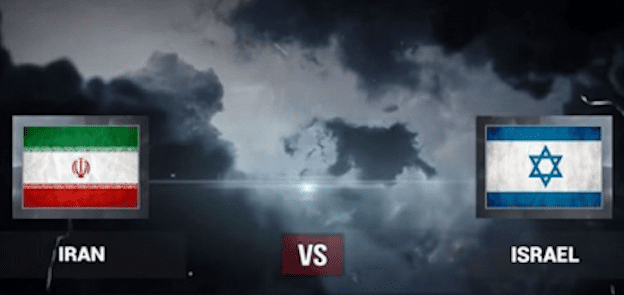
    Iran VS Israel

    Israel and Iran: War Games 

    0
    By Salman Masalha on 9 May 2018 Features

    The airstrikes attributed to Israel deep inside Syria, aimed at weapons shipments to Hezbollah or at Iranian bases and missile stocks, and the launching of an Iranian drone into Israel have been nothing but war games, with their boundaries set in advance. This is a cat-and-mouse game played by Iran and Israel.

    It’s hard to imagine a scenario in which total war erupts between Iran and Israel. Such a war, if it broke out, would sow devastation and exact an intolerable toll in human lives.

    It doesn’t seem likely that the ayatollahs in Tehran and their counterparts in Jerusalem are unaware of these destructive implications. Such a war could draw in other countries in the region and require the intervention of the big powers to stop the destruction. Therefore, the scuffle between Iran and Israel must be viewed as war games that serve the purposes of both sides. Israel and Iran need each other because each fulfills the other’s goals.

    Iran needs Israel in order to expand its sphere of influence across the Arab countries in the region, because as long as Israel maintains its occupation in Palestine, Iran can keep feeding the Arab world declarations about the Little Satan and the Zionist entity that must be annihilated. It well knows the intensity of anti-Israel sentiment in the Arab world.

    Thus Tehran, without much effort, can show people in these countries that their leaders are incompetent. Iran continues to gain; it can send out its long tentacles and further entrench its influence in the Arab world.

    Iran isn’t doing anything new. It learned these games from Arab leaders who have used the Palestinian issue to block any demand for freedom by their citizens. The Palestinian problem has helped perpetuate the rule of Arab tyrants.

    Israel also needs Iran. Just as Iran calls Israel the Little Satan (compared to the great American one), Israel also portrays Iran as the devil incarnate.

    Portraying Iran as the Great Satan fits the way some Arab leaders perceive the danger of the ayatollahs trying to undermine their regimes. This has also led to the prevailing view on the Israeli right that seeks a regional peace agreement that includes “moderate Sunni states” as defined by Israel. The big Iranian devil serves the interests of Israel’s right, letting it push aside dealing with the Palestinian problem, portraying it as less pressing. Israel can claim that the conflict with the Palestinians isn’t the main issue needing resolution on the road to establishing a new order in the Middle East.

    Thus there’s some mutual back-scratching in these war games. Iran can continue to entrench its influence in the Arab world and Israel can continue to occupy Palestine unhampered and without international pressure to end the occupation. This in a nutshell is all there is to the game of conflict theory guiding Iran and Israel. The problem is that sometimes war games get out of control.

    Haaretz, May 8, 2018

    For Hebrew, press here

    IN PLACE

    Share. Facebook Twitter LinkedIn Email WhatsApp Copy Link
    Previous ArticleWhy Is A Swedish ELINT Aircraft Operating Off Lebanon and Syria These Days?
    Next Article In 1982, Four U.S. Navy Aircraft Carriers Gathered Near Lebanon
    Subscribe
    Notify of
    guest
    guest
    0 Comments
    Newest
    Oldest Most Voted
    Inline Feedbacks
    View all comments
    RSS Recent post in french
    • Pourquoi le Koweït a classé huit hôpitaux libanais sur la liste du terrorisme ? 8 February 2026 Dr. Fadil Hammoud
    • En Orient, le goût exotique de la liberté est éphémère 30 January 2026 Charles Jaigu
    • Au Liban, des transactions immobilières de l’OLP suscitent des questions 18 January 2026 L'Orient Le Jour
    • Pourquoi la pomme de la tyrannie tombe-t-elle toujours ? 10 January 2026 Walid Sinno
    • La liberté comme dette — et comme devoir trahi par les gouvernants 2 January 2026 Walid Sinno
    RSS Recent post in arabic
    • خبير إيراني يُرجِع اعتقال القيادات الإصلاحية إلى “هندسة مرحلة ما بعد خامنئي” 9 February 2026 شفاف- خاص
    •   5 شروط «قاسية على لبنان» ولقاء العميد الصقر مع ضابط إسرائيلي في فلوريدا 9 February 2026 الأخبار
    • عصام رجي وصعوده في عالم الغناء والتلحين 8 February 2026 د. عبدالله المدني
    • اعتقال شخصيات إصلاحية في طهران بتهمة زعزعة الإستقرار لصالح أميركا وإسرائيل 8 February 2026 شفاف- خاص
    • مفارقات لا تخلو من كوميديا سوداء 8 February 2026 بدر أشكناني
    26 February 2011

    Metransparent Preliminary Black List of Qaddafi’s Financial Aides Outside Libya

    6 December 2008

    Interview with Prof Hafiz Mohammad Saeed

    7 July 2009

    The messy state of the Hindu temples in Pakistan

    27 July 2009

    Sayed Mahmoud El Qemany Apeal to the World Conscience

    8 March 2022

    Russian Orthodox priests call for immediate end to war in Ukraine

    Recent Comments
    • سیاست آمریکا در قبال لبنان: موانعی برای از بین بردن قدرت حزب الله - MORSHEDI on U.S. Policy Toward Lebanon: Obstacles to Dismantling Hezbollah’s Grip on Power
    • Mehdi El Husseini on Correction on “Inside the Bank Audi Play Article”!
    • Nadim Shehadi on The Panic Seeps to Dodge City
    • Yusuf Kanli on A necessary conversation: On Cyprus, security, and the missing half of the story
    • Mohamed on Inside the Bank Audi Play: How Public Money Became Private Profit
    Donate
    © 2026 Middle East Transparent

    Type above and press Enter to search. Press Esc to cancel.

    wpDiscuz