
Close Menu
    Facebook Instagram LinkedIn
    • العربية (Arabic)
    • English
    • Français (French)
    Facebook Instagram LinkedIn
    Middle East Transparent
    • Home
    • Categories
      1. Headlines
      2. Features
      3. Commentary
      4. Magazine
      5. Cash economy
      Featured
      Headlines Axios

      Scoop: French plan to end Lebanon war includes recognition of Israel

      Recent
      15 March 2026

      Scoop: French plan to end Lebanon war includes recognition of Israel

      13 March 2026

      Iran Alone

      13 March 2026

      A Farewell to a Mind That Spoke with History: In memory of Prof. Dr. İlber Ortaylı

    • Contact us
    • Archives
    • Subscribe
    • العربية (Arabic)
    • English
    • Français (French)
    Middle East Transparent
    You are at:Home»Categories»Features»Future Leadership of Kuwait 

    Future Leadership of Kuwait 

    0
    By Simon Henderson on 18 December 2023 Features

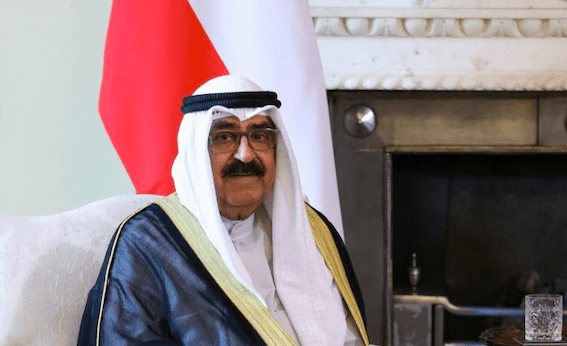
    The death of eighty-six-year-old Emir Nawaf al-Ahmad al-Sabah was not unexpected. He had been hospitalized for undisclosed reasons in November, and his increasingly poor health had already caused him to give Crown Prince Mishal al-Ahmad al-Sabah de facto control in 2021. But Sheikh Mishal, a half-brother, is already himself eighty-three, which will prompt much speculation about who the wider al-Sabah clan favors as heir apparent to Mishal and whether a much younger person—more capable of a longer reign—will be chosen. In the Kuwaiti system, the new emir, who has not yet taken the oath before parliament, has twelve months to choose an heir. No names of likely candidates have yet emerged in public.


    For the moment, Kuwait is engaged in protocol. Emir Nawaf’s death was announced on December 16. He was buried after a funeral service attended by family members and the speaker of Kuwait’s parliament on December 17. Regional and world leaders are now making condolence visits. The first to arrive was Emir Tamim bin Hamad al-Thani of Qatar, followed by King Abdullah of Jordan and King Hamad bin Isa al-Khalifa of Bahrain. Iranian foreign minister Hossein Amir-Abdollahian, Palestinian leader Mahmoud Abbas, and Iraqi prime minister Mohammed Shia al-Sudani were next. Crown Prince Muhammad bin Salman, known informally as MbS, represented Saudi Arabia, which suggests that his father, King Salman, who at eighty-eighty next year is the oldest Gulf leader, was not well enough to travel.

    The memory of Iraqi leader Saddam Hussein’s invasion in 1990 and the subsequent liberation by U.S.-led forces evokes Kuwait’s vulnerable position at the northern end of the Persian Gulf, sandwiched between Iraq and Saudi Arabia, with Iran just a few miles across the water. OPEC member Kuwait has nearly 10 percent of the world’s oil, and with a population just exceeding 4 million—70 percent of them expatriates—its name has become synonymous with wealth.

    Yet despite this, the country has been plagued by divisive governance and maladministration. The fifty members of the National Assembly frequently criticize the current government, led by Prime Minister Sheikh Ahmad Nawaf, the eldest son of the deceased emir. As a consequence of the tough grilling ministers face in the chamber, Sheikh Ahmad, appointed in July 2022, is already on his fourth cabinet. The latest edition of the Middle East Economic Survey (MEES) energy newsletter described his relations with parliament as “tumultuous” and reported: “Amid such an acrimonious relationship, much needed fiscal and economic reforms continue to go unaddressed.” A glaring example is the emerging need to lease ship-based electricity-generating plants because the existing onshore infrastructure is barely adequate to provide power for the summer months, when air-conditioning demand peaks.

    Kuwait’s leadership looks to the United States for military support and hosts more than 13,000 American personnel in the country. Washington must be wishing Sheikh Mishal well in his leadership role and hoping he can choose a capable and probably younger al-Sabah to eventually succeed him.

    Washington Institute

    Share. Facebook Twitter LinkedIn Email WhatsApp Copy Link
    Previous ArticleWhy We Are a Republic, Not a Democracy
    Next Article Beirut and Damascus a century ago
    Subscribe
    Notify of
    guest
    guest
    0 Comments
    Newest
    Oldest Most Voted
    Inline Feedbacks
    View all comments
    RSS Recent post in french
    • Le Liban entre la logique de l’État et le suicide iranien 3 March 2026 Dr. Fadil Hammoud
    • Réunion tendue du cabinet : différend entre le Premier ministre et le chef d’état-major des armées, qui a menacé de démissionner ! 3 March 2026 Shaffaf Exclusive
    • En Arabie saoudite, le retour au réalisme de « MBS », contraint d’en rabattre sur ses projets pharaoniques 27 February 2026 Hélène Sallon
    • À Benghazi, quinze ans après, les espoirs déçus de la révolution libyenne 18 February 2026 Maryline Dumas
    • Dans le nord de la Syrie, le barrage de Tichrine, la forteresse qui a résisté aux remous de la guerre civile 17 February 2026 Hélène Sallon
    RSS Recent post in arabic
    • كيف تحول التيار الرسمي للقوميين العرب إلى معادين للعروبة؟ 14 March 2026 حسين الوادعي
    • تقييم متشائم: بأُمرة “الحرس” مباشرةً، 30 الف مقاتل في حزب الله ومعركة طويلة 13 March 2026 خاص بالشفاف
    • 500 ألف دولار شهريا لنبيه برّي لدعم نفوذ إيران في بيروت 12 March 2026 إيران إنترناشينال
    • بالفيديو والصور: بلدية صيدا “قَبَعت” القرض الحسن من شارع رياض الصلح! 12 March 2026 خاص بالشفاف
    • “طارق رحمن”: الوجه الجديد في عالم التوريث السياسي 12 March 2026 د. عبدالله المدني
    26 February 2011

    Metransparent Preliminary Black List of Qaddafi’s Financial Aides Outside Libya

    6 December 2008

    Interview with Prof Hafiz Mohammad Saeed

    7 July 2009

    The messy state of the Hindu temples in Pakistan

    27 July 2009

    Sayed Mahmoud El Qemany Apeal to the World Conscience

    8 March 2022

    Russian Orthodox priests call for immediate end to war in Ukraine

    Recent Comments
    • hello world on Between fire and silence: Türkiye in the shadow of a growing regional war
    • بيار عقل on Did Iran just activate Operation Judgement Day?
    • Kamal Richa on When Tehran’s Anchor Falls, Will Lebanon Sink or Swim?
    • me Me on The Disturbing Question at the Heart of the Trump-Zelensky Drama
    • me Me on The Disturbing Question at the Heart of the Trump-Zelensky Drama
    Donate
    © 2026 Middle East Transparent

    Type above and press Enter to search. Press Esc to cancel.

    wpDiscuz