



European Union foreign policy chief Kaja Kallas has floated the idea of adapting the Black Sea Grain Initiative model to the Strait of Hormuz, opening a new diplomatic front in efforts to stabilize global energy flows disrupted by the escalating war involving Iran, the United States and Israel. Her remarks, made after consultations with António Guterres, signal not only a search for practical solutions to restore maritime traffic but also a broader shift in how Europe seeks to navigate a rapidly deteriorating regional security environment.
At its core, Kallas’s proposal reflects a strategic calculation. The European Union needs the Strait of Hormuz to remain open, yet it is unwilling to commit to the kind of direct military engagement advocated by Donald Trump. By invoking a mechanism previously brokered with Türkiye’s involvement in the Black Sea, Kallas is effectively pointing toward a diplomatic workaround: a structured, monitored maritime corridor designed to function even amid active conflict.
A chokepoint under systemic pressure
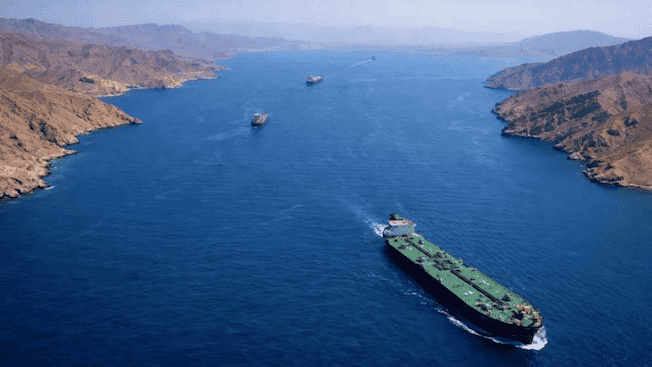
The urgency behind this proposal is rooted in the centrality of Hormuz to the global energy system. Roughly one-fifth of the world’s seaborne oil trade passes through the narrow waterway, alongside a significant share of liquefied natural gas exports from Gulf producers. Since the outbreak of hostilities at the end of February, tanker movements have slowed dramatically, insurance premiums have surged and alternative export routes have proven insufficient.
This is not a regional disruption but a systemic shock. Even economies that do not rely directly on Gulf imports are exposed through global price formation. Europe, already grappling with energy insecurity in recent years, faces renewed vulnerability as volatility spreads across oil and gas markets.
Kallas’s intervention must therefore be understood as a response to immediate economic risk as much as to geopolitical instability.
A European alternative to military escalation
Kallas’s remarks also reveal a growing divergence between European and American approaches. While Washington has called on allies to deploy naval assets to secure shipping lanes, several key European and Asian partners have shown little enthusiasm for direct military involvement.
Instead, the European Union appears to be gravitating toward a model that combines diplomacy, multilateral legitimacy and technical oversight. In referencing the Black Sea Grain Initiative, Kallas is not merely citing a past success; she is articulating a preferred method of crisis management.
That initiative, signed in July 2022 between Russia, Ukraine, Türkiye and the United Nations, allowed Ukrainian agricultural exports to resume despite ongoing war. It relied on a narrowly defined humanitarian objective, a jointly monitored corridor and a coordination mechanism based in Istanbul. Crucially, it demonstrated that limited cooperation between adversaries is possible when mutual interests align.
For Kallas and the EU, this experience offers a conceptual template for Hormuz.
The limits of analogy
Yet the comparison has clear limits, and Kallas herself has acknowledged that any such model would need significant adaptation.
Unlike the Black Sea, where two principal belligerents could be brought into a structured arrangement, Hormuz is embedded in a far more complex conflict environment. Iran, the United States, Israel and multiple Gulf actors all have stakes in the outcome, and their strategic objectives are not easily reconciled.
Moreover, the nature of the threat is more diffuse. The risks in Hormuz extend beyond state-controlled naval activity to include missiles, drones, mines and asymmetric tactics. Ensuring safe passage would therefore require not only diplomatic agreement but also credible enforcement mechanisms.
Kallas’s proposal, while diplomatically innovative, faces these structural constraints.
Türkiye’s re-emerging role
The reference to the Black Sea model inevitably brings Türkiye into the discussion. Ankara’s role in facilitating the 2022 agreement elevated its status as a pragmatic intermediary capable of operating across geopolitical divides.
Türkiye maintains communication channels with Iran while remaining integrated within NATO structures. It has experience in managing maritime traffic and inspection regimes, as well as a track record of working alongside the United Nations in sensitive negotiations.
For European policymakers, these attributes make Türkiye a potentially valuable partner in any Hormuz initiative. Kallas’s framing implicitly recognizes this, even if Ankara is not explicitly named as a central actor at this stage.
For Türkiye, the implications are significant. Participation in such a mechanism could reinforce its image as a constructive regional actor, strengthen ties with the European Union and contribute to its broader ambition of positioning itself as an energy hub linking producers and consumers.
Strategic opportunity and strategic risk
However, the opportunities are matched by substantial risks.
Any Turkish involvement in Hormuz would need to navigate the sensitivities of Iran, which may view external monitoring or coordination mechanisms as constraints on its strategic leverage. At the same time, expectations from Western partners could push Ankara toward a more active role than it may be willing to assume.
There is also the operational dimension. Unlike the Black Sea initiative, which relied heavily on monitoring and inspection, a Hormuz arrangement could entail exposure to direct security threats. The line between facilitation and involvement could quickly blur.
Failure would carry reputational consequences. The eventual breakdown of the Black Sea Grain Initiative underscored the fragility of such arrangements even under more controlled conditions. In Hormuz, the stakes are considerably higher.
A question of feasibility
Skepticism remains widespread among analysts. Iran’s current posture suggests that it sees value in maintaining pressure on maritime traffic. The United States may be reluctant to relinquish control to a multilateral framework, while Israel’s security considerations add further complexity.
At present, the Strait appears to be operating under a form of selective access rather than total closure. Some vessels continue to transit, albeit under heightened risk and uncertainty. This ambiguous situation complicates the design of a formal corridor, which typically assumes a clearer disruption baseline.
For a Kallas-inspired initiative to succeed, all major actors would need to perceive tangible benefits in stabilizing the flow of energy. That condition has yet to fully materialize.
Beyond Hormuz: A test of Europe’s strategy
Kallas’s proposal ultimately speaks to a broader question: how should Europe respond to a world in which traditional security guarantees are less reliable and conflicts increasingly disrupt global commons?
By advocating a model rooted in diplomacy and multilateral coordination, Kallas is positioning the European Union as a proponent of negotiated stability rather than coercive enforcement. This approach reflects both strategic preference and structural limitation.
It also highlights the role of middle powers such as Türkiye, whose ability to engage across divides becomes more valuable as great power consensus erodes.
A delicate idea
The idea of a “Turkish model” corridor in the Strait of Hormuz, as raised by Kaja Kallas, encapsulates the dilemmas of a changing international order. It is an attempt to reconcile the need for stability with the reluctance to escalate conflict, to secure vital economic flows without deepening military entanglement.
Whether such a model can be implemented remains uncertain. The differences between the Black Sea and Hormuz are profound, and the political conditions for cooperation are far more fragile.
Yet the proposal itself is significant. It signals Europe’s search for new tools in managing global crises and underscores the continued relevance of diplomatic innovation in an era defined by fragmentation.
For Türkiye, the question is not simply whether to participate, but how to shape its role in a way that maximizes influence while minimizing exposure. For Europe, as articulated by Kallas, the challenge is to turn a conceptual framework into a workable reality.
In the current environment, that may prove to be the most difficult task of all.