
Close Menu
    Facebook Instagram LinkedIn
    • العربية (Arabic)
    • English
    • Français (French)
    Facebook Instagram LinkedIn
    Middle East Transparent
    • Home
    • Categories
      1. Headlines
      2. Features
      3. Commentary
      4. Magazine
      5. Cash economy
      Featured
      Headlines Shaffaf Exclusive

      Talk and Plot: Teheran Double Game with the Sharaa Regime

      Recent
      6 January 2026

      Talk and Plot: Teheran Double Game with the Sharaa Regime

      5 January 2026

      When “law enforcement” looks like piracy: The Maduro seizure, Türkiye’s caution, and the “precedent” problem

      5 January 2026

      The Financial Stabilization and Deposits Repayment Act: A Controversial Step in Lebanon’s Crisis Management

    • Contact us
    • Archives
    • Subscribe
    • العربية (Arabic)
    • English
    • Français (French)
    Middle East Transparent
    You are at:Home»Categories»Features»Iran reopens investigation into Rafsanjani death

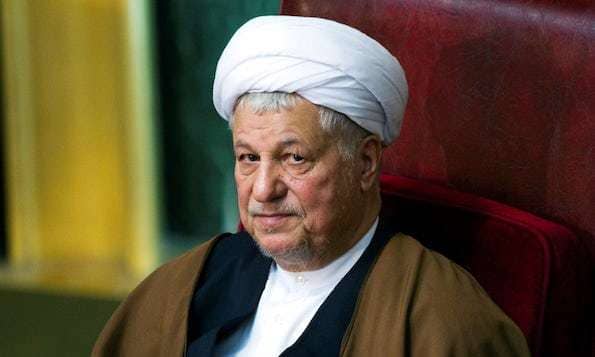
    Iran reopens investigation into Rafsanjani death

    0
    By The Guardian on 10 January 2018 Features

    Relatives of former president say his body had high radiation levels and they doubt the official finding of cardiac arrest

    Saeed Kamali Dehghan Iran correspondent

    Iran has reopened an investigation into the death of its former president Ali Akbar Hashemi Rafsanjani, according to members of his family who say his body had unusually high radiation levels.

    Tuesday marked one year in the Persian calendar since the sudden death of the pragmatist ayatollah, who served as president for two consecutive terms until 1997.

    Rafsanjani’s daughter Faezeh Hashemi revealed last month that an examination led by the country’s supreme national security council had determined that the level of radioactivity in her father’s body was 10 times what is considered permissible.

    The cleric’s son Yaser Hashemi said this week that the current president, Hassan Rouhani, a close ally of Rafsanjani, had ordered the council to reopen the investigation.

    A family member who wished to remain anonymous told the Guardian: “The consensus within the family is that the he was killed, or at least did not die of natural causes.”

    Newspapers in Tehran commemorated the anniversary on Tuesday by publishing tributes alongside large images of Rafsanjani on front pages. “He was our voice,” said the headline of Etemaad, a reformist daily. “One year without the ayatollah,” said the Ebtekar daily.

    The official account of Rafsanjani’s death blamed cardiac arrest. The Guardian understands that the family was not put under pressure to forego a postmortem before his burial, but decided not to opt for one as they did not want to desecrate the body and wanted bury him as soon as possible, in accordance with Islamic tradition.

    But the family has since cast doubts over the cardiac arrest finding. “There was a meeting between all the family members and some members of the supreme national security council and it was announced to us that our father’s body had 10 times the permissible radioactivity,” Faezeh Hashemi told Etemaad in December.

    The Guardian understands that a blood sample was taken from Rafsanjani’s body in hospital after his death, at the request of his nephew. That sample is missing under mysterious circumstances. The radioactivity level was determined after examining a catheter tube that was connected to the body. It is not clear whether the blood sample would have given a different result.

    “He [Rafsanjani] had a meeting scheduled for 8pm that evening with a senior Revolutionary Guard. There are signs prior to his death that people had warned him about his safety,” the family source said.

    Rafsanjani’s body was found by one of his bodyguards in a swimming pool in Koushk Garden, a complex used by senior officials. The ayatollah used the facilities for swimming once or twice a week. He swam alone that day while guards stayed outside, the source said. One guard found the body after Rafsanjani failed to come out at the usual time. The family member said the guards had provided conflicting accounts.

    Samples have been taken from all family members including grandchildren to compare Rafsanjani’s radioactivity levels with theirs. Rafsanjani’s other daughter, Fatemeh, and his wife also had higher radioactivity levels than usual.

    It is not clear whether the level found in Rafanjani’s catheter was enough to kill him, as little is known about the type of the radioisotope, its lifetime and other heath factors.

    Rafsanjani’s death deprived moderates of a key powerbroker who retained significant influence in Iran’s political system despite his views becoming steadily less hardline in recent years. The ayatollah was one of Iran’s great political survivors, and could have played a key role in the appointment of the next supreme leader in the event of a vacancy.

    Rafsanjani’s family have faced restrictions on their movements since his death. Some, including Faezeh Hashemi, who has been jailed in the past, have been barred from leaving the country. The family has complained that some of Rafsanjani’s documents were taken from his office.

     THE GUARDIAN
    Share. Facebook Twitter LinkedIn Email WhatsApp Copy Link
    Previous ArticleWho is attacking Russia’s bases in Syria? A new mystery emerges in the war.
    Next Article Mohammed bin Salman’s Next Saudi Challenge: Curtailing Ultraconservative Islam
    Subscribe
    Notify of
    guest
    guest
    0 Comments
    Newest
    Oldest Most Voted
    Inline Feedbacks
    View all comments
    RSS Recent post in french
    • La liberté comme dette — et comme devoir trahi par les gouvernants 2 January 2026 Walid Sinno
    • La « Gap Law »: pourquoi la précipitation, et pourquoi les Français ? 30 December 2025 Pierre-Étienne Renaudin
    • Au Liban, une réforme cruciale pour sortir enfin de la crise 23 December 2025 Sibylle Rizk
    • Le Grand Hôtel Abysse sert toujours des repas en 2025 16 December 2025 Walid Sinno
    • Au cœur de Paris, l’opaque machine à cash de l’élite libanaise 5 December 2025 Clément Fayol
    RSS Recent post in arabic
    • بدلاً من معالجة مشكلة النفايات: حملات على قرارات صيدا وعلى حساب الناس وصحتهم 9 January 2026 وفيق هواري
    • ( شاهد الفيديو) الحاكم للرأي العام:  استرداد الأموال المختلسة، وأصول المركزي، سيوفر السيولة لسداد حقوق المودعين 8 January 2026 الشفّاف
    • رسالة مفتوحة من المخرج الإيراني “محسن مخملباف” إلى “رضا بهلوي” 8 January 2026 خاص بالشفاف
    • البنوك اللبنانية: أعذارُكم لم تَعُد مقبولة! 8 January 2026 وليد سنّو
    • نتائج تدخل بيونغيانغ في الحرب الأوكرانية 7 January 2026 د. عبدالله المدني
    26 February 2011

    Metransparent Preliminary Black List of Qaddafi’s Financial Aides Outside Libya

    6 December 2008

    Interview with Prof Hafiz Mohammad Saeed

    7 July 2009

    The messy state of the Hindu temples in Pakistan

    27 July 2009

    Sayed Mahmoud El Qemany Apeal to the World Conscience

    8 March 2022

    Russian Orthodox priests call for immediate end to war in Ukraine

    Recent Comments
    • P. Akel on The Grand Hôtel Abysse Is Serving Meals in 2025
    • Rev Aso Patrick Vakporaye on Sex Talk for Muslim Women
    • Sarah Akel on The KGB’s Middle East Files: Palestinians in the service of Mother Russia
    • Andrew Campbell on The KGB’s Middle East Files: Palestinians in the service of Mother Russia
    • farouk itani on A Year Later, Lebanon Still Won’t Stand Up to Hezbollah
    Donate
    © 2026 Middle East Transparent

    Type above and press Enter to search. Press Esc to cancel.

    wpDiscuz