



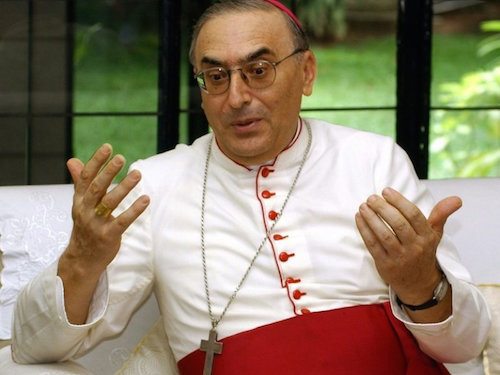
Damascus (AsiaNews) – The Syrian people are “generally in favor” of the national truce signed by the Syrian government and rebel militias, in force since midnight of 30 December. A fragile cease-fire, but on a national scale “which was long overdue” and the hope is that it will bring “a bit of relief”, says Card. Mario Zenari, apostolic nuncio to Syria, commenting to AsiaNews on the agreement between Russia and Turkey that led to a freezing of the fighting.
The truce seems to be holding thus far in anticipation of a new peace conference slated for Kazakhstan next month.
The Vatican’s chief diplomat in Syria sees the cease-fire as a “positive step”, even if he remains cautious. “Until yesterday, in the east of Damascus – he says – there were bombings and mortar rounds. On the afternoon of December 29 rockets have fallen to the east of the capital. “
People “are tired of this war,” adds Card. Zenari, so they have “welcomed the ceasefire, the third this year, hoping that the outcome is better than the previous two.”
The agreement includes a large part of the opposition groups, who have been battling President Bashar al-Assad for over five years, but not the Islamic state and other jihadist militias. The People’s Protection Unit (YPG, the Kurdish fighters in Syria) have also been excluded. Russian President Vladimir Putin however, says the truce is fragile. Meanwhile, the future aims of the Iranian Russian axis in Syria after the recent recapture of Aleppo remain unclear.
On the streets of the capital, says the apostolic nuncio, “you can breathe a different climate, there is the hope that this agreement will be better than others and can withstand.” The “immediate goal,” he adds, “it is to facilitate the distribution of humanitarian aid, food, basic necessities”. Moreover, he calls for a “return to the negotiating table, to save more civilian casualties and prevent further devastation.”
Card. Zenari speaks of “feedback and positive reactions” to the agreement between Moscow and Ankara, the “problem” now is to “see what will happen” in the near future. “There remain several unresolved issues – confirms the prelate – not all rebel groups are involved in the agreement, the situation on the ground remains fragmented, the picture is not well defined and there are still doubts and uncertainties about who is part of the truce and the role for the future of the country”.
We must still emphasize the importance of these “small steps” toward peace, even though the population “remains in suspense waiting for developments and there is no 100% certainty that this agreement will hold up.” In any case, confirms cardinal, this truce “seems to be different from the others, it has positive elements that make us hope. We must wait and see … “.
While international politics moves to solve the complex Syrian arena, the situation on the ground continues to be difficult, even and especially in the capital Damascus, where “there has been no water for four days, and the problem is starting to manifest in all its gravity” . At the moment, says Cardinal. Zenari, “no one knows for sure who or what caused this problem.” According to some sources, the water reservoirs were damages in the fighting, others speak of the reservoirs having been poisoned by jihadist groups and rebels. “We do not know what the cause is – says the prelate – but we are concerned because we are even starting to run low on bottled water. There are trucks covering the city to distribute water, but the unease is visible”.
Finally, the Nuncio in Damascus recalls the recent Christmas celebrations which experienced “great turnout” among Christians, both in Damascus and Aleppo, and in several other parts of the country. “The faithful have found comfort in these celebrations – says Card. Zenari – because faith is an element of strength, support in difficulties. The bishops, pastors were very happy, especially in Aleppo there was a climate of relief and hope that the bombs have stopped falling”. Finally, the cardinal recalls that in Syria Christmas and Easter “are national days of celebration, as for the most important Muslim celebrations”, confirming the importance and recognized value “of the Christian presence” in the life of the country. (DS)