



When Türkiye was expelled from the U.S.-led F-35 Joint Strike Fighter program in 2019, it was more than a procurement dispute — it was a geopolitical rupture. A NATO ally, an early industrial contributor, and one of the program’s founding partners, Türkiye suddenly found itself locked out of a project it helped fund and build.
The official reason was Türkiye’s purchase of the Russian S-400 missile defence system, a move Washington perceived not as diversification, but defiance. The consequences were profound.
Ankara lost access to fifth-generation stealth aircraft, the pilot training pipelines and joint maintenance networks that came with them, and — perhaps most critically — the sensor-fusion and data-integration technologies that define modern aerial warfare.
For a nation that secures NATO’s southeastern flank and commands airspace from the Balkans to the Caucasus, this was not merely a logistical setback. It was a strategic alarm bell.
In the span of a few years, Türkiye went from being a core partner in the Western defence architecture to being treated as an unreliable outlier — an uncomfortable ally at best, a potential risk at worst. And yet, less than a decade later, the picture is changing again.
From pariah to pivot: How the West rediscovered Türkiye
Only a decade ago, Erdoğan’s Türkiye was the West’s cautionary tale. European newspapers caricatured him as “Sultan Erdoğan” — the strongman steering the republic into neo-Ottoman dreams, flirting with Russia and Iran, and using political Islam to challenge the secular order of Atatürk. The 15 July 2016 coup attempt, and the sweeping purges that followed, seemed to confirm every Western fear.
When tanks rolled on the Bosporus bridges, Western capitals issued statements of “concern” — none of solidarity. Ankara learned that its NATO membership did not guarantee empathy. Erdoğan learned that moral lectures from allies arrived faster than any intelligence sharing.
Back then, he couldn’t secure invitations to Berlin or London. Western leaders, constrained by domestic criticism, avoided being photographed with him. Today, however, those same capitals are competing to re-engage.
The irony is stark: Türkiye has not become more democratic; it has become more necessary.
Europe’s geopolitical climate has transformed. Russia’s invasion of Ukraine has shattered illusions of a “post-war” continent. Migration routes, energy corridors, and Black Sea security have become the lifelines of European stability — and each of those threads runs through Türkiye.
Thus, the European discourse that once revolved around democracy and rights has shifted toward security and survival. Even as Türkiye’s main opposition, the Republican People’s Party (CHP), proudly claims the solidarity of more than eighty-five socialist and social democratic parties across Europe—many of which pledge to revive Türkiye’s EU accession process should the CHP come to power—the current reality is far less encouraging. The continent that once championed enlargement as a moral mission now treats it as a strategic liability. Migration management, energy dependence, and border control have replaced democracy, reform, and convergence in the vocabulary of Brussels. Türkiye, once courted as a model of democratic transformation, now finds itself discussed in terms of containment and resilience.
A new axis: London and Ankara
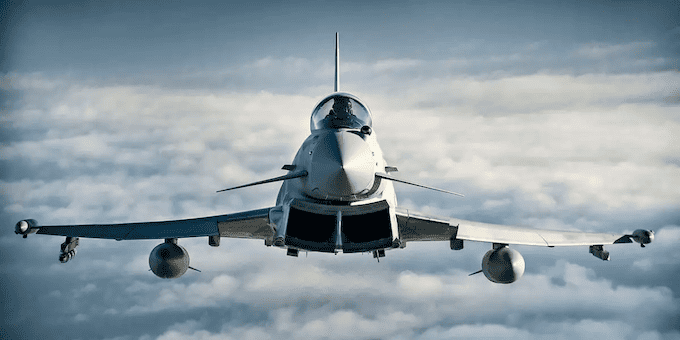
The latest and most visible symbol of this shift arrived on 27 October 2025, when British Prime Minister Keir Starmer landed in Ankara to sign a Eurofighter Typhoon cooperation agreement.
The deal, covering 44 aircraft, marks Türkiye’s first major Western fighter acquisition outside U.S. channels. But its significance extends far beyond airframes: it represents a strategic realignment between post-Brexit Britain and post-F-35 Türkiye.
President Erdoğan called it “a new emblem of our partnership with the United Kingdom.” Starmer, in turn, praised Türkiye’s “vital importance to NATO’s southeastern flank.”
Behind those polite statements lies a more transactional truth: Britain, seeking to reassert global influence after Brexit, has found in Türkiye a gateway to relevance; Türkiye, seeking autonomy from U.S. constraints, has found in Britain a partner who offers technology without tutelage.
Rolls-Royce, BAE Systems, and Turkish Aerospace Industries (TAI) are now collaborating on design, stealth materials, avionics, and even engine technology. The cooperation goes far beyond purchase — it signals a fusion of strategic ambitions.
For Britain, it means extending industrial life to its Typhoon line and ensuring export momentum for the next generation of engines. For Türkiye, it means accessing Western innovation without political conditionality — a partnership based on capability, not hierarchy.
Berlin’s gate: The reluctant but indispensable partner
The Eurofighter consortium — Britain, Germany, Italy, and Spain — runs on German approval. Without Berlin’s export clearance, no deal takes off.
Germany’s relationship with Türkiye has long oscillated between friction and necessity. Migration politics, press freedom debates, and conflicting instincts over Russia have strained ties; yet economic interdependence remains undeniable.
Under Chancellor Friedrich Merz, Berlin has begun recalibrating. The new government, more conservative and Atlanticist, views Türkiye not as a moral headache but as a strategic cornerstone of European defence.
Merz’s October 29 visit to Ankara, coinciding with Türkiye’s Republic Day, symbolized a pragmatic thaw. Berlin now supports Türkiye’s inclusion in its proposed Security Architecture for Europe (SAFE) — a framework to strengthen NATO’s southern flank.
Germany’s role also carries a technological dimension. MTU Aero Engines, a cornerstone of European propulsion expertise, possesses the metallurgical knowledge Türkiye needs to develop its indigenous fighter jet engine.
In this new geometry, London provides design, Berlin provides precision — and together they help Ankara move toward the one goal that unites all Turkish defence planning: strategic independence.
Türkiye’s sovereign sky project
In February 2024, the KAAN — formerly the TF-X — made its maiden flight at Ankara’s Mürted Air Base. Its afterburners cut through the winter air with a thunderous roar that was heard far beyond the runway.
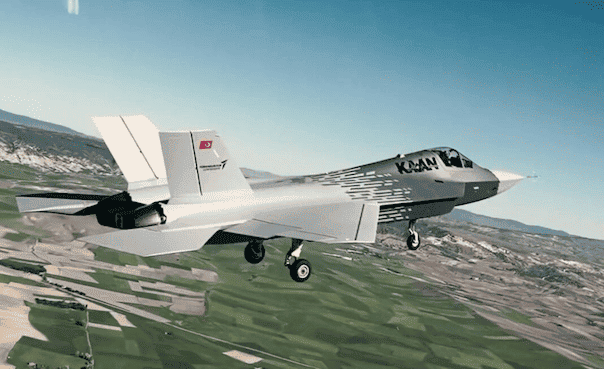
It was not simply a flight test. It was a declaration — that the Republic, founded on industrial sovereignty a century ago, was extending that ideal into the stratosphere.
Developed by TAI under the supervision of the Defence Industries Presidency (SSB), KAAN represents the culmination of two decades of steady progress: from assembly-line partnerships with the U.S., to design independence, and now to fifth-generation ambition.
Only a handful of nations — the U.S., Russia, China, and, partially, the UK — have mastered such capability. Türkiye’s entry into that circle signals not just technical evolution, but civilizational confidence.
The fighter incorporates:
Every rivet, every algorithm reflects a singular doctrine: sovereignty through technology.
Yet KAAN’s most critical challenge — and its ultimate test — lies beneath its fuselage: the engine.
The current prototype is powered by the U.S.-made F110-GE-129, a capable but politically vulnerable engine. Every spare part, every software patch is subject to export controls. Every maintenance cycle is a potential pressure point.
Türkiye has learned the lesson: dependence equals exposure.
A joint venture between TUSAŞ Engine Industries (TEI) and Rolls-Royce is developing a next-generation turbofan capable of 35,000 pounds of thrust. Concurrent discussions with Germany’s MTU aim to enhance metallurgy, turbine cooling, and compressor design.
The objective is clear: by 2030, Türkiye plans to field a fully indigenous engine — designed, forged, and assembled on Turkish soil.
When that day comes, KAAN will cease to be merely an aircraft. It will become a manifestation of national sovereignty — a flying statement that Türkiye’s security is no longer rented, but built.
If its maiden flight in 2024 was the sound of ambition, its first flight on a Turkish-built engine will be the sound of emancipation.
Bridging the gap: F-16s and Eurofighters
Even as KAAN climbs toward production, Türkiye’s air force must maintain combat readiness across multiple volatile fronts. Modernization, therefore, cannot be an abstract goal — it must secure today’s skies while preparing for tomorrow’s battles.
The bridge rests on two pillars: the F-16 Block-70 modernization with the United States and the Eurofighter Typhoon acquisition from the UK and Germany.
The $23 billion F-16 package includes 40 new aircraft and upgrade kits for 80 existing ones, ensuring NATO interoperability, mission-data compatibility, and pilot continuity. Politically, it marks a reluctant U.S. acknowledgment that Türkiye remains indispensable to alliance security — especially as tensions flare in Ukraine, Syria, and the Eastern Mediterranean.
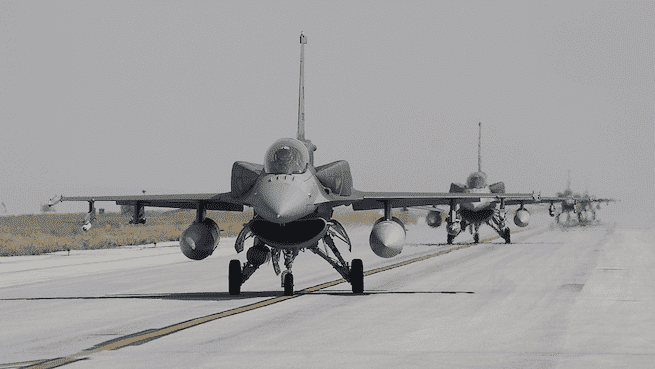
But Ankara’s interpretation is different. The F-16 deal is both a necessity and a reminder: access delayed is access denied. The experience reinforced Ankara’s conviction that strategic dependence on any single supplier, however allied, is untenable.
The Eurofighter Typhoon thus emerges as the second pillar — a high-performance, multirole platform designed to fill the capability gap until KAAN matures. Equipped with advanced radar, high-agility control surfaces, and long-range air-to-air capabilities, the Typhoon offers Türkiye not just deterrence, but technological breathing space.
Unlike the American model, the Eurofighter framework allows localized maintenance, potential co-production, and industrial participation — essential for Türkiye’s growing defence ecosystem.
By the late 2020s, Ankara’s air fleet will stand on a three-tier structure:
This arrangement is not redundancy; it is resilience. It protects deterrence while ensuring a smooth transition toward independence.
Every aircraft in this configuration serves not only as a weapon but as a symbol of recalibrated sovereignty.
The regional equation
In the twenty-first century, altitude has replaced territory as the measure of influence. Whoever commands the air commands the conversation.
In the Aegean, Greece has embarked on one of the most aggressive modernization drives in its history. Its Rafale fighters from France, armed with Meteor and SCALP missiles, already extend its strike range deep into Turkish territory. By 2028, Athens will take delivery of F-35 stealth jets, becoming the first Southeastern European country to operate fifth-generation aircraft.
For Türkiye, these developments redefine deterrence. The balance is no longer about numbers; it is about visibility — or the lack thereof.
F-35s and Rafales give Athens the ability to see first, strike first, and disappear before radar locks on.
Southward, Israel has perfected this model. Its customized F-35I “Adir” fleet, equipped with proprietary command software and local avionics, provides real-time dominance over the Levant. Integrated with U.S. and NATO networks, Israel enjoys not only air superiority but information superiority. It can see across the Sinai, Lebanon, and Syria simultaneously — a form of strategic omnipresence that others can only observe.
, Türkiye faces a different dynamic. Russia’s militarization of Crimea and the ongoing war in Ukraine have transformed the region into one of the world’s densest air environments. Russian Su-35s and MiG-31s patrol aggressively, while Ukrainian drones and Western missile systems challenge them daily. Türkiye’s careful enforcement of the Montreux Convention, closing the Straits to belligerent warships, preserved its neutrality and leverage — but also reminded Ankara how fragile the balance has become.
Meanwhile, in the Eastern Mediterranean, air power underpins everything from maritime borders to gas exploration. The sky has become the theatre of diplomacy.
French frigates patrol near Crete; Greek pilots train with Israeli instructors; U.S. and British surveillance aircraft monitor maritime movements. Against this backdrop, Türkiye’s Bayraktar TB-2, Akinci, and Kızılelma drones provide tactical depth but cannot substitute for manned fifth-generation fighters in contested electronic warfare.
Hence, Türkiye’s dual modernization — Eurofighters for today, KAAN for tomorrow — is not luxury but strategic necessity. It ensures that Ankara remains a central actor in the most crowded and competitive airspace in the world.
In this region, every aircraft delivered, every radar upgraded, and every pilot trained is a diplomatic message.
Air power no longer just defends borders — it defines alliances.
Strategic autonomy without isolation
The F-35 episode was a wake-up call. For Türkiye, it crystallized a philosophy: dependence is vulnerability.
From that realization emerged a doctrine of strategic autonomy without isolation.
This new posture rests on three pillars:
This is not a rejection of the West; it is a redefinition of partnership.
Türkiye remains anchored in NATO’s structure, yet it now walks with its own rhythm — neither defiant nor dependent, but self-possessed.
As one senior official put it: “We remain in NATO, but on our own feet.”
Still, this transformation occurs amid continuing contradictions.
Osman Kavala, Selahattin Demirtaş, and Figen Yüksekdağ remain behind bars; several journalists and opposition figures face ongoing trials; the rule-of-law index ranks Türkiye 118th out of 142 nations.
Yet, for European leaders now preoccupied with Russia, China, and energy crises, the democratic debate has faded into a whisper.
Security has become the overriding language of engagement.
What once disqualified Türkiye from favour now justifies its indispensability.
The engine as a metaphor
At its core, Türkiye’s modernization is not merely about jets — it is about self-determination. The engine has become the metaphor for national sovereignty.
Every embargo, every delay, every spare-part denial has reinforced the same truth: security that depends on others is never secure.
By mastering the engine, Türkiye seeks to master its own strategic heartbeat.
Over the next decade, the country will phase out its F-4 Phantoms, upgrade its F-16s, deploy Eurofighters, and introduce KAANs powered increasingly by domestic propulsion.
Each step tells the same story — a republic reclaiming the skies it once merely patrolled.
Air power defines sovereignty
The Eurofighter deal provides Türkiye with the bridge. KAAN provides the future. And the Anglo-German partnerships provide the fuel. In the skies above the Aegean, the Black Sea, and the Levant, Türkiye is no longer content to be a customer. It is becoming a creator.
When KAAN finally lifts off under a Turkish-built engine, it will mark not only a technological milestone but a civilizational one — the moment when the republic’s century-old ideal of independence evolves from rhetoric to altitude.
In a world where alliances have altitude limits, sovereignty now takes flight.
