


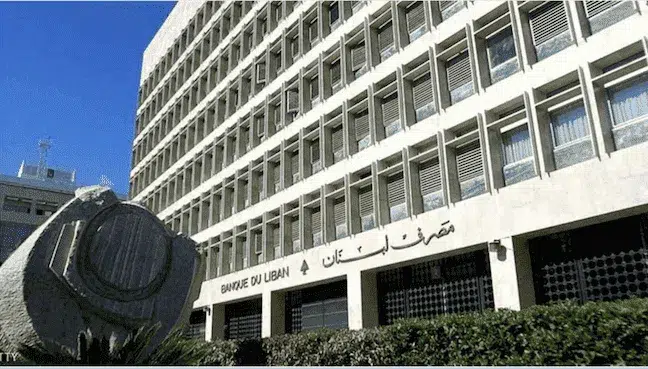
The International Monetary Fund wants a state better able to meet its obligations. The government is looking for resources to finance its spending. The banks are seeking to reduce their losses. But all three share a common interest: their eyes are on the same treasure—the gold reserves held by Banque du Liban.
There is an almost astonishing paradox in Lebanon’s financial crisis. The International Monetary Fund, the Lebanese state, and commercial banks—parties that have failed for years to agree on how to distribute losses, how to repay deposits, or how to restructure the banking sector—seem to have finally discovered one point of convergence: Banque du Liban’s gold.
Their motives may differ, their economic and political arguments may vary, and their proposed uses may take different forms. But the implicit question remains the same: Why should these parties bear the full burden of their financial obligations when the central bank sits on a substantial gold reserve?
The question may appear practical at first glance, but it carries grave risks.
The IMF: Improving the State’s Solvency at the Expense of the Central Bank
Let us begin with the IMF.
The idea of using part of the gold reserve could be presented as a means of accelerating deposit repayments and facilitating a comprehensive financial settlement. Yet this approach has another consequence worth examining.
Every dollar contributed by Banque du Liban through monetizing its gold is, in effect, a dollar that the Lebanese state may be spared from having to secure from its own resources to meet obligations arising from the crisis.
Thus, the state emerges with lighter financial burdens, more manageable debt, and greater capacity to service its future obligations, including those associated with any financing program with the International Monetary Fund.
This is where the problem of conflicting incentives and interests arises.
An international creditor seeking to restore sovereign debt sustainability may find it convenient to shift part of the burden onto an independent monetary institution—burdens that should, in principle, be distributed through a transparent and lawful restructuring process.
What is presented as a technical solution in the interest of depositors may, in reality, become a means of shifting financial responsibility away from the state.
The issue is not whether the IMF should support a serious resolution of Lebanon’s crisis. That is self-evident. The real question is whether such a resolution may legitimately be achieved by weakening the balance sheet of the very institution entrusted with protecting monetary stability.
The Government: Reconstruction at the Expense of Another Institution
The government’s interests raise an equally serious concern.
Lebanon urgently needs investment in electricity, infrastructure, roads, and reconstruction. There is no serious disagreement over these priorities. The disagreement begins when the central bank’s gold is proposed as an alternative source of financing expenditures that, by their nature and responsibility, belong in the state’s public budget.
Here, a historical comparison is difficult to ignore.
During the government of Hassan Diab, Banque du Liban was subjected to pressure to finance an enormously costly subsidy system. The consequences of that policy, along with the financial distortions that accompanied it, remain an essential part of the economic reckoning that has yet to be settled.
Today, under Prime Minister Nawaf Salam, the vocabulary has changed: reform, recovery, reconstruction, modernization.
But if the proposed financing mechanism once again relies on using the central bank’s resources to cover government expenditures, the underlying institutional problem remains unchanged.
Changing the name of spending does not change its nature.
Subsidies become reconstruction programs, and financial obligations are transformed into national recovery initiatives, but the outcome remains the same: the central bank is being asked to finance responsibilities that belong to the state.
The government has legitimate spending and reconstruction obligations, but it also has policy and economic choices for which it must take responsibility: reforming public utilities, mobilizing financial resources through the budget, attracting private investment, restructuring state-owned enterprises, and considering privatization or public-private partnerships wherever appropriate.
Gold must not become a substitute for making these decisions.
Likewise, the reconstruction of southern Lebanon, however important it may be nationally and however politically sensitive, does not justify turning the monetary authority’s strategic reserves into a readily available source of government funding.
The distinction between the state’s budget and the budget of its central bank is not an accounting detail; it is one of the fundamental pillars of institutional credibility.
Commercial Banks: Socializing Losses While Retaining Gains
Then come the commercial banks.
Their motives are perhaps the most obvious.
Any serious banking recovery requires acknowledging losses, conducting reliable asset valuations, rebuilding capital, restructuring institutions when necessary, and fairly distributing responsibilities among shareholders, creditors, and all other relevant parties.
The greater Banque du Liban’s contribution from its gold reserves, the smaller the burden that may otherwise fall on bank shareholders and other parties legally required to absorb losses under the applicable frameworks.
For banks seeking to preserve their institutions and privileges while limiting the injection of new capital, this arrangement is highly attractive.
But it raises a fundamental question of fairness and accountability.
For years, commercial banks accumulated enormous financial exposures to Banque du Liban, which in turn helped finance a state whose successive governments refrained from confronting the worsening consequences of their fiscal policies.
Ultimately, depositors found themselves bearing the consequences of a system in which responsibilities became difficult to identify and losses could easily be shifted from one party to another.
Any settlement that allows bank shareholders to retain substantial economic interests while the central bank’s gold is used to fill the gap threatens to reproduce the very moral hazards that helped create the crisis.
The goal should be to rebuild a banking sector capable of functioning—not to revive the old system of privileges under a new regulatory label.
Banque du Liban: Legal Protection and Strategic Responsibility
The position of Banque du Liban rests on entirely different considerations.
The first is legal.
Law No. 42, enacted in 1986, established legal protection for Lebanon’s gold reserves and prohibited their disposal outside the procedures specified by law.
Whatever arguments may be put forward to amend this framework, the central bank cannot treat gold as an asset that may be sold, transferred, lent, or used in response to demands from other institutions.
The second consideration is institutional.
The gold held by the central bank serves a monetary and strategic function. Using it to finance ordinary sovereign obligations could undermine the distinction between the central bank’s assets and the state’s resources.
This distinction becomes even more important in a country that remains in default on its sovereign debt and whose creditors may continue seeking to recover what they are owed.
Using the central bank’s gold directly to finance government expenditures could open the door to legal arguments concerning the relationship between the central bank and the state, including attempts by Eurobond holders to challenge the independence of certain assets or the protections afforded to them.
Whether such claims would succeed remains a legal and judicial question. But simply creating legal uncertainty around the country’s strategic reserves constitutes a risk in itself, one that is difficult to justify.
The third consideration is economic.
Protecting gold does not necessarily mean insisting that its composition remain unchanged forever.
If Parliament were to authorize the use of a limited portion of the reserve in the future, under strict legal conditions, a fundamentally different approach could be considered: converting a portion of it into high-quality, long-term sovereign debt instruments that generate income, such as U.S. Treasury bonds, subject to appropriate risk-management safeguards.
The purpose here would not be to finance government spending or to exempt bank shareholders from their recapitalization obligations.
Rather, it would be to preserve the reserve’s underlying value while generating income streams that could, under a clear legal mechanism and sound, independent governance, be allocated toward helping repay deposits.
Naturally, any such strategy would require careful examination of interest-rate risk, liquidity, capital preservation, and the legal framework governing reserve management.
It must not be confused with selling gold to finance the government budget.
There is a fundamental difference between consuming a strategic reserve and managing that reserve to generate sustainable income.
The former depletes the country’s capacity to withstand financial shocks. The latter, if properly designed and implemented, aims to preserve it.
The Real Question: Who Pays for Lebanon’s Collapse?
Behind the debate over gold lies the question that Lebanon’s political and financial establishment has spent years trying to evade answering: Who ultimately bears the cost of the collapse?
The state cannot simply transfer its obligations to the central bank.
Banks cannot expect to emerge from the crisis without acknowledging their losses and rebuilding their capital.
International institutions should not encourage solutions that improve one party’s balance sheet at the expense of weakening another, particularly when the party being weakened is the institution responsible for monetary stability.
Depositors should not be persuaded that the only way to recover their money is to liquidate the country’s last strategic reserves while everyone else involved escapes bearing their fair share of responsibility.
Gold is not a substitute for reform. It is not a substitute for fiscal discipline. It is not a substitute for recapitalizing banks. And certainly, it is not an inexhaustible source of funding for successive governments that are unable—or unwilling—to confront their obligations.
In 1986, Parliament Made a Fateful Decision
The Lebanese Parliament has not always been a model of long-term financial foresight. But in 1986, amid civil war and institutional disintegration, it established legal protection for the country’s gold.
Four decades later, it may turn out that this protection had a far greater impact than its authors ever imagined.
It helped preserve a strategic asset that successive governments could not easily spend, that commercial banks could not use to repair their balance sheets, and that international creditors could not simply claim to settle sovereign debts.
The irony is not without bitterness: a country that squandered much of its financial wealth still holds a strategic reserve because an earlier generation of legislators placed it beyond the reach of political bargains and temporary expedients.
That protection must not be dismantled simply because the parties involved in resolving the crisis find it easier to agree on spending someone else’s assets than on agreeing how to distribute their own losses.
Lebanon needs reconstruction. It needs a viable banking sector. It needs a credible agreement with the International Monetary Fund. Above all, it needs to repay deposits and restore confidence in its institutions.
But none of these objectives justifies treating Banque du Liban’s gold as a common pool of resources into which every party may dip its hand to escape its own responsibilities.
Gold must not become the final victim of a financial crisis in which nearly every other safeguard has already collapsed.
After depositors lost access to most of their wealth, the least Lebanon can do is protect what remains of its strategic reserves through the law, subject their management to sound monetary principles, and ensure that if their use is ever authorized, it is exclusively for a clear, legitimate, and specific purpose.
Lebanon’s gold must remain a safeguard for its financial future—not a means of paying the bill for past mistakes.