



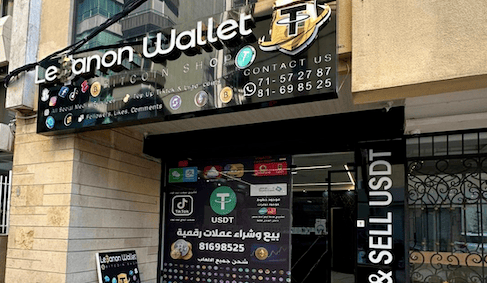
An investigation by Nominis and Coleven, a non-profit that maps the financial layer of terror networks, has uncovered a cryptocurrency fundraising network linked to Hezbollah, highlighting how digital assets are increasingly being used to support illicit financing operations. Beyond the specific findings of the investigation, the report sheds light on a broader reality: Lebanon’s rapidly expanding crypto economy is flourishing largely outside a formal regulatory framework, creating significant blind spots for authorities and compliance professionals alike.
The investigation traced an anonymous X account that presented itself as raising humanitarian donations for Lebanon. Behind the charitable messaging, researchers concluded that donations were being directed toward Wataawanou (“Help Each Other Association”), an organization previously identified by open-source researchers as being linked to Hezbollah’s social welfare apparatus.
Rather than relying on a single cryptocurrency, investigators found the fundraising campaign accepted donations across multiple blockchains, including Bitcoin, TRON, XRP and, notably, Solana. While USDT on the TRON blockchain has become synonymous with illicit finance investigations in recent years, the appearance of a Solana wallet reflects a growing trend among illicit actors to diversify across networks.
According to Nominis, the fundraising wallets themselves handled only relatively modest amounts of cryptocurrency. However, blockchain analysis linked these addresses to a much broader network that the company estimates has processed more than $90 million in cumulative on-chain value. The investigation argues that the public-facing donation wallets represent only a small visible component of a significantly larger financial infrastructure.
Perhaps the report’s most important finding is operational rather than financial. Compliance programs that focus primarily on Bitcoin and TRON risk missing activity taking place on newer networks such as Solana. As blockchain ecosystems continue to evolve, illicit finance is becoming increasingly multi-chain, requiring investigators to track activity across multiple networks rather than focusing on a handful of dominant cryptocurrencies.
The findings also carry wider implications for Lebanon.
Since the collapse of the country’s banking sector in 2019, cryptocurrency adoption has accelerated dramatically. With traditional banking services severely constrained, businesses, importers, freelancers and ordinary citizens have increasingly turned to stablecoins such as USDT to move value across borders, settle international transactions and preserve purchasing power.
This rapid adoption has created a flourishing crypto economy operating largely outside a comprehensive regulatory framework. Digital assets are now routinely used for remittances, trade settlement, peer-to-peer payments and wealth preservation, while Lebanese authorities have yet to establish a fully developed licensing and supervisory regime for virtual asset service providers.
However, while blockchain investigations can often follow funds as they move between wallets and networks, the ultimate challenge remains the same: cashing out.
*The Missing Link: Lebanon’s Cash-to-Crypto Infrastructure*
Cryptocurrency transactions frequently end up in cash. The country’s rapidly expanding network of crypto-to-cash brokers operates largely outside formal oversight, creating a significant blind spot for authorities attempting to understand the full movement of funds.
During field visits conducted last year, numerous crypto-to-cash operations appeared to be functioning discreetly behind ordinary retail businesses. In several cases, cryptocurrency dealing desks were found operating from the back rooms of clothing stores and other commercial premises, hidden from public view yet openly handling substantial volumes of U.S. dollar cash.
The questions this raises are significant.
Who operates these businesses? What anti-money laundering controls are in place? Where does the liquidity originate from that allows large amounts of cryptocurrency to be converted into physical dollars on demand?
Unlike licensed financial institutions, many of these operators function in an environment where reporting requirements, compliance obligations and regulatory supervision remain limited or unclear. Yet they are capable of handling significant volumes of transactions every day.
My own investigation found that a number of these operators appeared to maintain ties with Russian-linked cash-to-crypto networks, suggesting that Lebanon may increasingly be serving as part of a broader transnational ecosystem connecting cash markets and digital assets. While the precise nature of these relationships remains opaque, they raise important questions regarding the origin of liquidity and the international networks supporting these operations.
The Nominis investigation demonstrates how funds can move across blockchains and eventually arrive in wallets connected to fundraising operations. What remains far less understood is what happens once those funds enter Lebanon’s cash economy.
That gap between on-chain visibility and off-chain cash conversion may represent one of the most significant vulnerabilities in Lebanon’s emerging digital financial landscape.
Investigations such as the Nominis report demonstrate both sides of the cryptocurrency revolution. On one hand, digital assets provide an essential financial lifeline for many Lebanese who have been abandoned by a collapsed banking system. On the other, the absence of clear regulation and effective oversight creates opportunities for illicit actors to exploit the same infrastructure for fundraising, sanctions evasion and financial crime.
As Lebanon continues to rely increasingly on digital assets without a modern regulatory framework, the country’s crypto ecosystem is expanding faster than the state’s ability to supervise it. The result is a parallel financial network that serves legitimate economic needs while simultaneously presenting growing compliance, regulatory and national security challenges.
The blockchain may provide unprecedented transparency into the movement of funds, but in Lebanon’s cash-driven economy, the most important questions often begin where the blockchain trail ends.