
Close Menu
    Facebook Instagram LinkedIn
    • العربية (Arabic)
    • English
    • Français (French)
    Facebook Instagram LinkedIn
    Middle East Transparent
    • Home
    • Categories
      1. Headlines
      2. Features
      3. Commentary
      4. Magazine
      Featured
      Headlines Jerusalem Post

      Argentina knew Josef Mengele was living in Buenos Aires in 1950s, declassified docs reveal

      Recent
      7 December 2025

      State Capture in the prism of the Lebanese petroleum cartel

      1 December 2025

      Argentina knew Josef Mengele was living in Buenos Aires in 1950s, declassified docs reveal

      28 November 2025

      A Year Later, Lebanon Still Won’t Stand Up to Hezbollah

    • Contact us
    • Archives
    • Subscribe
    • العربية (Arabic)
    • English
    • Français (French)
    Middle East Transparent
    You are at:Home»Categories»Headlines»Lebanon’s Banking Scandal Exposes a System Built on Privilege and Betrayal

    Lebanon’s Banking Scandal Exposes a System Built on Privilege and Betrayal

    1
    By Samara Azzi on 31 October 2025 Headlines

    When the governor of Lebanon’s central bank revealed this week that one of the country’s largest lenders had quietly transferred US $280 million to a client during the height of capital controls, it confirmed what many Lebanese already knew in their bones: the banking system was never broken — it was rigged.


    For years, ordinary citizens have been told their money simply “isn’t available.” Students have been stranded abroad without tuition. Families have watched their savings evaporate. Pensioners have been forced into poverty. Yet, at the same time, a single favoured client — foreign, wealthy and well-connected — could move hundreds of millions of dollars out of the country with ease.

    This is not just a scandal. It is a grotesque display of moral bankruptcy.

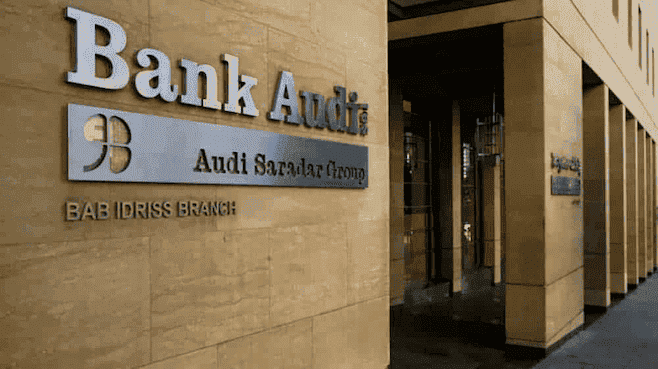
    The bank in question is Bank Audi. The client, a Qatari citizen.


    A tale of two depositors

    Since Lebanon’s financial collapse in 2019, the country’s banks have imposed draconian restrictions on withdrawals and transfers. The justification has always been the same: to preserve what little liquidity remained. But this week’s revelation tears that justification apart. There were always two classes of depositor — the powerless and the privileged.

    Bank Audi’s transfer to a Qatari client exposes the system for what it truly is: a private vault for the elite, guarded by institutions that pretend to act in the public interest while serving only those with influence.


    The silence of the powerful

    What makes this episode particularly galling is the silence that surrounds it. Bank Audi’s board of directors has issued no statement, no apology, no explanation. The Association of Banks in Lebanon, whose moral compass has long been missing, has remained mute. And the country’s regulators — already compromised by years of cronyism — have offered only shrugs.

    Equally troubling is the quiet complicity of international stakeholders. Institutions that are shareholders in Bank Audi, such as the European Bank for Reconstruction and Development (EBRD) and entities linked to the IMF, speak often of transparency, governance and reform in fragile economies. Yet where are their voices now? Will they continue to support a compromised board, or will they act to bring accountability to the current management?


    A systemic betrayal

    This is not an isolated act of corruption. It is a symptom of a deeper rot — a system built on insider privilege, opacity and impunity. Lebanon’s financial collapse did not simply happen; it was engineered by a small elite who treated the country’s banking sector as their personal escape hatch.

    The $280 million transfer is merely the latest confirmation that while ordinary Lebanese were made to believe that capital controls applied to everyone, in reality, the rules were different for those who mattered.


    The path forward

    The response must begin with truth. Bank Audi owes the public full disclosure — who approved the transfer, when it happened and under what authority. The central bank and the courts must investigate. Depositors must be compensated, not ignored. And international shareholders must decide whether they stand for reform or for rot. Before demanding reform across an entire sector, they should start by reforming the bank in which they hold shares.

    For years, the country’s citizens have been told to endure. They have endured enough.


    If $280 million can find its way to Doha while ordinary Lebanese cannot withdraw their savings to buy food, then this is no longer a financial crisis. It is a moral one.

    Share. Facebook Twitter LinkedIn Email WhatsApp Copy Link
    Previous ArticleIranian Reformist Intellectual Sadeq Zibakalam: ‘Iran Has Taken Every Possible Measure To Harm Israel’ – But ‘Israel Has Never Sought To Destroy Iran!’
    Next Article Lebanon’s banks are running out of excuses
    Subscribe
    Notify of
    guest
    guest
    1 Comment
    Newest
    Oldest Most Voted
    Inline Feedbacks
    View all comments
    Dr. Fawzi Bitsrv
    Dr. Fawzi Bitsrv
    1 month ago

    It is very clear and obvious to every body 1_ The first responsdiility falls in the all banks in Lebanon. 2_ The international law all over the world says clearly (know your customer) 3_on what basis you lended funds to the government or any without Knowing their status that they can pay back their debt. 4_ does this apply in your rules and regulations to the poor people ? 5_I know so many influenced people transfered their funds abroad. 6_ Banks as well as the central bank are partners for the collapse 7_you created the hair cut only imposed on… Read more »

    0
    Reply
    RSS Recent post in french
    • Au cœur de Paris, l’opaque machine à cash de l’élite libanaise 5 December 2025 Clément Fayol
    • En Turquie et au Liban, le pape Léon XIV inaugure son pontificat géopolitique 27 November 2025 Jean-Marie Guénois
    • «En Syrie, il y a des meurtres et des kidnappings d’Alaouites tous les jours», alerte Fabrice Balanche 6 November 2025 Celia Gruyere
    • Beyrouth, Bekaa, Sud-Liban : décapité par Israël il y a un an, le Hezbollah tente de se reconstituer dans une semi-clandestinité 20 October 2025 Georges Malbrunot
    • L’écrasante responsabilité du Hamas dans la catastrophe palestinienne 18 October 2025 Jean-Pierre Filiu
    RSS Recent post in arabic
    • بلدية صيدا لا تلتزم القوانين 4 December 2025 وفيق هواري
    • دراسة لمصرف لبنان: وزارة الطاقة اشترت “فيول” لنظام الأسد بأموال المودعين! 4 December 2025 الشفّاف
    • حبيب صادق وسيمون كرم والممانعة 4 December 2025 محمد علي مقلد
    • السفير سيمون كرم رئيساً لوفد لبنان الى “الميكانيزم” 3 December 2025 الشفّاف
    • ملاحظات أولية على هامش زيارة البابا للبنان 2 December 2025 جريس أبو سمرا البتدّيني
    26 February 2011

    Metransparent Preliminary Black List of Qaddafi’s Financial Aides Outside Libya

    6 December 2008

    Interview with Prof Hafiz Mohammad Saeed

    7 July 2009

    The messy state of the Hindu temples in Pakistan

    27 July 2009

    Sayed Mahmoud El Qemany Apeal to the World Conscience

    8 March 2022

    Russian Orthodox priests call for immediate end to war in Ukraine

    Recent Comments
    • Will Saudi Arabia fund Israel’s grip over Lebanon? – Truth Uncensored Afrika on Lebanon’s Sunnis 2.0
    • farouk itani on A Year Later, Lebanon Still Won’t Stand Up to Hezbollah
    • فاروق عيتاني on BDL Opened the Door to Digitization — The State Must Walk Through It
    • انطوانحرب on Contributing to Restoring Confidence
    • jam on Lives in freefall: The triumph of decline
    Donate
    Donate
    © 2025 Middle East Transparent

    Type above and press Enter to search. Press Esc to cancel.

    loader

    Inscrivez-vous à la newsletter

    En vous inscrivant, vous acceptez nos conditions et notre politique de confidentialité.

    loader

    Subscribe to updates

    By signing up, you agree to our terms privacy policy agreement.

    loader

    اشترك في التحديثات

    بالتسجيل، فإنك توافق على شروطنا واتفاقية سياسة الخصوصية الخاصة بنا.

    wpDiscuz