



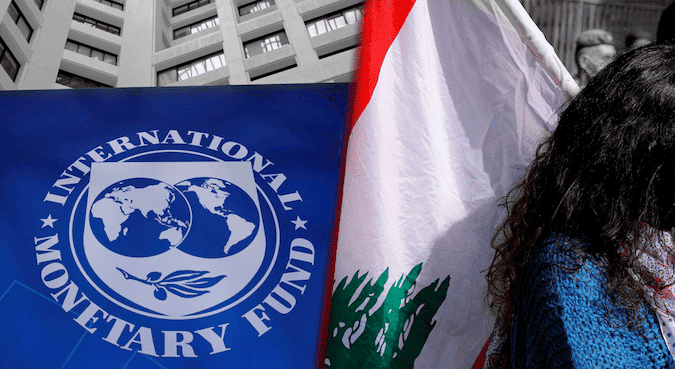
Lebanon’s attempt to revive its banking system is collapsing under the weight of contradictory government actions and misguided international advice. The structure of current policies all but guarantees that the cash economy will dominate and formal banks will wither. The push toward cash companies, the convenience they offer, and the prolonged standoff with the International Monetary Fund (IMF) have created a situation in which rebuilding a healthy banking sector has become nearly impossible.
The State’s Support for Cash Companies
A major obstacle to financial normalization is the government’s tacit and sometimes overt support for cash companies — money transfer operators, exchange houses, and other quasi-financial outlets. The government of Lebanon has outsourced tax collection to these firms. They collect multi millions of dollars for the state and pocket it into their own accounts. They then use this public money to trade and loan it out ensuring they increase their own profits using public funds. These firms are being allowed to expand using public funds and benefit from regulatory leniency and lack of accountability. Effectively, they have become profitable enough to operate with zero or minimal costs to customers, while banks remain hamstrung by capital controls, administrative burdens, and liquidity shortages.
This creates a tilted playing field. As long as cash companies are permitted to offer transfers or payments at zero cost — using infrastructure indirectly financed by public resources — they will continue to siphon off activity that once flowed through banks. It is economic common sense: the average customer will always choose the cheaper, more convenient option. In Lebanon today, that means the cash company on the corner rather than the bank branch with withdrawal limits and queues.
Convenience as a Competitive Weapon
While banks are closing branches and shedding staff to stay afloat, cash companies are proliferating. They are now everywhere — embedded in retail shops, neighborhood kiosks, remittance centers, and even grocery stores. This ubiquity makes them not only convenient but also trusted in a local, transactional sense. The accessibility gap has become so wide that the formal banking network is almost irrelevant for day-to-day transactions.
For ordinary citizens, the convenience of these cash outlets outweighs any perceived benefits of banking. They can send or receive dollars instantly, make payments in cash, and bypass formal systems that no longer serve them. As the banking network shrinks, these companies become the de facto backbone of the Lebanese financial system — but one operating entirely outside the regulatory perimeter and encouraged by the finance ministry.
The IMF Standoff and Its Perverse Effects
The deadlock with the IMF has further entrenched the cash economy. The IMF’s insistence on a total equity wipeout of banks before assessing accountability has frozen any serious restructuring process. Instead of a phased recapitalization that could restore trust and functionality, Lebanon’s banks remain in limbo — paralyzed, under-capitalized, and unable to compete.
In the meantime, the cash economy has become the only functioning financial ecosystem. Without new capital or deposit guarantees, citizens have no incentive to return to banks. Worse, the vacuum created by this paralysis has opened space for illicit activity. Vast quantities of cash now circulate freely, with intelligence of money houses receiving volumes that could be linked to narco-financing and other forms of organized crime. Much of that cash finds its way into circulation through the very same cash companies that are expanding unchecked.
This is not just an economic failure; it is a national security concern. Every month that the IMF standoff continues, the informal cash sector becomes stronger and more institutionalized. The lines between legitimate remittance networks and money-laundering pipelines blur further. The country’s monetary system risks becoming indistinguishable from a gray market.
The Scale of the Problem
Lebanon’s cash economy has swollen to a size that now rivals the formal one. Estimates suggest that nearly 70% of all economic transactions are conducted in cash, much of it in U.S. dollars. With such a vast proportion of commerce outside the banking system, the traditional levers of monetary policy — reserve requirements, interest rates, and capital adequacy rules — are rendered meaningless.
This expansion feeds on itself. The more people rely on cash, the weaker the banks become; the weaker the banks become, the more people rely on cash. Meanwhile, government spending and donor aid often flow indirectly through the same cash networks, deepening their liquidity base. Public money that should be reinforcing financial institutions is instead reinforcing their competitors and enabling the cash economies for political reasons.
A Structural Trap
Lebanon is trapped in a vicious cycle. The government’s short-term convenience policies — aimed at keeping transactions flowing and citizens calm — are undermining the very institutions needed for long-term stability. International organizations, particularly the IMF, compound the problem by framing the issue as one of fiscal arithmetic rather than financial intermediation. Their focus on debt write-downs and equity destruction ignores the reality that the country cannot function without a credible, functioning banking system.
The result is a dual economy: a shrinking, suffocated formal sector and an expanding, cash-saturated informal one. This duality creates opacity, fuels corruption, and drains any possibility of financial recovery. Every day that passes without a comprehensive banking restructuring strengthens the cash networks’ grip on the economy.
What Should Be Done
Rebuilding the banking sector requires reversing the current logic. First, the state must stop subsidizing or indirectly supporting cash companies. This means enforcing regulatory parity — ensuring that any entity handling public or private funds faces the same scrutiny as a bank. Second, a credible recapitalization plan must be implemented to restore depositor confidence, not just punish shareholders. Third, international institutions must shift from moral hazard lectures to practical blueprints for rebuilding financial intermediation.
Conclusion
Under current policies, Lebanon cannot simultaneously fight the cash economy and rebuild its banks. The government’s financial favoritism toward cash companies, combined with the IMF’s rigid conditionality, ensures that the cash economy will continue to dominate for years. Streets awash with physical dollars, cash houses handling enormous sums, and an absent banking framework create conditions ripe for illicit finance and macroeconomic decay.
If Lebanon continues on this path, the banking system will not recover within the next three years — or perhaps ever. Real recovery begins only when policymakers stop pretending that the cash economy can be suppressed through rhetoric while feeding it with public money. Rebuilding banks from scratch requires courage, not convenience; reform, not paralysis. Until that shift happens, Lebanon’s future will remain firmly in the hands of its cash dealers rather than its bankers.