



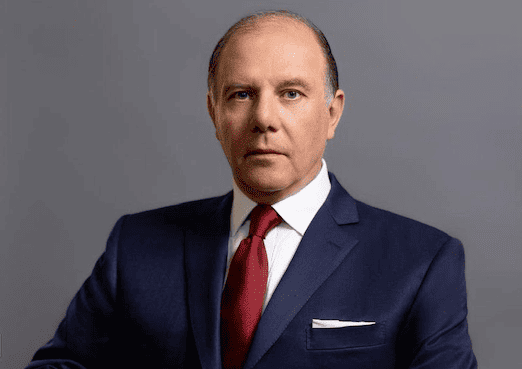
One inherited runaway inflation, the other a collapsed banking sector. Yet Argentina’s President Javier Milei and Lebanon’s new central bank governor Karim Souaid share a core principle: restoring trust in money.
Milei’s reforms, launched in 2024, centered on slashing Argentina’s fiscal deficit, stabilizing the peso, and shrinking central bank liabilities while protecting property rights—including foreign-currency deposits. Unlike reckless “shock therapy” that wipes out savers, Milei lifted currency controls gradually. Argentines regained the right to open dollar accounts, sign contracts in foreign currency, and move their savings more freely. His objective was simple but radical: to legitimize and protect dollar deposits rather than confiscate them.
The results have been painful but necessary. Inflation, though still high, is being wrestled down. Confidence in the peso is slowly returning. And Argentines, long accustomed to hiding their “mattress dollars,” are being coaxed back into the banking system. Milei’s market-oriented discipline, lauded by the IMF, has restored at least a measure of predictability after decades of destructive populism.
Souaid confronts an even harsher landscape. Appointed Lebanon’s central bank governor earlier this year, he inherits a financial system in ruins: frozen deposits, bankrupt banks, and a political class that has profited from both. His plan is no less ambitious than Milei’s—and arguably riskier given Lebanon’s fractured political system.
At its core, Souaid’s approach rests on clawing back the unacceptable interest windfalls generated by the “financial engineering” schemes of his predecessor, the now-indicted Riad Salameh. He is pursuing illicit financial activity head-on, a stance welcomed by the U.S. Treasury, in order to rebuild the central bank’s balance sheet. That stronger footing, in turn, would allow him to safeguard as many lawful deposits as possible—beginning with the smallest and most vulnerable savers.
The strategy is cautious but principled. By protecting depositors and forcing the system to absorb past excesses, Souaid aims to lay the groundwork for renewed growth. If paired with a reform-minded government willing to liberalize Lebanon’s sclerotic economy, it could reopen a path toward prosperity.
But here lies the danger. The IMF, which now cheers Milei’s defense of depositors in Argentina, risks torpedoing Lebanon’s recovery by insisting that Beirut repudiate $16.5 billion owed to its own central bank. Such a move would effectively punish depositors twice—first by freezing their savings, then by destroying the very balance sheet meant to secure their eventual recovery. The IMF’s stance prioritizes foreign bondholders over Lebanese households and undermines Souaid’s cautious but necessary plan.
This double standard is striking. Argentina is praised for reforms that protect savers; Lebanon is pressed toward policies that would wipe them out. Both countries need international support, but external prescriptions without domestic political will can be worse than useless.
Lebanon’s challenge, unlike Argentina’s, is not just economic but political. Entrenched banking lobbies and sectarian factions block every serious reform. Souaid cannot impose discipline alone. He needs legislation, backing from political leaders, and above all, a unified commitment to prioritize citizens over cronies. Without that, Lebanon risks drifting deeper into financial paralysis.
The lesson is clear. Trust—whether in pesos or in lira—is the foundation of recovery. Milei grasped that, and even his harshest critics admit he has restored confidence that Argentina can break its inflationary spiral. Souaid grasps it too. The question is whether Lebanon’s political elite—and its international partners—will allow him to act.
If they do, Lebanon might yet retrace Argentina’s difficult but hopeful path. And if they don’t, the same IMF that now applauds Milei will eventually be left cheering Lebanon’s collapse.