



A courtroom drama over the annulment of the CHP’s landmark 38th Congress has left Türkiye’s oldest political party in suspense. With rival camps mobilized, judges hesitant, and markets watching closely, the battle for legitimacy continues far beyond the ballot box.
The Republican People’s Party (CHP), Türkiye’s oldest and most storied political movement, is once again at the center of the nation’s political storm. Months after its November 2023 congress ended Kemal Kılıçdaroğlu’s 13-year leadership and elevated Özgür Özel to the helm, the legitimacy of that transition is still unresolved.
Ankara’s 42nd Civil Court of First Instance adjourned on Sept. 15—rather than decided—the case seeking to annule the CHP 38th Ordinary Congress of November 2023, which produced the leadership transition from Kılıçdaroğlu to Özel. The next hearing is scheduled for October 24.
The delay preserves the immediate status quo inside CHP, but it also sustains a climate of legal and political uncertainty that now radiates beyond the party’s corridors and into markets and institutions. The postponement follows weeks of turbulence, including a September 2 ruling that ousted CHP’s Istanbul provincial leadership and the installation of Gürsel Tekin as court-backed caretaker—developments that triggered protests, acute media focus, and a new sprint toward an extraordinary party congress on September 21 intended to reconsolidate Özel’s mandate.
The result is a high-stakes three-level chess game: a fight over intra-party legitimacy, an argument about who referees party elections (local courts or the Supreme Election Council—YSK), and a broader contest over judicial authority in Türkiye’s political field.
The case and what the court did (and didn’t) do
The lawsuit targets two pillars: (1) the 38th Ordinary Congress of November 4–5, 2023, which made Özgür Özel CHP leader; and (2)—in some filings—the 21st Extraordinary Congress held in April 2025, whose outcomes the plaintiffs also contest. The central accusations include vote-buying and procedural manipulation, and plaintiffs have urged the court to declare the congress “mutlak butlan” (absolute nullity). Some filings further requested interim measures: to remove Özel and his team and to appoint a trustee—with scenarios aired publicly that could pave a pathway for Kılıçdaroğlu’s organizational return. CHP rejects the claims, calling the litigation politically driven and harmful to democratic life within parties.
On September 15, the Ankara court did not declare the congress void; did not dismiss the case; did refuse an emergency bid to block CHP’s planned September 21 extraordinary congress; and did set a new date, October 24, for further proceedings. The posture amounts to preserving political continuity while keeping the legal sword suspended. In the short run, the ruling operates as a time-buying device: it allows party politics to move forward—Özel’s camp to seek consolidation at the 21 September congress—without foreclosing the plaintiffs’ legal pathway.
Markets, often a barometer of perceived political risk, reacted positively to the absence of a sudden leadership shock: Turkish stocks rose on the day and sentiment improved, suggesting investors prefer predictability, even if it comes via delay rather than resolution. The BIST 100 advance and lira firmness reported by international outlets underline how institutional ambiguity has evolved into a macro-variable in Türkiye. The market’s relief is telling: a destabilizing verdict might have amplified volatility at a time of inflationary pressure and heavy FX intervention, and amid broader concerns over rule-of-law risk premia.
The Istanbul shock: A prologue that redrew the risk map
The September 15 adjournment lands in a political environment already shaken by September 2: a court annulled the October 2023 CHP Istanbul provincial congress, removed Özgür Çelik and others, and effectively installed Gürsel Tekin under judicial auspices—developments that caused sharp market swings and deepened concerns about judicial reach into party dynamics. Protests, police presence, and tense images from party buildings followed. Whether or not one agrees with the legal reasoning, the message to political actors and observers was unambiguous: local courts are prepared to intervene in internal party matters that were long regarded as falling under YSK oversight or party self-governance mechanisms.
In response to Istanbul’s disruption, CHP sought to speed up reconsolidation by calling an extraordinary congress for September 21, backed by reports of over 900 delegate signatures. The goal is to generate fresh legitimacy for Özel and the party executive—effectively building a political shield against ongoing litigation. The sequencing matters: by holding a new congress before the Ankara court’s next hearing, CHP hopes to moot the case or at least complicate any retroactive invalidation remedy.
Who decides: YSK, local courts, or… both?
At the heart of the legal debate is a constitutional-institutional question with systemic implications: Who has final say over party election disputes? Traditionally and doctrinally, the YSK (Supreme Election Council) has been the apex authority for electoral matters. CHP’s leadership repeatedly argued that civil courts lack jurisdiction over what are effectively election disputes within political parties. Yet, a set of recent moves and interpretations—including YSK’s own decisions—have muddied the waters.
In early September, the YSK reportedly upheld aspects of the Istanbul court’s approach, rejecting appeals to reverse the ouster of the provincial administration even as it lifted suspensions over district congresses. The YSK’s justification emphasized that district election boards lack authority to suspend a running congress process, while not squarely restoring the ousted provincial leadership—a split outcome that complicates the neat narrative that only YSK controls every aspect of intra-party election review. Add to that the Ankara court’s refusal on September 15 to dismiss for lack of jurisdiction—plus the earlier Istanbul 45th Civil Court interventions—and one sees a jurisdictional mosaic replacing a previously perceived hierarchy.
Even some AKP figures have warned publicly that local-court encroachment into election disputes could “turn the whole system upside down,” because it invites forum shopping, staggered injunctions, and contradictory orders that paralyze party processes and, by extension, democratic competition. The concern is not merely partisan; it is institutional: if parties cannot be confident about who ultimately adjudicates their contests, strategic behavior will shift from campaigning to litigation—and the venue of politics will tilt from ballots to courtrooms.
Reading the court’s signal
What does the adjournment signal? At minimum: caution. The court avoided a merits judgment (e.g., declaring “mutlak butlan” or dismissing the case) and resisted emergency relief that would have blocked the September 21 congress. That combination suggests sensitivity to irreparable harm considerations (what happens if the court blocks an internal election that might cure defects?) and an appreciation of the political temperature. It may also suggest the bench expects new facts or procedural filings in the coming weeks—either from the parties or from related cases—that would sharpen the record.
This reading aligns with reporting that the presiding judge is “buying time,” possibly to see how parallel processes (including criminal matters involving CHP figures or appeals concerning the Istanbul provincial case) unfold. Analysts also note the HSK factor: concerns—speculative but widely discussed—that judicial assignments could change or that a mis-timed merits ruling could expose the judge to career risk. An adjournment, in that climate, becomes a risk-mitigation strategy in itself.
Inside CHP on D-Day: Prepared, defensive, and reading the tea leaves
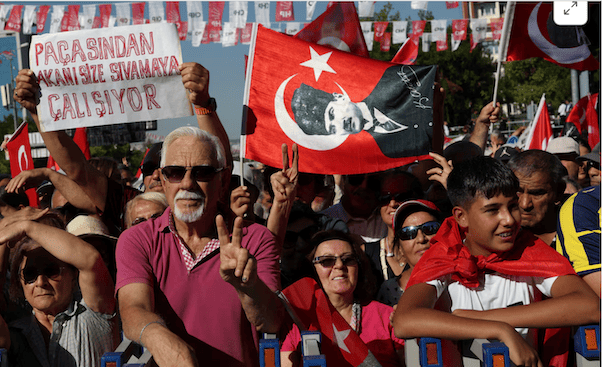
The political choreography at CHP headquarters on September 15 reflected high alert without panic. Reports indicated the MYK (Central Executive Board) gathered in full, while Özgür Özel—whose September 14 Tandoğan rally served to rally the base and project confidence—kept to a schedule meant to convey business as usual. Lawyers were on call; former MPs and provincial leaders circulated; internal access controls tightened; and media presence—including foreign press teams with camera crews—was notably heavier than an ordinary Monday. Interestingly, the absence of riot police or extraordinary governorate orders was read by insiders as an early signal that a disruptive outcome was unlikely that day. In short: maximum readiness for turmoil that didn’t arrive—yet.
Özel’s camp projects a two-step strategy: win (or win big) at the September 21 extraordinary congress to refresh legitimacy, then argue in court that the political reality has overtaken the legal theory of nullity, rendering some demands moot. The plaintiffs, for their part, counter that illegality cannot be cured by subsequent votes if the original congress was void ab initio. Which theory persuades the court—curative democracy versus strict invalidation—may define not only this case but future intra-party disputes in Türkiye.
What the future holds for CHP’s legal and political saga
Scenario 1: Curative politics prevails – CHP’s September 21 congress delivers a broad mandate for Özel, creating a political fact too heavy to ignore. The court may—explicitly or implicitly—lean on doctrines of proportionality and institutional prudence, finding either no standing, no grave procedural breach, or simply a lack of necessity to grant the dramatic remedy of nullification given the party’s fresh vote. Lawsuits remain formally alive but lose force, and plaintiffs pivot to appeals. Result: lowered short-term risk, continued legal noise.
Scenario 2: Procedural rigor rules – The court takes a stricter line: if it concludes that the original congress suffered from non-curable defects, it could order partial or complete invalidation, with targeted remedies (e.g., rerun specific votes) rather than voiding all outcomes. Politically, this would be a heavy blow but not necessarily a knockout, and it could push CHP to craft interim leadership accommodations while appealing. Market risk would rise, but the opacity of the remedy would matter as much as the headline.
Scenario 3: Injunction spiral – Between now and October 24, new interim relief requests emerge—perhaps aiming to interfere with CHP’s preparations, media strategy, or local organizational moves. Even if denied, such motions can absorb attention and shape narrative. In that spiral, politics is outsourced to procedural trench warfare. The court’s rejection on Sept 15 of a bid to halt Sept 21 shows reluctance to engage in maximal preemptive control—but does not preclude other, narrower requests.
Scenario 4: Jurisdictional clarification – The court could yet rule lack of jurisdiction, largely aligning with the view that YSK should decide electoral matters inside parties. But YSK’s own split messaging on Istanbul—and the practical reality of local court activity—make this less likely without higher-court guidance. A jurisdictional ruling would reduce case-specific drama while intensifying the systemic debate on the scope of YSK authority.
Markets, Messaging, and the risk premia of uncertainty
The immediate market rally after the adjournment underscores a pattern: in Türkiye’s current climate, legal posture can move prices. The BIST 100 gained more than 5%, and the lira firmed, as reported, with investors extrapolating reduced near-term disruption to municipal management and macro policy. Still, the relief sits atop fragile macro foundations—elevated inflation, FX defense, and geopolitical risk. If October 24 delivers fresh uncertainty—or if interim steps bring new police-political scenes—those gains can reverse. For foreign funds, rule-of-law headlines now figure prominently in country risk assessment, a channel once dominated by interest rates and current account metrics alone.
The wider political backdrop: Arrests, trustees, and opposition fragmentation
The litigation intersects with a broader field of pressure points on the opposition. In recent months, several CHP-linked municipal figures have been detained or arrested, most notably Istanbul Mayor Ekrem İmamoğlu, a figure widely seen—domestically and abroad—as a potential national challenger. The moves triggered protests and international concern about judicial independence. While the government asserts that prosecutors and courts act within the law, opposition voices emphasize selective enforcement and timing. The international press coverage around September 15 reflected this divide; it also noted that a weakened opposition—whether by legal entanglement or internal conflict—would have ramifications for any early-election scenarios before 2028.
Inside CHP, the Istanbul trusteeship and the Kılıçdaroğlu–Özel duality risk fragmenting the party’s bench at a time of favorable electoral momentum following the 2024 local polls. Whether one casts the litigation as an attempt at “judicial engineering” or as an overdue anti-corruption correction, the net effect is that CHP must devote scarce organizational bandwidth to legal defense and internal diplomacy rather than policy opposition. Özel’s framing of a “judicial coup” is a politically potent message for mobilizing the base; it is also a message closely watched by diplomats and investors, who are weighing the durability of opposition institutions under stress.
Inside the courtroom: Names, motions, and narratives
Coverage of the hearing highlighted counsel on both sides. On the CHP side, Çağlar Çağlayan and colleagues argued the case is ultra vires for civil courts and politically motivated. On the plaintiff side, Onur Üregen—linked in reporting to Lütfü Savaş, the former Hatay mayor—pressed for robust interim measures, up to and including temporary removal of Özel and appointment of Kılıçdaroğlu as trustee pending a final ruling. The court declined to go that far on September 15 but left the door open to further submissions, including post-congress (after Sept 21) filings that could test how new political facts recalibrate legal demands.
The optics war: Images, symbols, and the “boxing match” frame
Politics is optics. The images of Gürsel Tekin entering CHP’s Istanbul HQ under police protection; the Tandoğan rally; the thick press presence at Ankara’s courthouse; and the quiet perimeter around CHP headquarters on Sept 15—all feed a battle of narratives. One camp argues we are watching a methodical judicial tightening. The other insists courts are stepping in because of real irregularities and that no party is above the law. And in the middle: a public watching leaders trade boxing metaphors—“no knockout, just body blows”—as the fight slogs on. The court’s adjournment keeps that bout alive.
The constitutional question we can’t duck
For all the personalities and plot twists, the constitutional stakes may outlast the parties involved. If local courts can remove provincial chairs, annul party congresses, and install trustees, Türkiye is in a new era of judicialized party governance. If, instead, YSK is meant to be the final arbiter, then its split signals and limited interventions risk inviting parallel authority and conflicting orders. Neither path is costless:
This debate requires legislative clarity and judicial restraint, not to disable oversight but to demarcate who oversees what and when. Otherwise, parties—and the electorate—live in a permanent provisional.
The September 21 gambit: Strategy, math, and mandate
The extraordinary congress scheduled for September 21 is not simply a procedural meeting; it is a political instrument. If Özel secures a broad mandate, he gains bargaining power in court and in the wider political conversation; if the vote is narrow or contested, plaintiffs can argue that division persists, strengthening calls for judicial cure. Sources indicate CHP has lined up 900+ delegate signatures for convening—a signal of organizational capacity—but attendance, cohesion, and post-vote messaging will still matter. A decisive, orderly event blunts the “party in disarray” narrative; a fractious one prolongs it.
Erdoğan, early elections, and the incentive structure
Why does this intra-party drama matter nationally? Because opposition configuration shapes the incentive structure for the ruling bloc. Analysts note that a disorganized CHP eases pressure on the government amid economic headwinds and foreign policy shocks. Speculation about early elections ebbs and flows with perceptions of opposition readiness and governmental cohesion. A CHP absorbed by internal litigation—and municipal leaders navigating legal jeopardy—makes opposition coordination harder and agenda-setting easier for the incumbent camp. International coverage has connected the congress case to worries about judicial independence, signaling that rule-of-law optics may factor into Türkiye’s investor story and diplomatic bandwidth.
What to watch—Signals, not noise
YSK clarifications or silence – Any opinion, circular, or reasoned judgment that clarifies (or further blurs) the boundary between YSK oversight and civil court authority over party elections will be pivotal. Keep an eye on post-Istanbul justifications and whether the YSK articulates a framework that lower courts will heed.
Interim motions before oct 24– Plaintiffs may try targeted injunctions to shape the run-up to or aftermath of the September 21 congress. The court’s stance on narrow relief (short of halting congresses) will reveal its appetite for process control.
September 21 optics and numbers– The margin, procedural cleanliness, and discipline of the extraordinary congress are as important as the result. A crisp process builds legitimacy equity.
Parallel cases and the HSK factor– Movement in criminal matters tied to CHP figures—and any developments around judicial assignments—could affect both timing and tone of the October 24 hearing.
Municipal governance continuity– The sturdiness of CHP-run municipalities under legal pressure is a practical test: if service delivery stumbles, the narrative of “politics over public good” gains traction.
Market sensitivity– Watch whether rule-of-law headlines remain a driver of daily risk sentiment—a sign that political procedure is now an embedded macro factor.
Institutions need bright lines
The September 15 adjournment is not a shrug; it is a signal. It signals a judiciary wary of being the institution that precipitously reshapes the leadership of Türkiye’s oldest party in a single stroke—and yet willing to remain on the field, asserting competence over matters once thought reserved to the YSK. For CHP, the path forward runs through political consolidation (September 21) and legal containment (October 24). For Türkiye’s broader institutional health, the path forward requires bright lines: Who decides, on what, and by which standard, when the sovereignty of party members—expressed in votes—collides with allegations of procedural taint.
Democracies live by rules and confidence in those rules. If courts are to be the guardians, their role must be circumscribed, predictable, and transparent. If YSK is the apex, its voice must be clear and consistent. Anything less invites the politics of permanent provisionality—a politics in which adjournments, not verdicts; injunctions, not campaigns; and forum shopping, not coalition-building, become the decisive instruments of power.
For now, the bell has rung; the round continues. CHP is still on its feet, the referee has not counted anyone out, and the crowd is watching closely—at home, in chancelleries, and on trading floors. The next decisive exchange may come on September 21 in the party arena, or on October 24 in the courtroom. Either way, the quality of Türkiye’s institutional order will be judged not just by who wins, but by how.